

A 10-day loop from Leeds through the Yorkshire Dales, Teesdale, UNESCO Durham and the chalk cliffs and gannet colonies of East Yorkshire: one of England's most varied driving circuits.
If you are looking for a Yorkshire Dales road trip itinerary that goes beyond the Dales themselves, this 10-day loop from Leeds is built for exactly that. The route crosses the Pennines through Skipton and Wensleydale, dips into Teesdale for the remarkable Bowes Museum at Barnard Castle, follows the River Wear into UNESCO-listed Durham, then heads east to the chalk headlands of the East Yorkshire coast at Bridlington before closing the circuit through the medieval streets of York.
| Day | Stop | Nights |
|---|---|---|
| 1 | Leeds | 1 |
| 2 | Skipton | 1 |
| 3 to 4 | Hawes, Wensleydale | 2 |
| 5 | Barnard Castle | 1 |
| 6 to 7 | Durham | 2 |
| 8 | Bridlington | 1 |
| 9 | York | 1 |
| 10 | Return to Leeds | — |
Leeds is more than a motorway junction. The Victoria Quarter's gilded arcades, the working-class energy of Kirkgate Market (the largest covered market in the UK) and the riverside bars of The Calls district make an energetic opening night. Arrive by train if possible, leave the car parked and walk the city centre before the Dales take over in the morning.
The drive up the A65 from Leeds deposits you in Skipton in under an hour. Skipton Castle stands at the top of the High Street, 900 years old and in unusually complete condition, its yew tree growing in the inner courtyard where Lady Anne Clifford planted it in the 1650s. The Leeds-Liverpool Canal threads through the lower town with narrowboat hire and guided boat trips.
One night in Skipton allows you to walk the castle and canal in the afternoon and use the evening for Bolton Abbey (12km north, a ruined priory in a riverside meadow) or the B6265 west to Malham Cove, the curved limestone cliff whose pavement at the top appeared in Harry Potter and the Deathly Hallows.
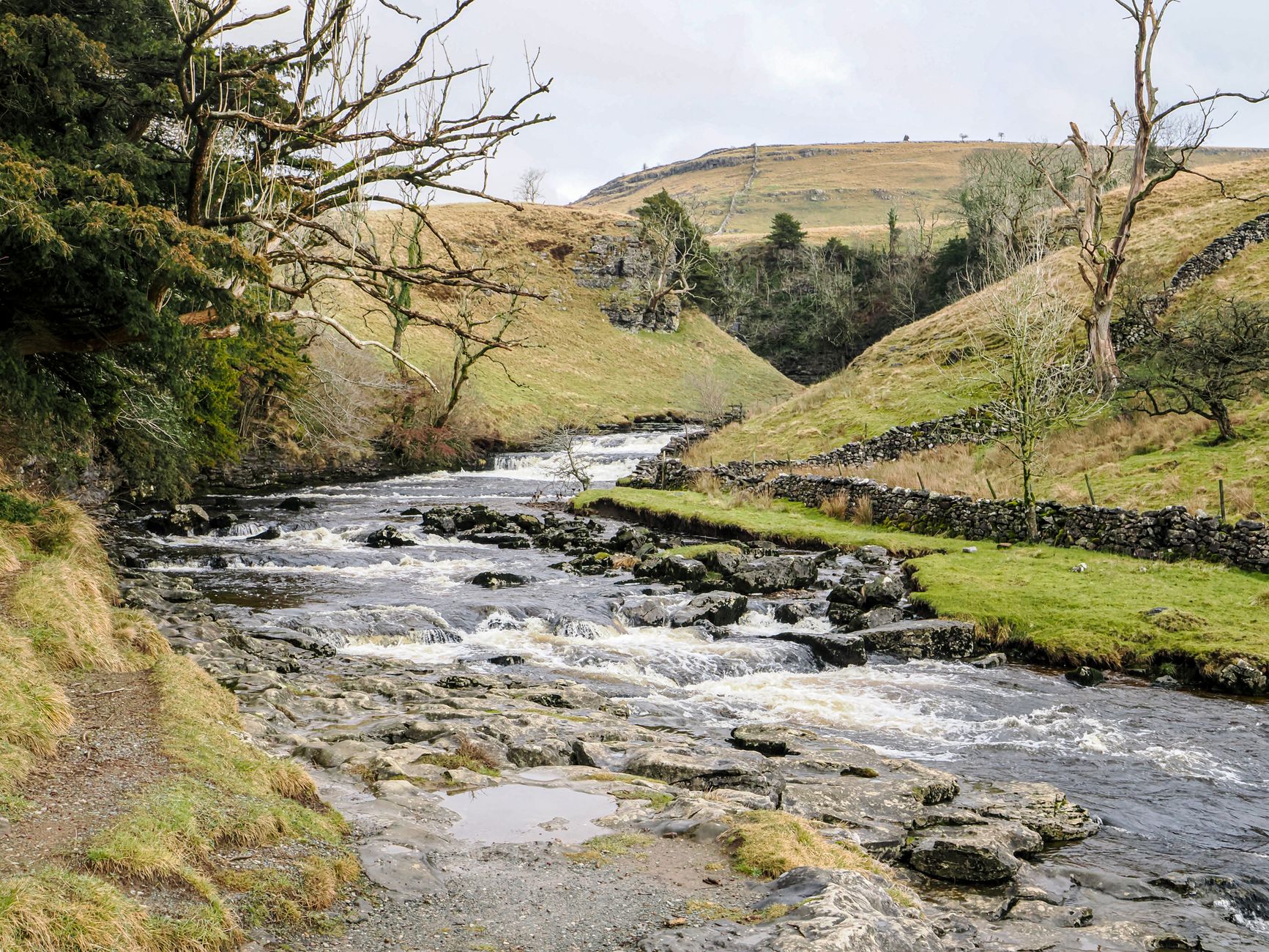
The climb from Skipton into Wensleydale passes through Aysgarth, where the River Ure drops over three broad limestone steps, before reaching Hawes at the valley's head. At 850 feet above sea level it is England's highest market town.
A 10-day southern France loop: Marseille's Calanques, Arles' Roman ruins and the Camargue, Saint-Tropez's beaches, and three nights on the French Riviera at Nice.
Spend the first afternoon at the Wensleydale Creamery, where the cheese with Protected Food Name Status is made and toured daily. In the evening, walk the mile and a half to Hardraw Force, England's highest single-drop waterfall, hidden in a gorge and reached through the courtyard of the Green Dragon pub. Turner painted it; Wordsworth stopped to write about it.
On the second day, drive the Buttertubs Pass north of Hawes. The switchback road climbs to 1,690 feet and is named for the roadside limestone potholes whose fluted columns resemble butter churns. The Tour de Yorkshire has used this road; in a car it takes about 20 minutes and the moorland views are worth every one of them. Hawes market runs on Tuesdays.
The A684 east from Hawes and the A66 bring you to Teesdale, a wider and quieter valley that most road trippers skip. Do not skip Barnard Castle. The Bowes Museum is a full-scale French château that appeared in County Durham by the will of John Bowes, a Victorian coal heir, and his French wife Josephine. Over 58,000 objects fill 22 galleries; Goya, El Greco and Canaletto feature alongside fashion, ceramics and decorative arts.
The Silver Swan, an 18th-century automaton made of silver and glass, performs at 14:00 daily and is one of the most extraordinary mechanical objects in England. The ruined castle above the River Tees gorge is managed by English Heritage and worth half an hour for the river views alone.
The A688 from Barnard Castle brings you into one of England's great dramatic approaches: Durham Cathedral and Castle on their river-girdled promontory, a UNESCO World Heritage Site since 1986.
The cathedral is Norman England's most complete monument, begun in 1093. The nave's distinctive incised columns, St Cuthbert's shrine in the Feretory and the Galilee Chapel at the west end (which holds the tomb of the Venerable Bede) together form the finest Romanesque interior in England. Entry is free, with a suggested donation.
Durham Castle, directly across Palace Green, is part of Durham University's oldest college and offers guided tours. Crook Hall, a medieval manor with Georgian additions and a walled garden, fills a quiet afternoon. Walk the river path from Prebends Bridge to Elvet Bridge on the second morning for the cathedral's most celebrated reflection in the Wear.
The drive east from Durham crosses the Vale of York before the land rises briefly into the Yorkshire Wolds and drops to the North Sea. Bridlington sits on the coast where the chalk uplands meet the shoreline; the town's harbour and sandy North Bay make a pleasant base for the afternoon and evening.
The real draws lie a short drive north. Flamborough Head, 5km from Bridlington, is a chalk headland capped by a white lighthouse (the current one dates to 1806, though an older chalk tower from 1674 still stands nearby). The headland walk takes under an hour and passes sea caves and open cliff edges.
Seven kilometres north, Bempton Cliffs RSPB Reserve holds England's only mainland gannet colony, with 10,000 pairs nesting on vertical 100-metre chalk cliffs alongside puffins, guillemots, razorbills and kittiwakes. Visit between April and August for the full colony; puffins are easiest to see from May to July.
The A1079 south-west from Bridlington brings York in around 90 minutes. Allow a full day. The Shambles, a medieval street where the timber-framed upper storeys nearly meet overhead, is Europe's best-preserved example of its kind. York Minster's nave is the largest Gothic nave in northern Europe. The city walls, built on Roman foundations and walkable for their full 3.4km circuit, offer rooftop views across the city.
The Jorvik Viking Centre reconstructs Viking-age Jórvík using original artefacts from the Coppergate excavation. The Castle Museum fills another hour with its recreated Victorian street. York has a strong independent food and drink scene; Stonegate and Gillygate have the best concentration of restaurants for the evening.
The A64 west returns you to Leeds in under an hour, completing the 10-day loop at approximately 290 miles of driving across 9 nights.
Best time to visit: May to September offers the longest daylight and most reliable weather for the open moorland roads. Bempton Cliffs is at its best April to August for seabirds, with puffins easiest to spot May to July. The Buttertubs Pass and the A66 over Stainmore can close in heavy winter snow.
Getting there: Leeds Bradford Airport has connections across the UK and Europe. Leeds railway station has direct services from London King's Cross in around 2 hours 20 minutes.
Accommodation: Hotels and B&Bs are plentiful in Leeds, Durham and York. In the Dales, self-catering cottages and farmhouse B&Bs suit the pace better. Barnard Castle is small; book accommodation ahead.
Road notes: The B6160 through Wharfedale and the A684 through Wensleydale have single-track sections with passing places. The A66 over Stainmore is a fast A-road that can close in winter. Campervans are well catered for throughout the route, with Certified Locations and farm pitches common across the Yorkshire Dales.
An 11-day Switzerland road trip that skips the ski resorts and explores the country's cultural heartland: Appenzell's painted facades, Basel's world-class art scene, the UNESCO capital Bern, lakeside Lausanne and cosmopolitan Geneva.
The full route — stops, maps, and driving times — is on Routebook by Kington.

A 10-day driving circuit from Leeds through the Yorkshire Dales to Hawes, across Teesdale to Barnard Castle and UNESCO Durham, then east to the chalk headlands and gannet colonies of East Yorkshire's coast at Bridlington, returning via the walled city of York.


