

A practical Bernina Express itinerary from Chur to Tirano by train, with stopovers in Bergun, St. Moritz and Italian-speaking Poschiavo on the UNESCO Rhaetian Railway.
You do not need a car to make the great Alpine crossing between Switzerland and Italy. The Bernina Express does it for you, climbing over a 2,253 metre pass with no road tunnel, then dropping to the palm trees of Tirano. This Bernina Express itinerary turns that famous day on the train into a relaxed week, getting off at the best stops along the UNESCO listed Rhaetian Railway instead of watching them slide past the window.
Most people do the Bernina Express in a single four hour run from Chur to Tirano. It is a wonderful day, but you finish with a blur of viaducts and glaciers and nowhere to walk. Breaking the line into overnight stops fixes that. You still ride every scenic section, but you also sleep in a car-free railway village, spend two nights in the high Engadine, and wake up in an Italian-speaking valley. Everything runs on scheduled Rhaetian Railway trains, most of them covered by a Swiss Travel Pass, so there is no car and no driving on mountain passes.
This is a one-way trip in a single direction, not a there-and-back. Ending in Tirano keeps the line moving forward and sets up an easy onward train to Milan.
Start in Chur, the oldest town in Switzerland and the official departure point of the Bernina Express. Keep the first day light. The old town is small, car-free and easy to walk, with painted facades, a 13th century cathedral and plenty of cafes. Stay near the main station so the next morning's train onto the Albula line is a short walk.
The Albula line between Chur and Bergun is the engineering showpiece of the route, threading helical tunnels and looping viaducts to gain height. Watch for the Landwasser Viaduct, a curved 65 metre span that sweeps straight into a cliff tunnel and is the most photographed structure on the railway. Bergun itself is a quiet, largely car-free Romansh village with the excellent Albula Railway Museum a few steps from the platform. One night is enough to walk part of the historic line trail and see the viaducts in evening light.
A 10-day southern France loop: Marseille's Calanques, Arles' Roman ruins and the Camargue, Saint-Tropez's beaches, and three nights on the French Riviera at Nice.
From Bergun the line continues to Samedan and St. Moritz, the polished resort at the heart of the Upper Engadine. Two nights give time to do more than pass through. Walk the lakeshore, ride up to Muottas Muragl for the classic view down the chain of Engadine lakes, and take a day among the glaciers. The train to Morteratsch and the cable car up Diavolezza both put you face to face with the Bernina massif on a clear day. St. Moritz is also where the Albula line hands over to the Bernina line, so this is the natural place to reserve your panoramic seats south.
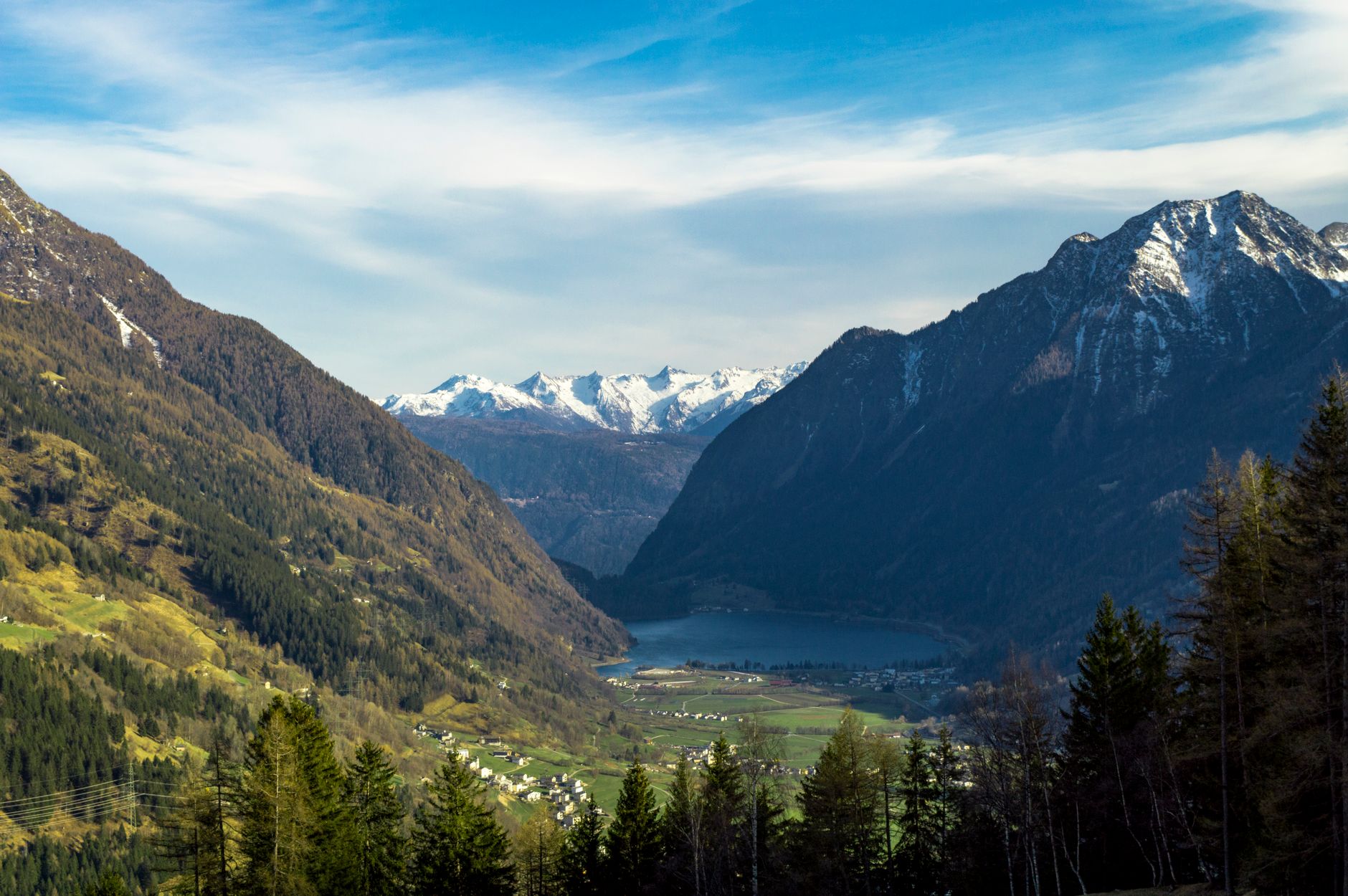
This is the headline leg. Leaving St. Moritz the Bernina line climbs past the Morteratsch glacier and the three lakes at the watershed, tops out at Ospizio Bernina, then pauses at the balcony station of Alp Grum with the whole Italian-facing valley falling away below. It drops into Poschiavo, where the language switches to Italian and the architecture turns to tall Spanish-style palazzi. The valley feels warmer and softer than the passes above it. Spend the night by the turquoise Lago di Poschiavo before the last short run to Italy.
The final descent is the cleverest piece of railway on the route. Just outside Brusio the train spirals through a 360 degree open stone viaduct to lose height without a steep gradient, a sight worth a window seat on the right. Tirano sits just over the Italian border, a low-key town built around the Madonna di Tirano sanctuary and surrounded by Valtellina vineyards. It is a relaxed place to end, with good local food and a wide square between the two railway stations.
June to October is the sweet spot. The summer Bernina Express service runs in this window, the high trails and glacier excursions are open, and the valleys are green. The train itself runs year round and is spectacular in deep snow, but the walking and the side trips are best in the warmer months. Summer weekends and July to August fill up first, so reserve the panoramic train and your St. Moritz beds early.
A Swiss Travel Pass covers the scheduled Rhaetian Railway trains along this whole line, plus most local transport and many excursions, which removes the need to buy tickets at every step. The pass does not include the seat reservation on the panoramic Bernina Express, which is separate and mandatory in summer, so book that as soon as your dates are fixed. If you prefer flexibility, the same line is served by ordinary regional trains that need no reservation and still deliver the views. Carry both Swiss francs and euros, since the route changes currency at the border near Tirano.
If you want the Alps without a hire car, this is one of the most rewarding rail trips in Europe. Each base has its own character, the scenic legs are an experience rather than a transfer, and the logistics stay simple from the first morning in Chur to the last evening in Italy. For a Bernina Express itinerary that lets you actually stop and explore, this is the version worth booking.
A 10-day loop from Leeds through the Yorkshire Dales, Teesdale, UNESCO Durham and the chalk cliffs and gannet colonies of East Yorkshire: one of England's most varied driving circuits.
The full route — stops, maps, and driving times — is on Routebook by Kington.

A 7-day drive-free rail journey on the UNESCO listed Rhaetian Railway, from Switzerland's oldest town across the Bernina Pass to Tirano in Italy. Built for travellers who want the high Alps without renting a car.
 Routebookby Routebook


