

A tested two-week Bulgaria road trip itinerary looping out of Sofia through the Rila and Pirin mountains, Roman Plovdiv, the Valley of the Thracian Kings, medieval Veliko Tarnovo and the Black Sea coast.
Bulgaria is one of the few countries in Europe where you can drive from a 2,900 m alpine skyline to a 2,600-year-old seaside town in a single week, on quiet roads, without booking anything six months ahead. It is also badly under-driven. Most visitors see Sofia, take a coach to Rila Monastery, and fly home.
This Bulgaria road trip itinerary is the fix: a two-week loop out of Sofia that strings together the mountains, the Thracian and medieval heartland, and the Black Sea, and gets you back to the airport without a single wasted repeat leg. Total driving is roughly 1,300 km across 13 nights, with the longest single day around four hours.
Sofia is the only realistic gateway, and it is where the hire cars are, so the trip has to start and finish there. Running the loop clockwise (mountains first, coast second) does three useful things. It puts the hardest walking days at the start while you are fresh. It gets you to the Black Sea in the warmest part of the trip. And it leaves the long westward drive from the coast broken by Koprivshtitsa, 90 minutes from the airport, so the last morning is calm rather than a dash.
The one thing to sort before you turn a wheel: Bulgaria requires an electronic vignette for cars on all national roads. It is linked to the number plate, there is no sticker, and hire cars normally include one. Confirm it at the desk anyway.
| Nights | Base | Drive in |
|---|---|---|
| 2 | Sofia | start |
| 2 | Bansko | ~2h |
| 2 | Plovdiv | ~2h |
| 1 | Kazanlak | ~1h30 |
| 2 | Veliko Tarnovo | ~1h30 |
| 1 | Varna | ~3h |
| 2 | Sozopol | ~2h |
| 1 | Koprivshtitsa | ~4h |
| — | Sofia airport | ~1h30 |
Do not collect the car yet. Sofia is compact and walkable, and central parking is a genuine irritation. Two nights covers the Alexander Nevsky cathedral (go down to the crypt, which is the national icon museum and better than the nave), the Roman ruins exposed under the Serdika metro station, and a taxi out to Boyana Church at the foot of Vitosha, where the 1259 frescoes are the reason it is UNESCO listed. Entry there is timed and capped, so go early.
Eat at Cosmos, a Jeunes Restaurateurs kitchen doing modern Bulgarian tasting menus, or Made in Home on Angel Kanchev for the home-cooking version. Made in Home does not take bookings and fills by seven.
A 10-day southern France loop: Marseille's Calanques, Arles' Roman ruins and the Camargue, Saint-Tropez's beaches, and three nights on the French Riviera at Nice.

Pick the car up and drive southwest, about two hours to Bansko. Ignore the ski-resort frontage: the old quarter behind it is stone houses and cellar mehanas, and the town is the best base in the country for two very different days.
Day one is Rila Monastery, about 100 km each way through the gorge. Go early. The coach tours out of Sofia land around midday and the courtyard, all painted arcades and black and white stripes, is a different place at nine in the morning. Day two is Pirin National Park, reached by gondola from the top of town, roughly half an hour each way. From the upper station you can walk the Banderitsa lakes in a few hours, or commit to Vihren, at 2,914 m Bulgaria's second-highest peak and a full day. Vihren is only sensible from mid-June to September.
Eat at Dedo Pene, a mehana in a house of about 1800 that has kept its original interior. Kempinski Hotel Grand Arena sits opposite the gondola and costs a fraction of its ski-season rate in summer.

Two hours east across the Rhodope foothills brings you to Plovdiv, one of the oldest continuously inhabited cities in Europe and the highlight of this Bulgaria road trip itinerary for anyone who likes cities they can walk.
The 2nd-century Roman theatre still hosts concerts, so check what is on. Above it, the Old Town climbs three hills in painted merchant houses. Below it, Kapana is a tight grid of bars, bakeries and small kitchens that has become the best eating in the country outside Sofia. Book Pavaj if you only eat one meal here.
Park at the bottom of the hill. The Old Town streets are steep cobbles and largely closed to cars, and the locals climb Nebet Tepe for sunset over the Maritsa plain.
Ninety minutes northeast, the Rose Valley doubles as the Valley of the Thracian Kings. The Thracian Tomb of Kazanlak is UNESCO listed and dates to the 4th century BC; the original is sealed for climate control, so you enter a full-scale replica alongside it in Tyulbeto Park. That is the intended experience, not a consolation prize.
Twelve kilometres north, the Shipka Memorial Church stands in gold-domed red brick for the Russian and Bulgarian dead of the 1877 pass battles. Above it on the ridge sits Buzludzha, the abandoned concrete disc of the communist party monument, fenced and derelict inside but extraordinary from the outside.
One warning: the Rose Festival runs 5 to 7 June in 2026 and books out every bed for miles. Plan around it unless you are going for it.
The drive over the Shipka Pass is the best hour of driving on the loop: switchbacks, memorials, and a long descent to the medieval capital.
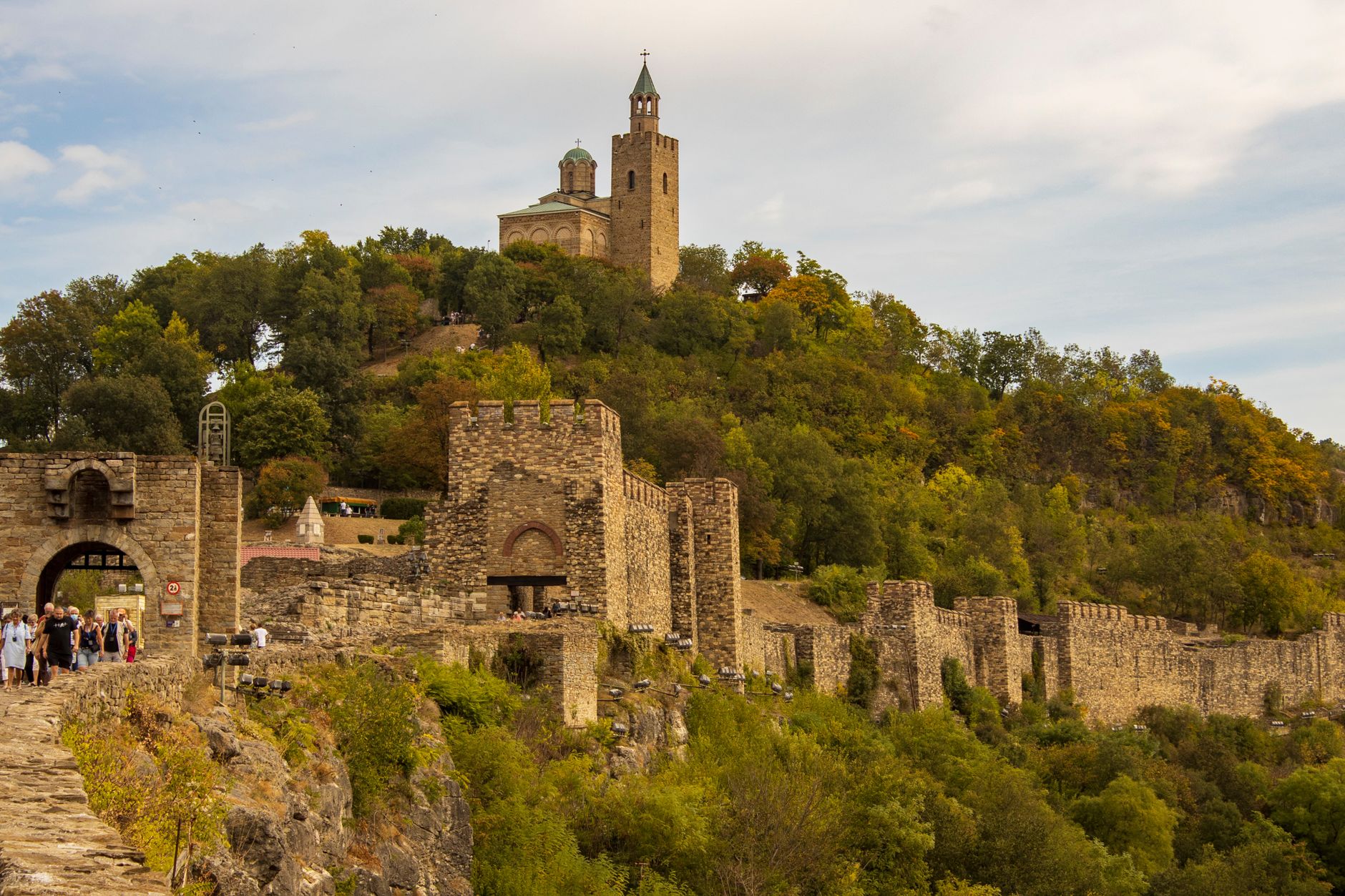
Veliko Tarnovo is stacked in tiers above a hairpin bend of the Yantra, with Tsarevets fortress on the crag opposite. Two nights covers the fortress and its Patriarchal cathedral, the craft street of Samovodska Charshia, and Arbanasi four kilometres uphill, where the Nativity Church is painted floor to ceiling and the merchant houses are effectively small forts.
The Tsarevets sound and light show is worth planning around, but it only runs on selected nights, so check locally when you arrive. Stay at Hotel Gurko, a timber and stone house with its own tavern; eat at Shtastliveca on the terrace over the gorge.
Three hours east to the coast. Varna is a working port rather than a resort, and it earns its single night with one extraordinary museum. The Chalcolithic necropolis found here in 1972 produced the oldest worked gold ever discovered, buried around 4,500 BC, and the Archaeological Museum holds all of it. Walk the Sea Garden down to the beach in the evening and swim.

Two hours south, past the resort sprawl, Sozopol is the reason to keep driving. Founded as Apollonia around 610 BC, it keeps a walled old quarter of wooden-storey houses on a small peninsula, with beaches on both sides and the long sand of Kavatsite three kilometres south.
This is the stop where you stop. Two nights, a swimming day at Kavatsite, the Archaeological Museum for the Apollonia finds, and dinner at The Windmill on the seafront, which has the best sunset table in town. Hotel Antea sits on the cliff five minutes above the old quarter and has its own parking, which matters here: the peninsula is effectively pedestrian in summer.
The longest drive of the trip, roughly four hours west on the A1, lands somewhere entirely unlike the coast. Koprivshtitsa is a valley village of more than 380 restored National Revival houses, and the place where the April Uprising against Ottoman rule was declared in 1876.
Stay the night rather than passing through. The day trippers leave by five and the village empties. Oslekov House, built between 1853 and 1856, is the finest restored interior and has English displays; the Karavelov and Kableshkov houses fill an afternoon. Buy the combined ticket at the first house you enter, and go before late afternoon because the museums close early.
Koprivshtitsa to Sofia airport is a straightforward 90 minutes on the A1, so an afternoon flight is comfortable. Fill the tank before you reach the airport approach roads.
May to June and September to October are the strongest windows, with temperatures around 18 to 26°C, comfortable hiking and open monasteries. July and August are hot inland in Sofia and Plovdiv, but they are also when the Black Sea half of the loop is at its best. If you want the coast, take the heat and start your mountain days early.
Bulgaria is one of the cheapest road trips in Europe. Hire cars run from about €21 a day, fuel and food are well below western European prices, and a good hotel room outside the coastal peak season is remarkable value. Roads between the towns on this loop are good, motorways link Sofia, Plovdiv and Burgas, and traffic outside the capital is light. Mountain sections are slower than the map suggests, so add time for the Shipka Pass and the Rila approach.
One genuine caveat: if you are travelling in winter, snow chains and winter tyres are needed for the mountain sections, and the Pirin walking is off the table entirely.
A 10-day loop from Leeds through the Yorkshire Dales, Teesdale, UNESCO Durham and the chalk cliffs and gannet colonies of East Yorkshire: one of England's most varied driving circuits.
The full route — stops, maps, and driving times — is on Routebook by Kington.

A two-week circuit of Bulgaria from Sofia, taking in the Rila and Pirin mountains, Roman Plovdiv, the Thracian tombs of the Rose Valley, medieval Veliko Tarnovo and the Black Sea coast before closing through the revival village of Koprivshtitsa.

