

A practical Cinque Terre without a car itinerary: eight days by train and ferry through La Spezia, Portovenere and all five Riviera villages, with timing, tickets and pacing tips.
The Cinque Terre is one of the easiest places in Italy to explore without driving, and arguably one of the worst places to bring a car. The five villages restrict traffic, parking is scarce and expensive, and a frequent regional train threads them together in minutes. This Cinque Terre without a car itinerary uses La Spezia as the gateway, adds the medieval harbour of Portovenere, and works north along the coast to finish on the beach at Monterosso al Mare.
The logic is simple. The Cinque Terre Express runs between La Spezia and Levanto every twenty minutes or so in season, stopping at all five villages, with hops of just two to five minutes between them. A seasonal ferry links the coast from a different angle, and the Sentiero Azzurro footpath joins the villages on foot. Driving means leaving your car in a distant car park and walking in anyway, so the train and ferry are not just greener, they are genuinely faster.
This is a gentle, gateway-to-gateway route rather than a loop. You arrive through La Spezia in the south and leave from Monterosso in the north, which avoids backtracking and keeps each day short.
Late spring and early autumn are the sweet spots. April to June and September to October give warm but comfortable weather, full train and ferry timetables, open trails and thinner crowds than the July and August peak. Winter is the quietest of all, though some ferries and trail sections pause.
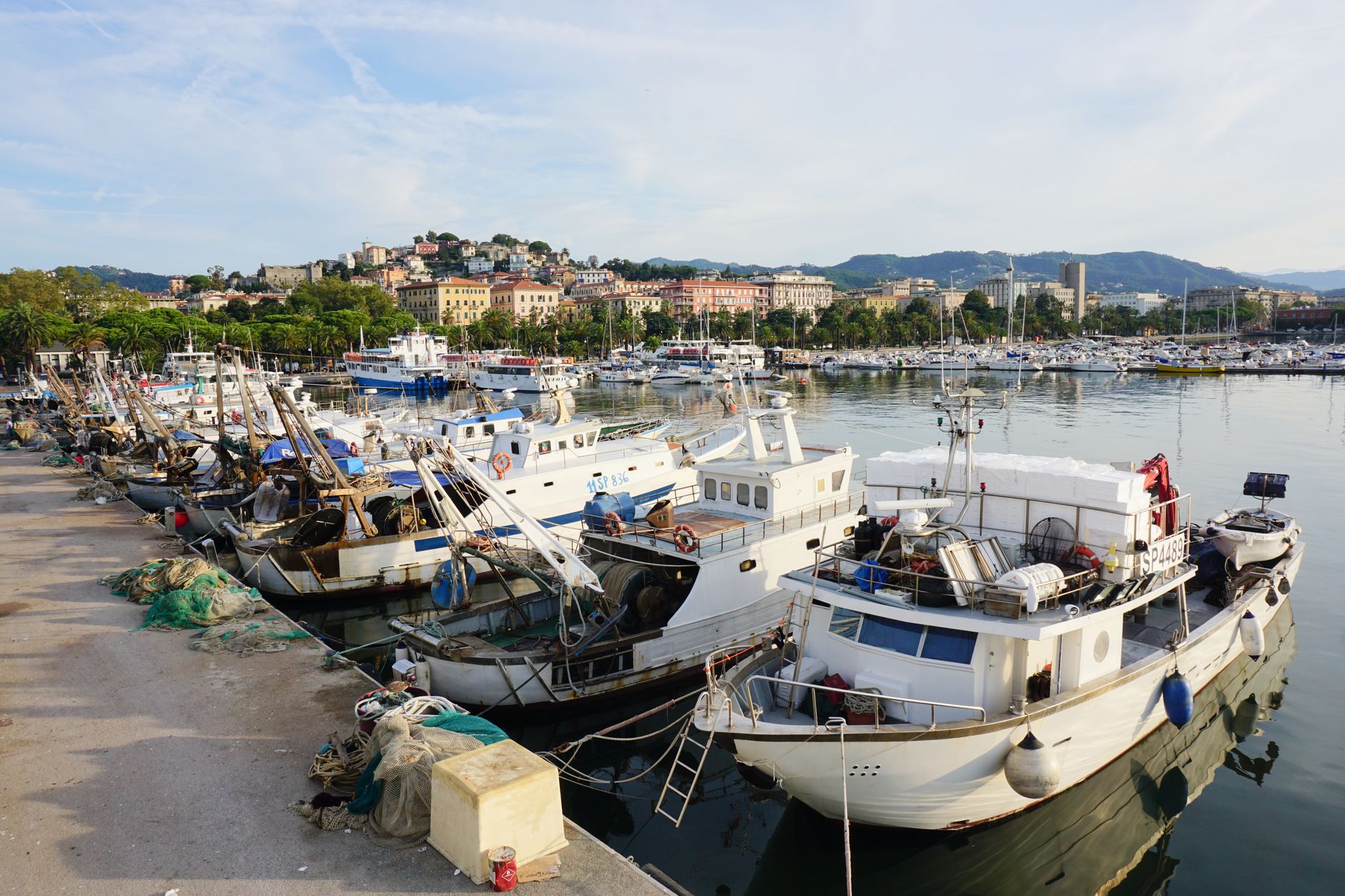
Start in La Spezia, the working port city that acts as the southern gateway. Fast mainline trains arrive here from Florence, Pisa, Genoa and Milan, so it is the natural place to land, drop your bags and get organised. Buy a Cinque Terre Card at the station, which covers unlimited Express trains and access to the paid trail sections, and check the ferry timetable for the next morning. Spend the evening on the lively Via del Prione before the villages take over.
Take the short ferry south to Portovenere, often called the sixth village and part of the same UNESCO listing. Tall pastel houses line the quay beneath a 12th-century castle, and the black-and-white striped Church of San Pietro sits on a rocky headland at the tip of the village. Walk up to Doria Castle for the view, cool off at Byron's Grotto, then catch the direct ferry on to Riomaggiore rather than doubling back to La Spezia.
A 10-day southern France loop: Marseille's Calanques, Arles' Roman ruins and the Camargue, Saint-Tropez's beaches, and three nights on the French Riviera at Nice.
Riomaggiore is the southernmost of the five villages and a strong first impression, with steep lanes of stacked houses dropping to a tiny harbour full of fishing boats. It is also the start of the Via dell'Amore, the short cliff path to Manarola that reopened in 2024 after a long restoration. Book a timed entry slot online before you arrive, because numbers are capped each hour. End the day with a drink on the rocks as the sun goes down.
Manarola is the village you have probably already seen on a postcard, framed by terraced vineyards that produce the sweet Sciacchetra wine. Walk the easy seafront loop to the Nessun Dorma viewpoint, order a board of local cheese and pesto, and stay for the moment the houses light up at dusk. It is a short, scenic place that rewards an overnight stay once the day-trippers have gone.
Corniglia is the quiet one. It is the only village without a harbour, perched high on a clifftop between vineyards and reached by the 382-step Lardarina staircase or a shuttle bus from the station. Far fewer people stay the night, so the evenings are calm, the views are wide, and the single main lane has some of the best gelato on the coast. It is a deliberate change of pace in the middle of the trip.
Many travellers rate Vernazza as the most beautiful of the five, built around a small natural harbour where cafes open straight onto the water below a ruined watchtower. This is also where the scenic coastal trail to Monterosso begins, so walk it in the morning while it is cool and the light is good. Come back down for a long lunch by the harbour and a swim off the rocks.
Finish in Monterosso al Mare, the largest village and the only one with a proper sandy beach. Two nights here let you slow right down: swim, rent a lounger on the Fegina seafront, wander the old town with its lemon trees and striped church, and eat the salted anchovies the village is famous for. Because Monterosso sits at the northern end of the line, it is also an easy place to leave from, with direct trains toward Levanto, Genoa and beyond.
The single most useful purchase is the Cinque Terre Card, which bundles unlimited Express train travel between the villages with access to the paid trail sections. Validate any paper train tickets before boarding, book the Via dell'Amore slot online in advance, and remember that ferries are seasonal and skip Corniglia. Pack light, because most accommodation involves steps and there are no taxis inside the villages.
If you want a relaxed week of colourful harbours, terraced vineyards, gentle coastal walks and very good food, this is one of the best car-free trips in Italy. The villages each have their own character, the transport does the hard work, and you spend your energy on the views rather than the parking. For a Cinque Terre without a car itinerary that stays calm and realistic, this is the version I would book.
A 10-day loop from Leeds through the Yorkshire Dales, Teesdale, UNESCO Durham and the chalk cliffs and gannet colonies of East Yorkshire: one of England's most varied driving circuits.
The full route — stops, maps, and driving times — is on Routebook by Kington.

An eight-day, car-free Cinque Terre itinerary by train and ferry, from the gateway city of La Spezia through medieval Portovenere and all five Riviera villages to the beach town of Monterosso al Mare.
 Routebookby Routebook


