

A point-to-point self-drive from Zagreb through Plitvice Lakes and the Adriatic coast to Dubrovnik, covering Croatia's most celebrated landscapes, Roman ruins, and islands in 10 days.
The croatia dalmatian coast road trip itinerary from Zagreb to Dubrovnik is one of the most rewarding drives in Europe. In 10 days and roughly 625 kilometres, you travel from Croatia's cosmopolitan capital through one of the world's great national parks, down a limestone coastline of Roman walled cities and clear blue water, to the honey-stone walls of Dubrovnik at the country's southern tip. No part of the route doubles back; Zagreb and Dubrovnik each have international airports, so you arrive in one city and fly home from the other.
You need a hire car for this itinerary. The stretch from Zagreb to Plitvice has limited public transport, and the Dalmatian coast works best with the freedom to stop on the Magistrala coastal highway at viewpoints and bays that no bus timetable will wait for. A standard saloon is sufficient for every road on the route; no four-wheel drive is needed.
The route runs south: Zagreb, Plitvice Lakes, Zadar, Split, Dubrovnik. The last leg, Split to Dubrovnik, now crosses the Pelješac Bridge instead of passing through Bosnia, which means no border formalities and no rental-car headaches.
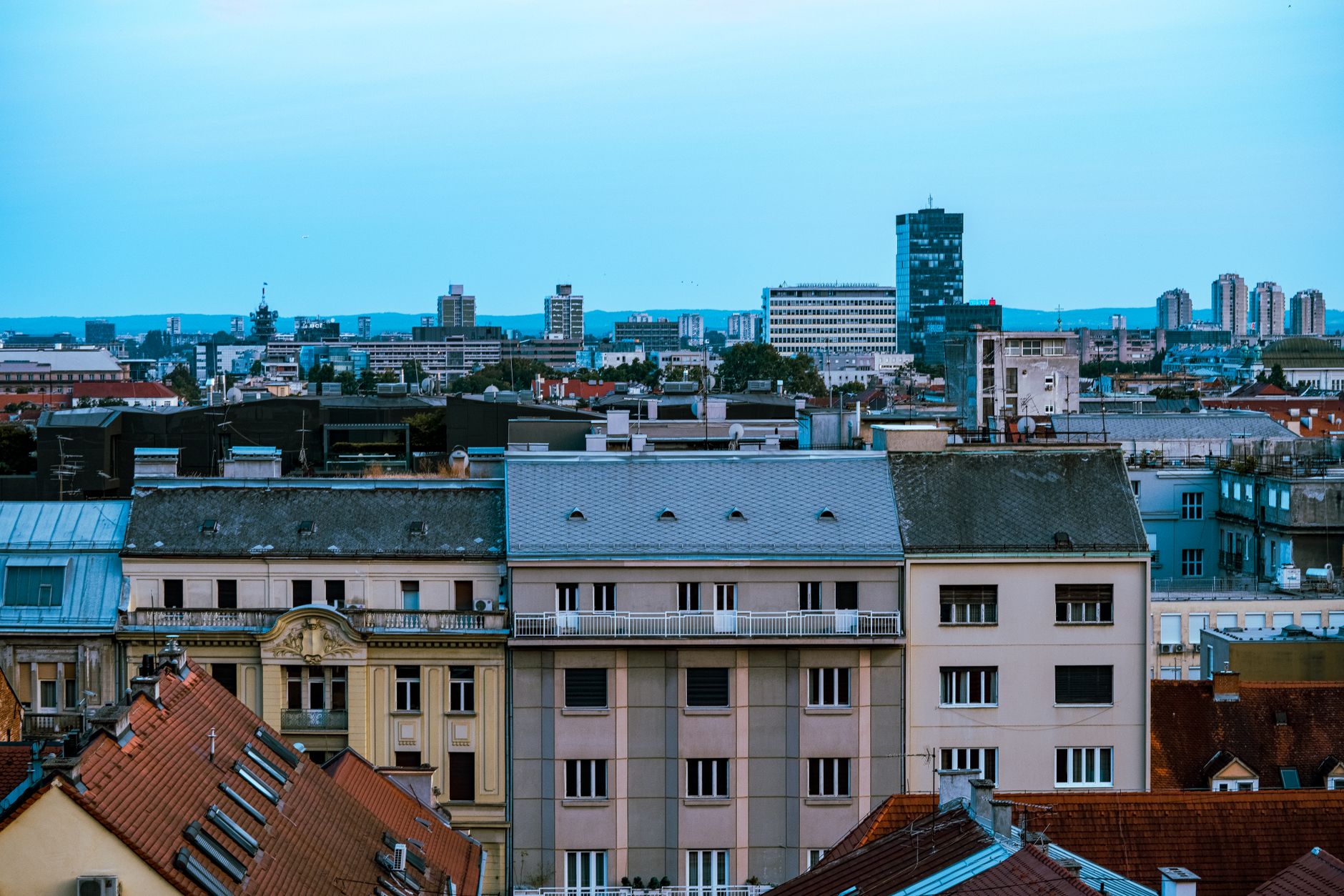
Zagreb divides cleanly into Upper Town and Lower Town, connected by a short funicular that has been running since 1888. The Upper Town holds the Gothic Cathedral of the Assumption, the Baroque Church of St. Mark with its mosaic-tiled roof, and the Lotrščak Tower, whose cannon fires at noon every day. Allow two to three hours to walk it.
The Dolac farmers' market, just below the Upper Town, fills a bright orange-awninged square from 7am to noon with local cheese, honey, fruit, and vegetables. It's the best single introduction to Croatian daily life and worth seeing before it closes.
For the afternoon, the Museum of Broken Relationships, a genuinely moving collection of donated objects and short stories about lost love, is one of the most memorable small museums in the Balkans. The evening belongs to the café terraces on Tkalčićeva Street, the city's most popular pedestrian strip.
Zagreb is a proper city, not a transit stop. One night is the practical minimum; those with a day to spare should add a second.
A 10-day southern France loop: Marseille's Calanques, Arles' Roman ruins and the Camargue, Saint-Tropez's beaches, and three nights on the French Riviera at Nice.
The drive south from Zagreb to Plitvice takes about two hours, following the A1 motorway before turning into the Lika highlands. The park itself sits in a forested canyon where 16 lakes cascade into one another over a 133-metre drop, the water coloured an improbable turquoise-green by dissolved minerals.
Two nights gives you the full picture. Plitvice is split into the Upper Lakes and the Lower Lakes, and the best experience visits both separately rather than rushing both into a single long day.
The Lower Lakes are the more dramatic section: Veliki Slap, at 78 metres, is the tallest waterfall in Croatia, and the short circuit below it passes emerald plunge pools and cascades at close range. Allow two to three hours for the Lower circuit. The Upper Lakes are quieter and more forested, with wooden boardwalks threading between lake edges and a boat crossing across the largest lake, Kozjak.
The park opens at 7am. Arriving within the first hour makes a significant difference in summer: the boardwalks are narrow, and by 10am the busiest sections have queues. Book entry tickets online in advance for July and August.
Accommodation is limited inside the park; the two hotels on site are well-positioned but book early. The small village of Mukinje, 3 km south, has private rooms and apartments.
The drive from Plitvice to Zadar takes roughly two hours, dropping through the Velebit mountains and descending to the Adriatic. Zadar is the oldest continuously inhabited city in Croatia, with 2,000 years of overlapping history compressed inside Roman-era city walls.
The Roman Forum, at the centre of the old town peninsula, is the largest on the eastern Adriatic; the adjacent Church of St. Donatus dates from the 9th century and hosts classical concerts in summer. The Cathedral of St. Anastasia holds Croatia's most important treasury.
Two installations on the waterfront make Zadar particularly memorable. The Sea Organ, completed in 2005, runs 35 pipes beneath stone steps along the promenade; wave energy pushes air through them, producing an unpredictable natural music audible at any hour. Immediately alongside it, the Greeting to the Sun is a circular solar panel the size of a football pitch that stores energy during the day and creates a shifting light display on the pavement from dusk. Alfred Hitchcock once declared Zadar's sunset the most beautiful in the world; sitting on these steps as the light fades is a reasonable way to check his claim.
On day five, a day trip to the Kornati Islands is the best use of a clear morning. Boats leave from the old-town quay and take around 90 minutes to reach the archipelago of 89 uninhabited limestone islands in the national park. Most tours include lunch at a family konoba on one of the islands.
Split is the biggest city on the Dalmatian coast and the centre of gravity for the whole southern region. The drive from Zadar takes roughly 1.5 to 2 hours on the A1 motorway with the sea visible for much of the descent.
Diocletian's Palace, built between 295 and 305 AD as the retirement estate of the Roman emperor, is one of the best-preserved Roman monuments in Europe. Crucially, it is not a museum: the old town of Split has grown up inside and around the palace walls for 1,700 years, and today apartments, restaurants, bars, and a cathedral coexist with Roman columns and basement chambers. Entry to the complex is free at all times, and the cellars beneath the main hall host concerts and markets throughout summer.
Three nights here is the right allocation. Day six is for exploring the palace and the Riva Promenade at your own pace. Day seven is for Hvar Island.
The catamaran from Split's Riva Promenade to Hvar Town takes 55 minutes. Leave the car in Split and take the catamaran; book your return online as crossings fill fast in July and August. Hvar Town itself has a 16th-century Spanish Fortress above it, the Pakleni Islands for swimming reachable by water taxi, and the widest main square on the Dalmatian coast. Plan on leaving the island by the 6pm or 7pm catamaran to return to Split for the evening.
Day eight gives time for Marjan Hill, the forested headland on Split's western edge, for panoramic views south towards the islands, and the Archaeological Museum of Split, which holds Roman finds from across the region.
The drive from Split to Dubrovnik takes roughly three hours and follows the coast road through Omiš and Makarska before crossing the Neretva delta and reaching the Pelješac Bridge. The bridge, opened in July 2022, spans 2.4 km across the sea and connects the two halves of Croatia's coastline without passing through Bosnia and Herzegovina, which previously required two border crossings and a passport check. This is now a smooth, uninterrupted drive.
On the Pelješac Peninsula itself, if time allows, the Dingač wine region produces Croatia's most celebrated red wines from Plavac Mali grapes grown on steep south-facing vineyards above the sea. A short detour through the village of Potomje is worth 30 minutes.
Dubrovnik's old town is a UNESCO World Heritage Site surrounded by 1,940 metres of medieval walls. The city is Croatia's most-visited destination and can feel overwhelmed by cruise ships in high summer; early morning and late evening visits to the old town are noticeably calmer.
The city walls walk, taking roughly 90 minutes at a relaxed pace, is the essential first activity. The views from the walls over the Stradun (the main limestone-paved street), the rooftops, and the sea are what most people picture when they think of Dubrovnik.
For day ten, take the Žičara cable car to the summit of Mount Srđ above the city. The 360-degree view from 405 metres takes in the old town, the surrounding islands, and on a clear day the coast of Montenegro to the south. The cable car runs frequently and the summit has a café.
One of the most honest things to know about Dubrovnik is that it rewards a shorter stay than most people expect. Two nights is enough; the compactness of the old town means you can cover the walls, the main sights, and several excellent restaurants without feeling rushed. Book accommodation inside or just outside the Pile Gate as far in advance as possible.
June is the best month for this route. The weather is reliably warm, the sea is clear enough for swimming, the peak summer crowds have not arrived, and ferry and catamaran schedules are running in full. Plitvice is at its lushest and greenest.
July and August bring the best beach weather and the longest days, but also the highest prices, the largest cruise-ship crowds in Dubrovnik and Split, and the warmest temperatures in the interior. Plitvice requires timed tickets and queuing at peak hours.
September is an excellent alternative to June. Temperatures remain warm, the sea stays swimmable well into October, and crowds thin noticeably after the first week of September. The harvest season brings local produce and wine to Dalmatian markets.
October to May: the route is drivable and hotels are open, but many island catamarans run reduced winter schedules, Dubrovnik is very quiet, and Plitvice has a different, more austere character. April and May see the waterfalls at their most powerful from snowmelt.
Croatia drives on the right. Roads are well-signed and in good condition throughout; the A1 motorway from Zagreb to Split is four-lane and fast, with tolls paid at barriers. The Magistrala coastal road south of Zadar is older and narrower, and slower than the motorway, but more scenic.
For the Split to Dubrovnik leg, the Pelješac Bridge has eliminated the Neum border crossing that previously added hassle and time to this stretch. Some rental car contracts still include Balkans clauses; check your rental agreement covers Bosnia-adjacent driving even if you don't cross the border.
Park outside the old towns wherever possible. Zadar, Split, and Dubrovnik all have paid car parks just outside the pedestrian zones; driving inside the restricted areas is not permitted during the day and not worth the effort at night. In Split, the Gripe and Riva garages are closest to the palace.
Book Plitvice timed-entry tickets, Hvar catamarans, and Dubrovnik accommodation as far ahead as possible for July and August. For June and September, a week's notice is usually enough.
A 10-day loop from Leeds through the Yorkshire Dales, Teesdale, UNESCO Durham and the chalk cliffs and gannet colonies of East Yorkshire: one of England's most varied driving circuits.
The full route — stops, maps, and driving times — is on Routebook by Kington.

A classic point-to-point drive from Zagreb through Plitvice Lakes and the Dalmatian coast, ending in Dubrovnik after ten days of UNESCO parks, Roman ruins, and Adriatic islands.


