

Eight days along England's most overlooked coastline, from Hull's Victorian docks through the North Norfolk AONB to Aldeburgh's shingle shore. A one-way drive for those who prefer wide skies and real harbours over tourist crowds.
Most road trips in England head south-west, to Devon and Cornwall, or north to Scotland. The coast that runs south from the Humber to Suffolk is almost entirely overlooked, and that is precisely its appeal. Skies here stretch wider than anywhere else in England. The light is extraordinary. The crowds are thin. And the stops along this England east coast road trip itinerary reward the curious traveller in ways that the more obvious routes rarely manage.
This eight-day one-way drive from Kingston upon Hull to Aldeburgh covers around 360 kilometres of road, with overnight stops at five genuinely distinct places: a transformed industrial port, an English seaside resort with a serious nature reserve, a medieval harbour town ringed by royal estates, a Victorian clifftop resort in a protected landscape, and a shingle-shore town shaped by music and the sea.
Total driving time between bases is roughly five hours. This is a route for lingering, not rushing.
Hull surprises most first-time visitors. The city spent 2017 as UK City of Culture and has not looked back: the Humber Street arts quarter hums with galleries and independent restaurants, the Fruit Market district is a weekend destination in its own right, and the Ferens Art Gallery has one of the finest free-entry collections outside London.
Give the first morning to The Deep, the dramatic aquarium at Sammy's Point where the River Hull meets the Humber Estuary. It houses more than 5,000 animals including hammerhead sharks and giant rays, viewed from Europe's deepest public underwater tunnel.
Spend the second day in the cobbled Old Town. Wilberforce House on the High Street is the birthplace of William Wilberforce, the abolitionist who ended Britain's slave trade; the free museum inside is quietly moving. The Streetlife Museum opposite covers Victorian transport with real trams and carriages under one roof.
On the way out of the city, or as a half-day trip, the Humber Bridge is best appreciated on foot or by bicycle: once the world's longest single-span suspension bridge, it is still a formidable piece of engineering. The market town of , 13 kilometres north-west, has a Gothic minster that many architects consider finer than York's.
A 10-day southern France loop: Marseille's Calanques, Arles' Roman ruins and the Camargue, Saint-Tropez's beaches, and three nights on the French Riviera at Nice.
The drive south to Skegness crosses the Lincolnshire Wolds, an Area of Outstanding Natural Beauty of chalk hills and deep valleys that most people speed through on the way to the coast. Take the B roads through Alford and Burgh le Marsh and the journey becomes part of the experience.
Skegness itself is a classic English seaside resort: bracing winds, coloured chalets, a good fish supper and a funfair or two. The real draw, though, is Gibraltar Point National Nature Reserve, a 1,100-acre expanse of sand dunes, saltmarsh and freshwater lagoon stretching south from the resort to the mouth of The Wash. Established as a bird observatory in 1949, it is one of the oldest in England and a crucial site for migrating birds in autumn. Bring binoculars.
The reserve's visitor centre opens at 10am, with a cafe and hides for watching waders and wildfowl. The beach here is wild and largely car-free: entirely different in character from Skegness proper.
King's Lynn is one of the great medieval port towns of England, with a preserved waterfront that rivals any in the country. The 1683 Customs House on Purfleet Quay is its symbol: a small Baroque building on stilts that once handled a significant share of England's seaborne trade with the Baltic. The Tuesday Market Place has been the commercial heart of the town since the twelfth century.
Use King's Lynn as a two-night base for exploring west Norfolk. On the first day, drive north to Sandringham Royal Estate (13 km): when the Royal Family is not in residence, the house, gardens and museum are open to the public. On the second day, continue north to Holkham Hall, the Palladian mansion set in a 25,000-acre estate, and walk to Holkham Beach, a mile of golden sand backed by tall Scots pines and dunes. This is one of the finest beaches in England, and surprisingly quiet midweek.
Wells-next-the-Sea, a short drive from Holkham, has a working harbour and the iconic Victorian beach huts at the end of the dunes. Burnham Market is worth a stop for lunch: a handsome Georgian village with good food and bookshops.
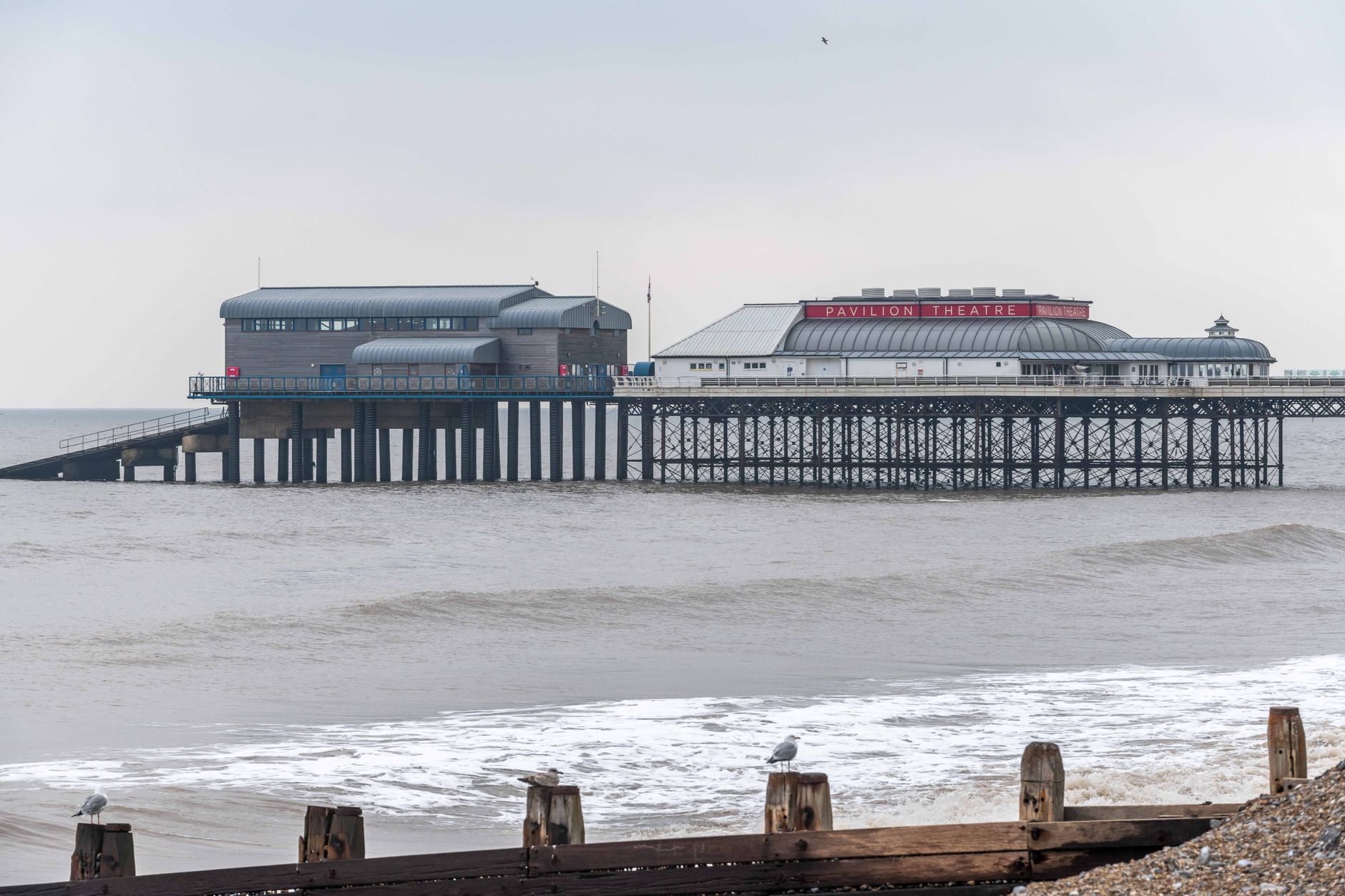
The 56-mile North Norfolk AONB has been protected since 1968. Cromer sits at its eastern end, a cliff-top Victorian resort that takes its food seriously: the local crab is arguably the best in England, and Davies Fish Shop on Garden Street is a reliable place to buy it fresh.
Cromer's Victorian pier hosts live variety shows in the summer, a genuinely unusual survival. The walk west along the clifftop to Overstrand and back gives wide views over the North Sea and returns through the town for a pint at the Red Lion.
On the second day, drive the coast road west through Sheringham to board the North Norfolk Railway, a heritage steam line that winds five miles through farmland to the market town of Holt. From Holt, the road continues to the village of Morston, where boat trips depart for Blakeney Point: a remote shingle spit that holds England's largest seal colony, with over 500 grey and common seals hauled out on the beach. Book in advance with Bean's Boats or Temple's Seal Trips.
Blakeney village itself, with its flint cottages and working quay, is one of the most photogenic places on this coast. Cley Marshes, managed by Norfolk Wildlife Trust, is one of the country's best birdwatching sites.

The drive south from Cromer to Aldeburgh takes about an hour and a half, passing through the Broads and the gentle Suffolk countryside before arriving at a shingle beach unlike any other in England.
Aldeburgh is small, quiet and serious about music. Benjamin Britten lived here from 1947 until his death in 1976, and the Aldeburgh Festival he founded with Peter Pears is now one of Europe's leading classical music festivals, centred on Snape Maltings Concert Hall, 8 kilometres up the River Alde. Even outside festival season, Snape Maltings is worth the trip: converted Victorian malt warehouses housing a concert hall, restaurants, art galleries and independent shops, with walks along the river and around the marshes.
From Aldeburgh, two short drives take in two of Suffolk's great heritage sites. Orford Ness (12 km south) is a remote shingle spit accessible by National Trust ferry from Orford Quay: the site of secret weapons testing during both World Wars and the Cold War, with atmospheric hulks of concrete laboratories still standing on the beach. Sutton Hoo (28 km south-west, near Woodbridge) is where the most significant archaeological discovery in British history was made in 1938: a complete Anglo-Saxon ship burial containing a king's treasure. The National Trust site is beautifully presented, with a reconstruction of the burial chamber and replica of the helmet.
May to September is best for this England east coast road trip. The seals at Blakeney Point are present year-round, but grey seal pups appear from November to January if you can handle the cold. Holkham beach is at its most beautiful and least busy in May and June. The Aldeburgh Festival runs in June. Autumn brings the best birdwatching at Gibraltar Point.
Getting here: Hull is easily reached by rail from London King's Cross via Doncaster. The P&O and Stena Line ferries from Rotterdam and Zeebrugge make a vehicle arrival simple for European visitors. Aldeburgh is 25 km from Ipswich station; trains run to London Liverpool Street in about an hour.
Getting back: Aldeburgh has no railway station. The simplest return is by car to Ipswich, or by bus to Saxmundham station on the East Suffolk line. Allow half a day to reach London.
Accommodation: King's Lynn and Cromer have a good range of hotels and B&Bs in the mid budget. Aldeburgh is small; book well ahead for summer, particularly around the Aldeburgh Festival in June. Campervan travellers will find multiple Camping and Caravanning Club sites along the route, including excellent pitches near Cromer and Holkham.
Food: This coastline is excellent for seafood. Cromer crab, North Norfolk samphire (June to August), Brancaster mussels and Aldeburgh fish and chips are the standouts. For the best fish and chips in Aldeburgh, join the queue at the Golden Galleon on the High Street.
A 10-day loop from Leeds through the Yorkshire Dales, Teesdale, UNESCO Durham and the chalk cliffs and gannet colonies of East Yorkshire: one of England's most varied driving circuits.
The full route — stops, maps, and driving times — is on Routebook by Kington.

Eight days of wide skies and hidden heritage, driving south from the Humber's Victorian docklands through the Lincolnshire nature coast, the medieval ports of Norfolk and the shingle shore of Suffolk.


