

A 12-day drive up the length of England linking seven national parks, from the tors of Dartmoor to the dark skies of Northumberland, with market-town bases and a proper leg between each one.
England has ten national parks, and most people only ever see one of them. This England national parks road trip itinerary strings seven together in twelve days, working from the far south west to the Scottish border. It is a long drive, but never a dull one, because each park hands over to something completely different: granite moor, wooded combe, limestone dale, heather, fell, and finally the emptiest country in England under the darkest sky in Europe.
The route runs one way, Tavistock to Rothbury, with a flight or train home from Newcastle. Bases are market towns rather than resorts, which keeps costs sensible and puts you in a pub with walkers rather than a hotel lobby. Every overnight move is a real leg of one to four hours, so it feels like a journey rather than a series of hops.
The drive covers Dartmoor, Exmoor, the Peak District, the North York Moors, the Yorkshire Dales, the Lake District and Northumberland. The three it leaves out, the New Forest, the South Downs and the Broads, all sit in the south and east and would add days of motorway for landscapes you can easily visit on their own. Seven in twelve days is already ambitious. Most guides reckon on three or four parks in ten days, which tells you how much of this itinerary is spent driving between them rather than lingering.
Start in Tavistock, an old stannary town on the western edge of Dartmoor and part of the Cornwall and West Devon Mining Landscape World Heritage Site. Two nights is the minimum for the moor.

Walk up to Wistman's Wood from Two Bridges, a stunted oak wood draped in moss and lichen that looks like nowhere else in England. Climb Haytor for the easiest big view on the moor. Drop into Lydford Gorge, where the River Lyd cuts a wooded ravine down to the White Lady waterfall. The moor roads are unfenced, so slow right down after dark when ponies and sheep are on the tarmac.
An easy hour and a bit north east brings you to Dulverton, where the River Barle leaves the moor. Exmoor is smaller and softer than Dartmoor, with deep wooded valleys, red deer and a coastline of high cliffs.
Walk the Barle up to the Tarr Steps, the ancient clapper bridge, and drive up to Dunkery Beacon for the highest view on Exmoor. Stay up afterwards: Exmoor was Europe's first International Dark Sky Reserve, and on a clear night you can pick out the Milky Way from the open moor with no equipment at all.
This is the long one, four hours or so up through Somerset and the Midlands to Bakewell. It is worth it. The Peak District was Britain's first national park, designated in 1951, and it packs more into a small area than anywhere else on the route.
A 10-day southern France loop: Marseille's Calanques, Arles' Roman ruins and the Camargue, Saint-Tropez's beaches, and three nights on the French Riviera at Nice.

Give it two nights. Walk or cycle the Monsal Trail, eight and a half traffic-free miles along an old railway through lit tunnels and over the Headstone Viaduct. Spend half a day at Chatsworth House, and another at Castleton for the Winnats Pass, the Mam Tor ridge and the show caverns underneath. Bakewell's riverside car parks fill by mid-morning at weekends, so start early or park out at Hassop Station.
East and north to Helmsley, a honey-stone market town with its own castle ruin and walled garden at the southern edge of the North York Moors.
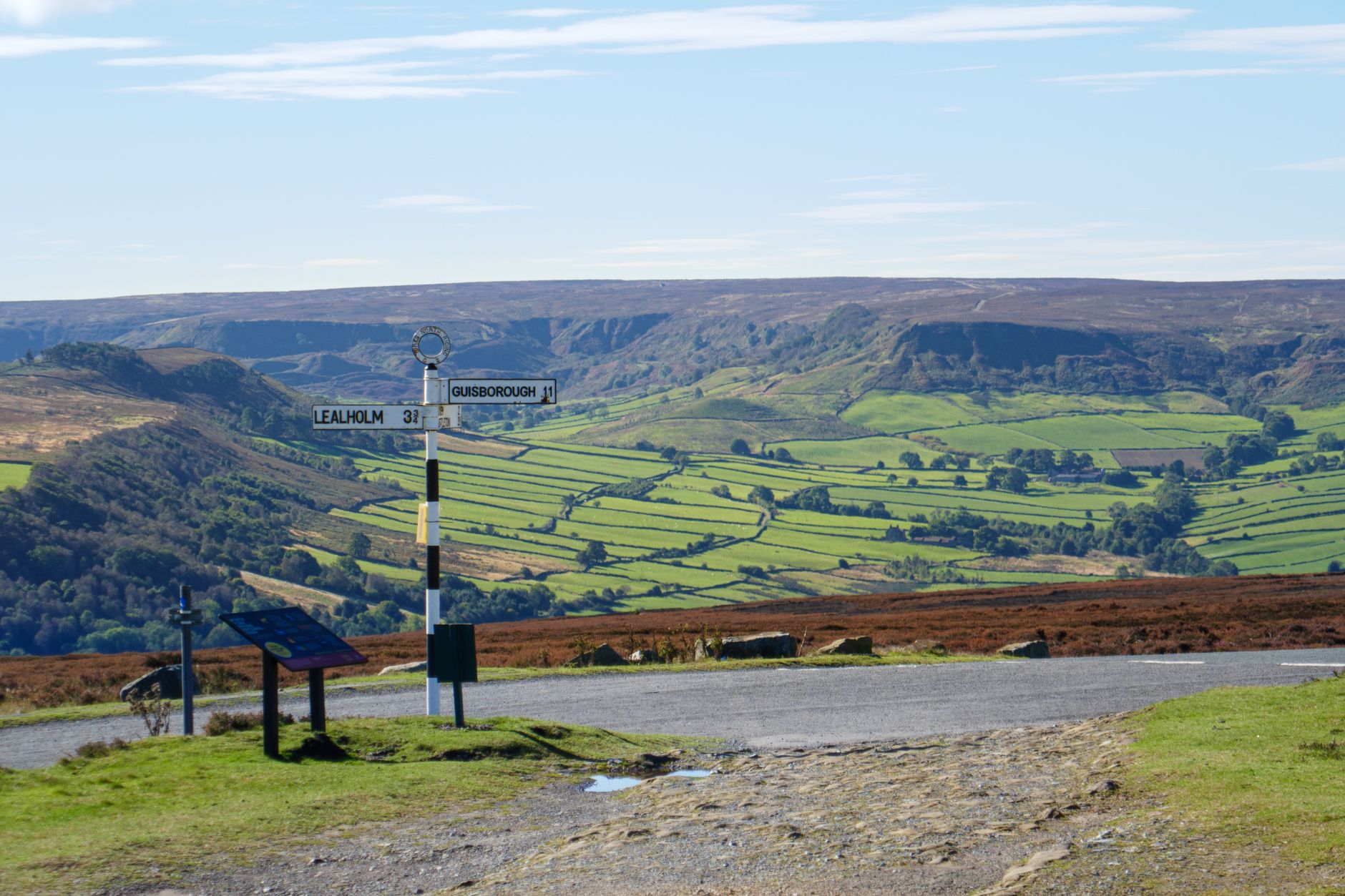
Rievaulx Abbey sits three miles up the valley, a Cistercian ruin that was one of the great abbeys of medieval England until the Dissolution. Sutton Bank, a few miles west, gives a long view over the Vale of York from the escarpment edge. If you have the time, the North Yorkshire Moors Railway runs steam trains from Pickering across the moors to Whitby. Time this leg for mid-August to early September and the moors are purple with heather.
West across the Vale of York to Hawes, the highest market town in Yorkshire and the obvious overnight in upper Wensleydale. The Dales are the gentlest landscape on the route, all dry stone walls and field barns, and Hawes is a working town rather than a showpiece.
Watch cheese being made at the Wensleydale Creamery, then walk to Hardraw Force, a single-drop waterfall reached through the grounds of the Green Dragon Inn for a small charge at the bar. Leave next morning over the Buttertubs Pass, the serpentine moor road north into Swaledale, which is one of the finest short drives in England.
An hour and a half west and you are in the Lake District, a World Heritage Site and the walking capital of England. Keswick, on Derwentwater, is the best base at the northern end.
Walk Catbells, about three hours return, for the classic view down Derwentwater. Take the launch round the lake, and visit the Castlerigg stone circle early or late when the coach parties have gone. Then drive Borrowdale up to Honister Pass, where England's last working slate mine runs tours and a via ferrata. Honister hits gradients of 1 in 4, so take the descent in low gear.
The last leg runs north east to Rothbury, the capital of Coquetdale, in the least visited national park in England. After eleven days of busy honeypots this feels like the reward.
Cragside sits above the town, the Victorian house of the inventor Lord Armstrong and the first house in the world lit by hydroelectricity, surrounded by a vast rhododendron estate. Behind it the Simonside ridge gives a half-day walk with views to the Cheviots and the North Sea. Stay up for the sky: Northumberland holds the largest area of protected darkness in Europe, and on a clear night the difference is obvious.
How long: twelve days as written, with eleven nights. Cut it to eight by dropping Exmoor and the North York Moors, or stretch it to a fortnight by adding a second night in Hawes and Helmsley.
When to go: May to September. The moorland roads are far more pleasant in long daylight, the heather is out in late August, and the boat trips and steam trains run on full timetables. Dark sky watching is better at the shoulders of that window, when the nights are properly dark.
Driving: legs are one to two hours apart, except the long haul from Exmoor to the Peak District, which is around four. Roads are good throughout but often single track and unfenced inside the parks, with livestock on them.
Where to stay: market-town inns and small hotels suit this route, and there are campsites in every park if you are in a campervan. Book the Lake District and the Peak District well ahead in July and August. The far end of the route, in Coquetdale, is the quietest and the easiest to book late.
A 10-day loop from Leeds through the Yorkshire Dales, Teesdale, UNESCO Durham and the chalk cliffs and gannet colonies of East Yorkshire: one of England's most varied driving circuits.
The full route — stops, maps, and driving times — is on Routebook by Kington.

A 12-day drive up the length of England linking seven national parks, from the tors of Dartmoor and the red deer of Exmoor to the Dales, the Lakes and the dark skies of Northumberland.


