

Hadrian's Wall is the most visited Roman monument in northern Europe and the most underexplored major route in northern England. This five-day loop from Carlisle covers the Wall's finest stretches at Housesteads, Vindolanda and Steel Rigg, then returns through the quiet Eden Valley via Appleby-in-Westmorland and Penrith.
Hadrian's Wall is the most visited Roman monument in northern Europe, a 73-mile barrier built from AD 122 on the orders of Emperor Hadrian to mark and defend the northern limit of the Roman empire. It is also one of the most underexplored major routes in England. Most visitors drive to one or two forts and leave. This itinerary spends five days along the Wall and through the Eden Valley that lies to its south, covering it properly.
The Wall runs east to west in a broad arc across northern England. Driving it lets you move between the key sites at your own pace, stop at viewpoints when the light is right, and reach places the Hadrian's Wall bus does not serve. The A69 is fast and straight; the B6318, the old Military Road built on the course of the Wall itself, is slower and more atmospheric. This loop uses both.
The Eden Valley is the natural return route. The broad valley between the Pennines and the Lake District is pastoral and unhurried: market towns like Appleby-in-Westmorland and Penrith have been trading since the medieval period. Adding them to a Wall itinerary doubles the range of the trip without adding much driving.
Carlisle has a mainline station on the West Coast Main Line, with direct trains from London Euston (3 hours), Manchester (1h45m) and Glasgow (1h15m). The M6 motorway connects Carlisle to the south; the A74 and M74 continue north to Scotland. The city is a straightforward overnight stop if you're travelling from the south.

Carlisle is the western anchor of this loop. The Norman castle at the north end of the city centre was begun in 1092 by William Rufus and held against Scottish sieges for centuries. Mary Queen of Scots was imprisoned here briefly in 1568 after fleeing across the border. The castle is managed by English Heritage and contains the Cumbrian Museum of Military Life.
Carlisle Cathedral, founded in 1122, is the second smallest in England but has exceptional medieval stained glass in the east window and intricately carved choir stalls dating from the 14th century. It is also the only English cathedral that was ever under Scottish rule, from 1135 to 1157 during the reign of King David I of Scotland. Entry is free.
Tullie House Museum and Art Gallery, a short walk from the cathedral, has the clearest explanation of Roman Carlisle and the Wall's western terminus at nearby Bowness-on-Solway. It is free and is the best way to understand the Wall's context before driving east along it.
With Carlisle explored, the Wall corridor opens up a short drive east. Brampton, a quiet red-sandstone market town 15 km away, makes an easy day trip and a good introduction to the western Wall.
A 10-day southern France loop: Marseille's Calanques, Arles' Roman ruins and the Camargue, Saint-Tropez's beaches, and three nights on the French Riviera at Nice.
The main attraction is Birdoswald Roman Fort, 10 km south on the B6318, where the Wall sits at its most complete above ground. The fort is one of the largest on the Wall; the granary walls still stand to several courses. An interpretive centre covers the garrison's 300-year history.
Two kilometres west of Birdoswald is Lanercost Priory, an Augustinian house founded in 1169 and partly built with stone pulled directly from Hadrian's Wall. The ruins are managed by English Heritage. King Edward I stayed here on campaign against Scotland in 1306 to 1307, making it a significant stop in its own right.
The stretch of Wall between Birdoswald and Willowford Bridge to the east is one of the best-preserved and least visited sections. Walking it takes about 45 minutes each way from the fort car park.
Drive to Haltwhistle: A69 east, about 40 km, 40 minutes.

Haltwhistle is the best base for the most dramatic stretch of Hadrian's Wall. The town makes a practical case for its claim to be the geographical centre of Britain; more importantly, Housesteads Fort, Vindolanda, the Steel Rigg viewpoint and Sycamore Gap are all within 10 km to the north and east, reachable without a long drive from any of them.
Day 2: Housesteads and Steel Rigg. Housesteads Roman Fort, 1 km north of the B6318, is the most visited site on the Wall. Founded around AD 124, the 2-hectare fort held up to 800 soldiers of the First Cohort of Tungrians, a unit from what is now Belgium. The remains include barracks, a hospital, granaries and the only visible Roman communal latrines in Britain. The walk from the car park to the fort takes 15 minutes uphill; the views from the ramparts on the north side are worth the climb.
A 30-minute walk west along the Wall from Housesteads reaches the Steel Rigg viewpoint and the short descent to Sycamore Gap. The Gap is a dramatic dip between two high points of the Wall's ridge; a lone sycamore tree stood here for over a century and was used in the 1991 film Robin Hood: Prince of Thieves. The tree fell in September 2023 in circumstances still under investigation. The gap and the Wall's ridge line remain as striking as ever and are still widely visited.
Day 3: Vindolanda. Vindolanda is 3 km south of the Wall on the B6318, a Roman fort and civilian settlement with the most significant excavated finds from Roman Britain. The Vindolanda writing tablets, discovered from 1973 in the anaerobic waterlogged deposits, are the oldest surviving handwritten documents from Britain. The site has active excavations running from March to September; visitors can watch the dig and, in some years, take part. The museum holds the tablets' facsimiles along with shoes, tools, weapons and everyday objects that give a clearer picture of life on the Roman frontier than anywhere else in the country.
Drive to Appleby: A69 west then A686 south through Alston, 38 km, about 50 minutes.
Appleby-in-Westmorland is the former county town of Westmorland, sitting in a loop of the River Eden with its Norman castle at the top of Boroughgate and St Lawrence church at the bottom. The town is small and understated in the best English market-town way: a long wide main street, a few independent shops, and a cattle market.
Appleby Castle, at the top of Boroughgate, dates from 1100 and was restored by the formidable Lady Anne Clifford in the 17th century. It opens Thursday to Monday from April to October. The castle grounds run down to the Eden; the river walk from the castle to the church is one of the most pleasant 15-minute strolls in Cumbria.
The town is also the site of the Appleby Horse Fair, held for one week each June and attended by tens of thousands of Gypsy and Traveller families from across Europe. It is one of the oldest traditional gatherings of its kind in the world and is a remarkable event to witness if your dates coincide.
Penrith makes an easy day trip from Appleby, 25 km west on the A66, and is the natural gateway to the Lake District from the north.
The red-sandstone town has a ruined 14th-century castle at its edge, a covered market (Tuesdays and Saturdays), a good independent bookshop and several places to eat well. It is quieter than the Lake District proper and tends to be overlooked in favour of it.
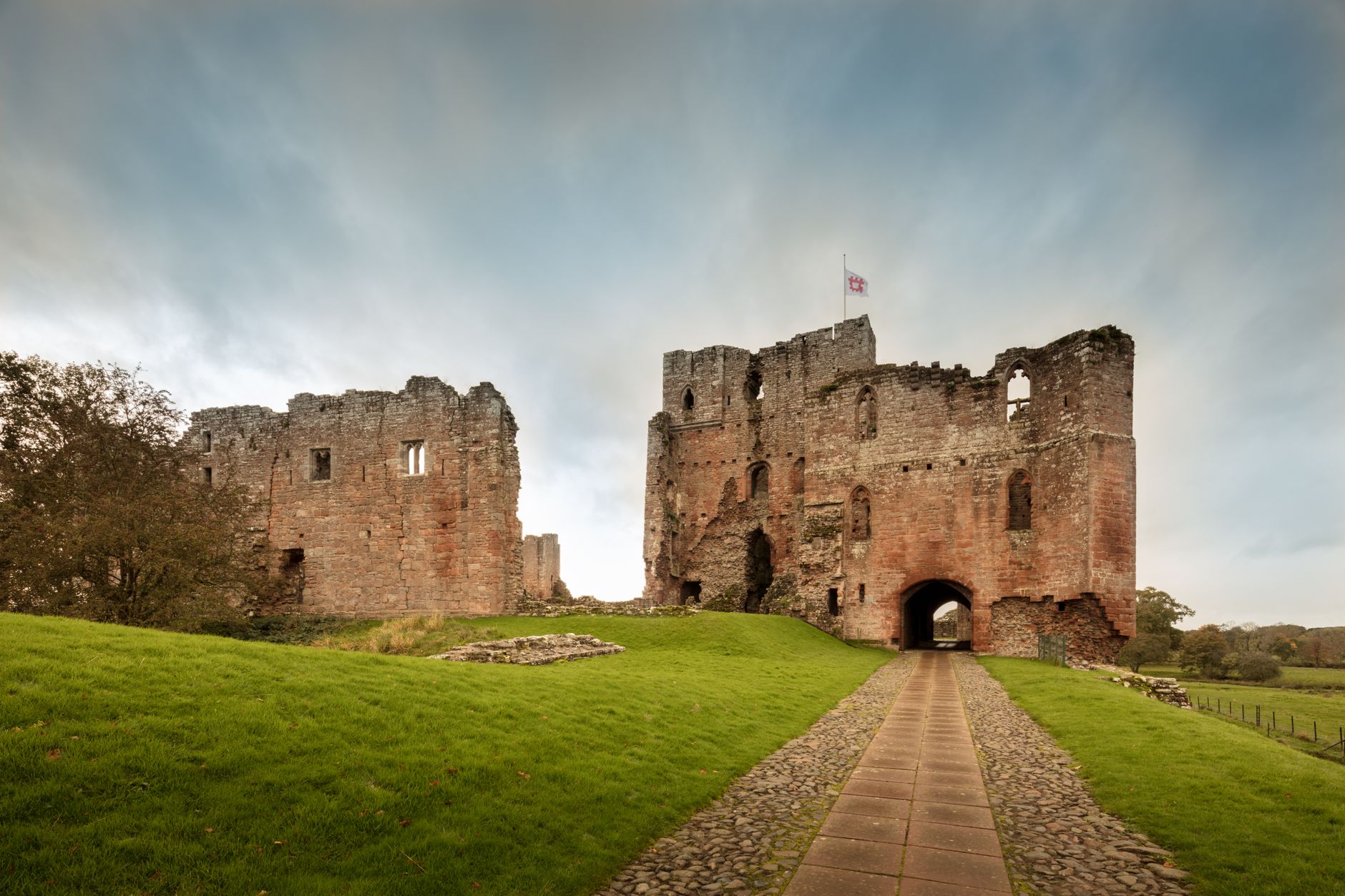
Brougham Castle, 2 km south on the A66 at the confluence of the Eamont and Lowther rivers, is the most significant historic site near the town. The Norman keep was built around 1170 and the outer walls were added and restored by Lady Anne Clifford in the 1650s. It is managed by English Heritage and the setting, with the rivers on two sides and the Pennines behind, is one of the more photogenic in Cumbria.
For those who want to add a half day of Lake District scenery, Ullswater is 15 km south via the A592 from junction 40 of the M6. The road down the east side of Ullswater via Pooley Bridge to Glenridding has some of the finest views in the Lake District.
From Appleby, the A6 north through Penrith connects to the M6, which runs directly north to Carlisle. Total loop: approximately 130 km driven over five days, averaging around 25 km a day.
English Heritage membership covers admission to Carlisle Castle, Birdoswald, Lanercost Priory, Housesteads, and Brougham Castle. If you plan to visit all five, the annual membership pays for itself by the third site.
Vindolanda is independently managed, not EH. Annual membership to the Vindolanda Trust also covers admission to the Roman Army Museum at Carvoran, 3 km west on the B6318.
The B6318 Military Road runs along or near the Wall for most of its course. In summer it is popular with cyclists and walkers; allow extra time if driving on busy weekends.
Best season: The Wall is open year-round. April to October gives the best walking conditions and all sites are open. The summer solstice in June is popular but busy. November to March has short days and some sites have reduced hours, but the Wall itself is rarely crowded.
Where to stay: Haltwhistle has a good range of B&Bs and a youth hostel at Once Brewed, right on the Wall. Carlisle, Penrith and Appleby all have independent hotels and B&Bs. Brampton has limited accommodation; booking ahead is essential.
Is a car necessary for this itinerary? For this specific loop, yes. The Hadrian's Wall Bus (AD122) runs seasonally between Hexham and Carlisle, stopping at the main Wall sites, but it does not serve Appleby or Penrith and runs only in summer. For year-round flexibility and the Eden Valley section, a car is essential.
Can you walk sections of Hadrian's Wall? Yes. The Hadrian's Wall Path National Trail runs the full 84 miles from Wallsend in Newcastle to Bowness-on-Solway near Carlisle. Many visitors drive the route and walk individual sections on day walks: Steel Rigg to Sycamore Gap (3 km one way), Housesteads to Milecastle 37 (1 km) or the full Housesteads to Steel Rigg stretch (2 km) are all excellent shorter walks.
Is Sycamore Gap worth visiting after the tree fell? Yes. The tree fell in September 2023 and the stump has been retained. The site is still one of the most dramatic viewpoints on the Wall, and the gap in the ridge is striking whether or not the tree is present. Conservation work around the stump is ongoing.
A 10-day loop from Leeds through the Yorkshire Dales, Teesdale, UNESCO Durham and the chalk cliffs and gannet colonies of East Yorkshire: one of England's most varied driving circuits.
The full route — stops, maps, and driving times — is on Routebook by Kington.

A five-day clockwise loop from Carlisle following Hadrian's Wall east through Brampton and Haltwhistle, then south through the Eden Valley via Appleby-in-Westmorland and Penrith. Covers Housesteads Fort, Vindolanda, the Steel Rigg viewpoint, and the historic market towns of the Eden Valley.


