

A 13-day drive up the length of England through the houses, graves and landscapes of Chaucer, Austen, Hardy, Shakespeare, the Brontës, Wordsworth and Bram Stoker.
English literature is unusually easy to drive. The writers who defined it were rooted, sometimes stubbornly, in single places: a cathedral city, a brick house in a Hampshire village, a stretch of chalk downland, a parsonage on the edge of a moor. Those places survive, most of them are open to visitors, and they happen to fall in a rough line up the map from Kent to the North Yorkshire coast.
This literary England road trip itinerary joins eight of them into a single 13-day drive. It starts where English storytelling arguably starts, at the shrine in Canterbury that Chaucer's pilgrims were riding towards, and ends where the most famous Gothic novel in the language was dreamt up, on the cliff at Whitby. In between you get Jane Austen twice, Thomas Hardy's Dorset, Shakespeare's Warwickshire, the Brontës' Pennines and Wordsworth's Lakes.
The drives are the point as much as the houses. Legs run between roughly an hour and a half and three and a quarter hours, so every day genuinely moves you somewhere new, and the landscape changes character with the literature: Kentish orchards to Hampshire chalk to Dorset downland to Cotswold stone to Pennine gritstone to Lakeland fell to North Sea cliff.
Because reading these books somewhere else and then standing in the room they were written in are two different experiences. Austen's writing table at Chawton is the size of a chessboard. The Brontë parsonage has moorland starting at the back gate, which explains Wuthering Heights more efficiently than any introduction. Hardy's chalk downs around Dorchester are still recognisably Wessex.
It is also a low-effort trip physically. Almost everything is a house, a church, a museum or a town centre. The one demanding day is optional: the moor walk above Haworth.
Start in Canterbury. One night is enough, but give yourself an evening inside the walls once the day trippers have gone.
The cathedral is the reason you are here. Becket was murdered in the north-west transept in 1170, the shrine that grew up around his tomb became the richest pilgrimage in England, and Chaucer's Canterbury Tales is a portrait of the people making that journey. Stay at Canterbury Cathedral Lodge inside the precincts if you can; the rate includes cathedral admission and you get the close to yourself after the gates shut. Eat at The Goods Shed, a permanent farmers' market with a restaurant above it by Canterbury West station.
A little over two hours west brings you to Winchester, the old capital of Wessex and the city where Jane Austen died in 1817. She is buried in the north aisle of the cathedral under a black marble slab whose inscription praises her character at length and never mentions that she wrote anything.
Give Winchester two nights, because the second day belongs to Chawton, 16 miles north-east. The modest brick house there is where Austen revised and published all six novels, and it is presented as a working home rather than a monument. Book ahead in summer, and note that last admission is 4pm.
A 10-day southern France loop: Marseille's Calanques, Arles' Roman ruins and the Camargue, Saint-Tropez's beaches, and three nights on the French Riviera at Nice.
Back in Winchester, the Wykeham Arms sits between the cathedral and the college and does rooms as well as food. The Chesil Rectory, a 15th-century timbered dining room, is the city's oldest commercial building.
An hour and a half west and you are in Thomas Hardy's Casterbridge. Dorchester is small, and the two Hardy houses sit at either end of it. Hardy's Cottage at Higher Bockhampton is the thatched house he was born in and wrote Far from the Madding Crowd in. Max Gate, on the southern edge, is the house he designed for himself in 1885 and wrote in until he died in 1928. Both are National Trust; the cottage only opens mid-March to October, Wednesday to Sunday, so check before you drive out.
The Dorset Museum in town holds the largest Hardy collection in the world, including a recreation of his study. Stay at The King's Arms, the Georgian coaching inn that appears by name in The Mayor of Casterbridge and reopened in 2021 after a full refurbishment.
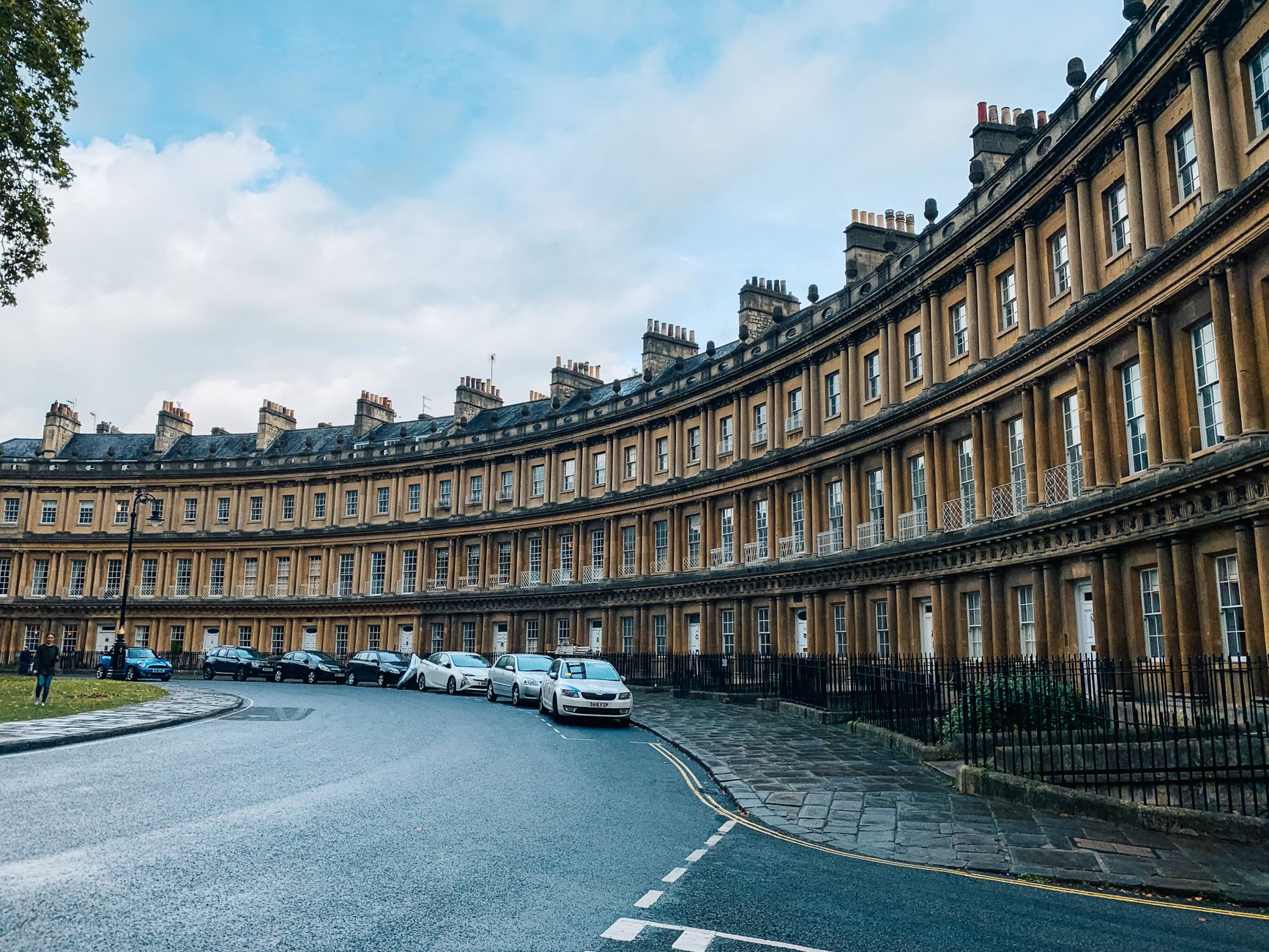
Bath is the most honest stop on this trail. Austen set Northanger Abbey and Persuasion here, lived here for five years, and by most accounts was relieved to leave. The city she disliked is now one of the best-preserved Georgian townscapes in Europe, and two nights lets you walk the Roman Baths, the Royal Crescent, the Circus and the Assembly Rooms without hurrying between them.
Bath has a clean air zone and almost no central parking, so use the Lansdown or Odd Down park and ride and leave the car for both days. Hotel Indigo occupies a terrace of Georgian townhouses on South Parade. Sally Lunn's has been serving its trencher bun in one of the city's oldest buildings since the 1680s.
Under two hours north-east through the Cotswold fringe. Stratford needs little introduction, and the risk is treating it as a checklist: birthplace on Henley Street, Anne Hathaway's Cottage at Shottery, grave in Holy Trinity Church by the river.
The second night is what turns it into something better. Book a Royal Shakespeare Company performance at the theatre on Waterside, a few hundred metres from the grave, and have a drink beforehand at the Dirty Duck, the actors' pub next door. A combined Shakespeare Birthplace Trust ticket is worth it if you plan on more than one family house.
The longest drive of the trip, a little over three hours north, and the mood changes completely.
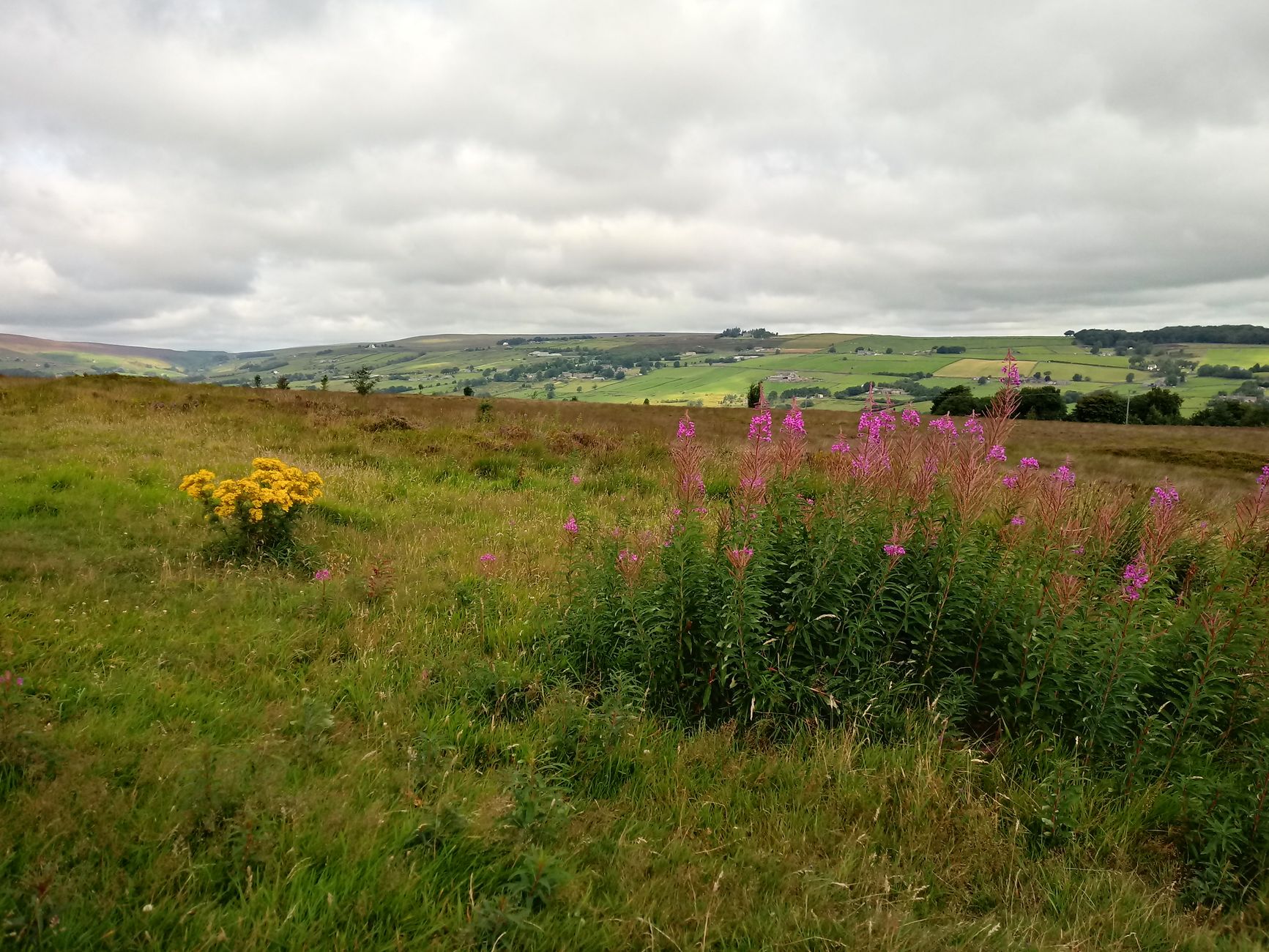
Haworth is a steep cobbled street climbing to a churchyard, with the parsonage behind it and open moor starting immediately after that. Charlotte, Emily and Anne Brontë wrote Jane Eyre, Wuthering Heights and The Tenant of Wildfell Hall in that house, and the Brontë Parsonage Museum keeps it close to how they left it.
If the weather holds, take the moor path from the museum out to the Brontë Waterfall and on to Top Withens, the ruined farmhouse long linked to the Earnshaw house in Wuthering Heights. It is 4 to 5 miles round trip and takes two to three hours. Wear boots. The Old White Lion sits at the top of Main Street; Cobbles & Clay a few doors down does the best daytime food in the village.
Two hours north-west over the Pennines and into the Lake District.

Wordsworth lived at Dove Cottage with his sister Dorothy from December 1799 to May 1808, and almost everything of his that people still read comes from those years. The cottage and the Wordsworth Museum beside it open Tuesday to Saturday, 10am to 4pm, and deserve two to three hours. His grave is in St Oswald's churchyard across the road, and Grasmere Gingerbread is made in the old village school beside it to an 1854 recipe.
With a second day, drive down the valley to Rydal Mount, his home from 1813 until his death in 1850, or walk the easy circuit of Grasmere and Rydal Water. Eat at the Jumble Room, an eccentric village restaurant that has been the best table here since 1996.
The last leg cuts east across the top of England, a bit over three hours, and finishes on the North Sea.

Bram Stoker came to Whitby on holiday in 1890, found the name Dracula in a book in the local library, and took the town wholesale into the novel: the ruined abbey on the cliff, the 199 steps up to St Mary's, and the wreck on Tate Hill Sands, which he lifted from the real grounding of the Russian schooner Dmitry five years earlier.
Climb the steps in the evening when the day trippers have gone. Eat fish at the Magpie Café on Pier Road, trading since 1939, and book if you would rather not queue. YHA Whitby occupies Abbey House on the East Cliff, which puts you closer to the ruins than anywhere else in town.
How long: 13 days is comfortable. Cut it to nine by dropping to one night in Winchester, Bath and Stratford, though you lose Chawton and the RSC evening, which are two of the best things on the route.
When to go: April to October. Hardy's Cottage closes from November, and the moor walk above Haworth and the fell paths at Grasmere want long daylight.
Driving: legs run from about an hour and a half to three and a quarter hours, all on good roads. The two long ones are Stratford to Haworth and Grasmere to Whitby; start those in the morning.
Where to stay: city and village hotels and inns suit this route, with a couple of very good YHA properties in the Lakes and at Whitby. Book Stratford, Bath and Grasmere well ahead in summer.
Opening days catch people out. Dove Cottage is closed Sundays and Mondays, and Hardy's Cottage runs Wednesday to Sunday in season. Sketch the trip against those two before you fix your dates.
A 10-day loop from Leeds through the Yorkshire Dales, Teesdale, UNESCO Durham and the chalk cliffs and gannet colonies of East Yorkshire: one of England's most varied driving circuits.
The full route — stops, maps, and driving times — is on Routebook by Kington.

Drive the length of England through the houses, graves and landscapes of its greatest writers, from Chaucer's Canterbury and Jane Austen's Hampshire to the Brontë moors, Wordsworth's Grasmere and Bram Stoker's Whitby.

