

A 7-day driving circuit from Durham through England's most unspoilt upland: High Force waterfall, England's highest market town, and Weardale's lead-mining heritage.
England's second-largest Area of Outstanding Natural Beauty is also one of its least-visited. The North Pennines stretch across County Durham and Cumbria, containing high moorland dotted with lead-mining ruins, river valleys shaped by ancient glaciers, and a waterfall that stops conversations dead. This north pennines teesdale road trip itinerary covers seven days, six overnight stops, and around 110 miles of driving through two distinct dales, none of it rushed.
This is a culture-and-landscape circuit for travellers who want genuine English wilderness without a long journey from the main rail network. It suits anyone with an interest in cathedral architecture, industrial heritage and upland walking. The route works particularly well in spring, when Teesdale's rare wildflower meadows are at their best, and in early autumn, when the river valleys colour up and visitor numbers fall. All drives are under 45 minutes.
Start in Durham, one of England's great surprise cities. The Cathedral and Castle sit on a dramatic river-bend promontory above the River Wear and together form the finest ensemble of Norman architecture in the country. They have been a joint UNESCO World Heritage Site since 1986.
Arrive before evening on Day 1 and walk the riverside loop below Palace Green. On Day 2, go inside: the Cathedral is free to enter, and the nave deserves thirty minutes of quiet attention. Reserve the afternoon for the Oriental Museum and the independent lanes of Saddler Street. Durham's food and drink scene is strongest on quality bistros and real ale pubs, particularly along the riverfront.
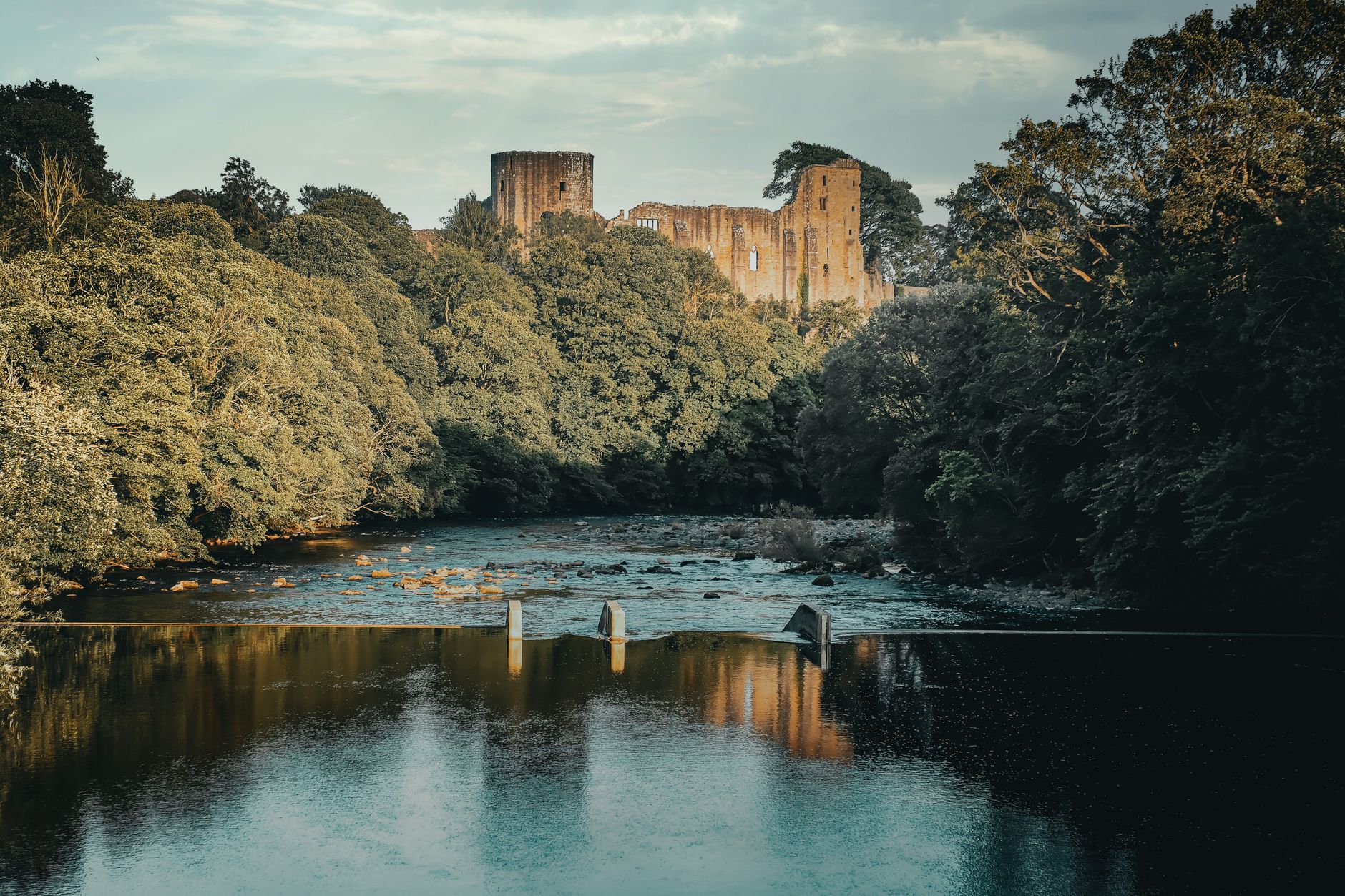
Leave Durham on the A688 south-west for 35 miles. Barnard Castle is Teesdale's principal market town, built on a rocky promontory above the river that gives the place its name.
The Bowes Museum deserves two hours of your morning. Built in the 1870s to resemble a French chateau, it rises from the surrounding countryside in a way that never quite stops surprising. Inside are 58,000 objects including Goya, Canaletto and Van Dyck. The Silver Swan, an 18th-century automaton, performs its routine every day at 2pm and is the one thing everyone talks about afterwards.
After lunch, walk across the Demesnes meadows to the 12th-century castle ruins above the Tees. The views from the keep are worth the English Heritage admission.
A 10-day southern France loop: Marseille's Calanques, Arles' Roman ruins and the Camargue, Saint-Tropez's beaches, and three nights on the French Riviera at Nice.
Take the B6277 north-west from Barnard Castle for 11 miles to Middleton-in-Teesdale. Drop your bags and drive four more miles to High Force: England's largest uninterrupted waterfall, where the Tees drops 21 metres over a hard dolerite sill. The half-mile path from the car park is well surfaced and takes around 20 minutes. Arrive before 11am in July and August to avoid the coaches.
The afternoon works two ways. Walkers can continue upstream along the Teesdale Way to Cauldron Snout, a longer cascade with views across the Cow Green reservoir. Non-walkers will find the Bowlees Visitor Centre, two miles east of High Force, a good introduction to the dale's geology and lead-mining past.
From Middleton, the B6277 climbs over the Pennine watershed in 22 miles, with open moorland on both sides. Alston is England's highest market town at around 300 metres, with a steep cobbled main street and 17th-century stone buildings. The South Tynedale Railway runs narrow-gauge heritage trains through the South Tyne Valley from here: England's highest narrow-gauge line, operated by volunteers. Check the timetable before you go, as it runs on selected days.
Three miles east at Nenthead, the Nenthead Mines Heritage Centre documents the lead-mining era that shaped the North Pennines over three centuries.

From Alston, the A689 runs east through the upper reaches of Weardale, passing the county boundary into County Durham and dropping gradually towards Stanhope. Stop at Killhope Lead Mining Museum, 9 miles west of Stanhope, which occupies a striking hillside site at the dale head. The restored 34-foot waterwheel, mine tunnels and ore-processing machinery are among the best-preserved lead-mining remains in England. Open April to October.
Stanhope itself is a quiet market town with a good range of cafes and shops and a handsome parish church. The Weardale Steam Railway runs heritage trains east through the valley from here towards Bishop Auckland, a good afternoon option if Killhope takes up the morning.
The A689 from Stanhope east to the A693 at Tow Law, then south, returns to Durham in around 25 minutes, completing the two-dale circuit.
Spring and early autumn are the best seasons. Teesdale's rare wildflower meadows, including the Teesdale violet and spring gentian, peak in May and June. October brings warm colours along the river valleys. Winter is possible but the B6277 between Middleton and Alston can carry ice and snow, and some rural guesthouses close from November to March.
Durham is on the East Coast Main Line with direct trains from London King's Cross (2h45), Edinburgh (1h15) and Leeds (1h05). A car is essential from Durham onwards.
Durham has the widest choice, from budget hotels near the station to boutique options in the Bailgate. Barnard Castle has reliable market-town inns. Book early for Middleton-in-Teesdale in summer, as the town has a handful of guesthouses and the High Force Hotel. Alston and Hexham both have solid B&B options; Hexham also has a good hotel on the main square.
Mid-range. Expect £80 to £150 per night outside Durham and £100 to £200 in the city. Entry fees at the Bowes Museum, Durham Castle and Hadrian's Wall sites run to around £15 to £30 per person on busy days. Petrol costs are low given the compact distances involved.
A 10-day loop from Leeds through the Yorkshire Dales, Teesdale, UNESCO Durham and the chalk cliffs and gannet colonies of East Yorkshire: one of England's most varied driving circuits.


