

A practical 10-day Peloponnese road trip itinerary from Athens, covering Mycenae, Nafplio, Olympia, the Mani coast, and the Byzantine cliff-town of Monemvasia.
Ten days is the right amount of time to see the Peloponnese properly. Long enough to slow down in Nafplio, spend a full day at Ancient Olympia without rushing, and drive the winding coastal roads of the Mani at a pace that allows stops. This Peloponnese road trip itinerary starts and finishes in Athens, circling the peninsula in a clockwise loop.
The Peloponnese is a large peninsula connected to the Greek mainland by the Corinth isthmus. Roads are generally good: a tolled dual carriageway connects Athens to Corinth, and two-lane asphalt roads serve the interior and coast. Some sections in the Mani peninsula are narrow but perfectly manageable in a standard car. A rental car is essential; public transport does not link the archaeological sites and smaller towns efficiently.
Travellers who want the highlights of ancient and Byzantine Greece at a relaxed pace, combined with coastal scenery and good food. Driving legs are short (one to three hours), the ruins reward a slow pace, and the Mani coast offers excellent swimming and hiking. The route works well as a first trip to Greece, or as a second visit for those who have already done Athens.
Athens (2 nights) → Corinth (1 night) → Nafplio (2 nights) → Olympia (2 nights) → Kardamyli (2 nights) → Monemvasia (1 night) → Athens
Total: 10 nights, approximately 900 km of driving.
Start in the capital with two nights. The Acropolis and the National Archaeological Museum are both essential; book timed entry online to avoid queues at the gate. The Monastiraki flea market and the neighbourhood streets of Plaka and Psyrri reward an afternoon wander. Athens is also where you collect your rental car, most conveniently from the airport on day three.
The drive from Athens to Corinth follows the Ionia Odos motorway and takes around 90 minutes. The Corinth Canal is a free stop: an 80-metre-deep slot cut through solid rock, with a bridge walkway above the water. Ancient Corinth, 5 km inland, is a larger and less crowded site than expected, with the Temple of Apollo standing above the Roman forum and an excellent museum. One night here before continuing south.
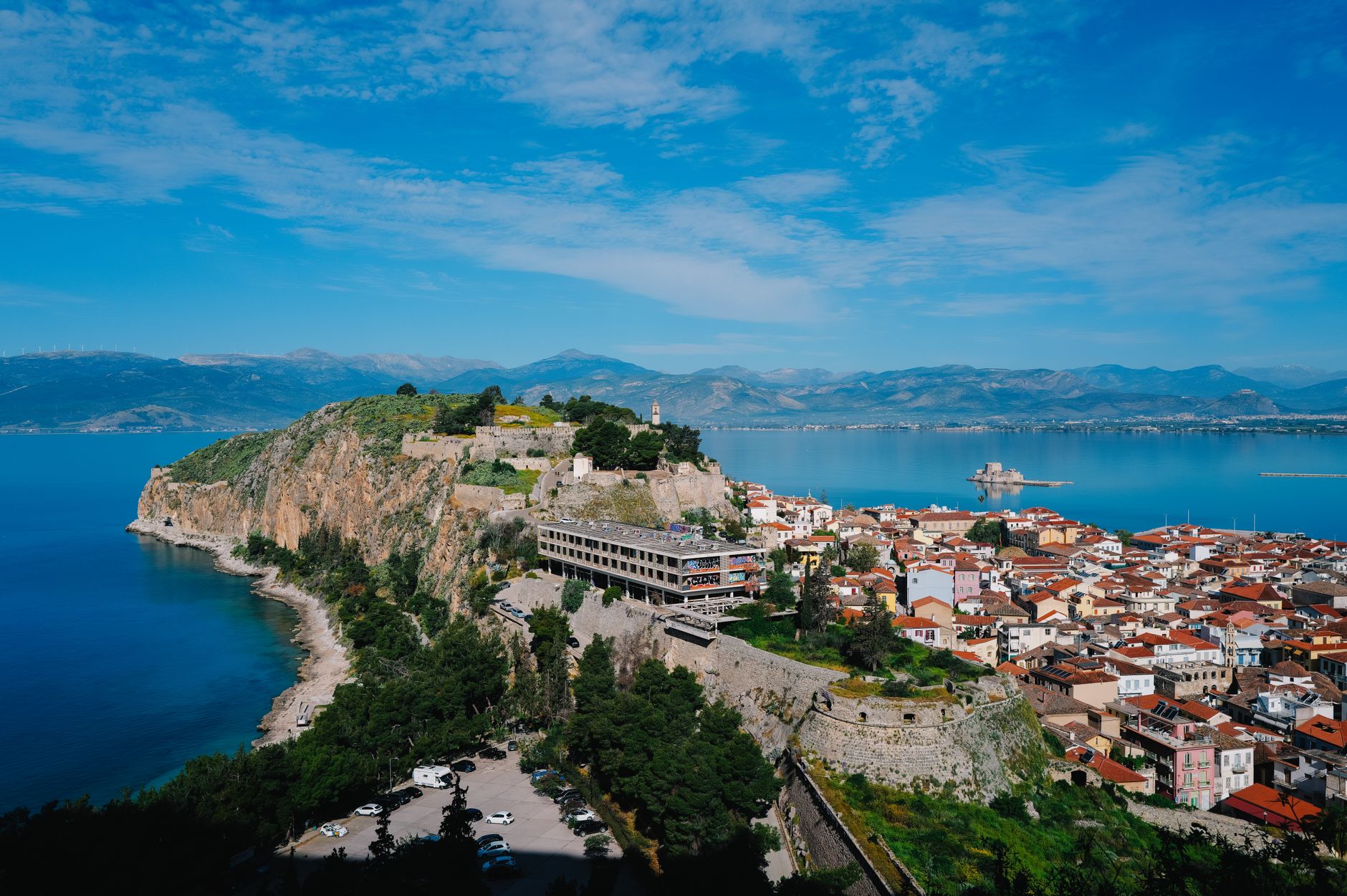
Nafplio is the most photogenic town in the Peloponnese, and the best base for the northeast. The Venetian old town has a castle at each end: Palamidi above (reached by 999 steps or a short drive), and the Bourtzi island fortress in the harbour. Two nights allows two day trips. Ancient Mycenae (50 minutes by car) is one of the great Bronze Age sites, with the Lion Gate, the Treasury of Atreus beehive tomb, and sweeping views across the Argolid. The theatre at Epidaurus (40 minutes) has near-perfect acoustics and a setting among pines that justifies its UNESCO status. Book both sites online in summer.
A 10-day southern France loop: Marseille's Calanques, Arles' Roman ruins and the Camargue, Saint-Tropez's beaches, and three nights on the French Riviera at Nice.

The drive from Nafplio to Olympia crosses the central Peloponnese via Tripoli and takes around three hours. Olympia is both a ruin and a pilgrimage: the ancient Olympic Games began here in 776 BC, and the site is large enough to need two days. On the first afternoon, walk the main site: the Temple of Zeus (now a field of toppled columns), the Philippeion, and the original stadium with its starting line intact. On the second morning, spend at least two hours in the museum before the coach parties arrive. The museum houses the spectacular sculpted pediments from the Temple of Zeus and the Hermes of Praxiteles.
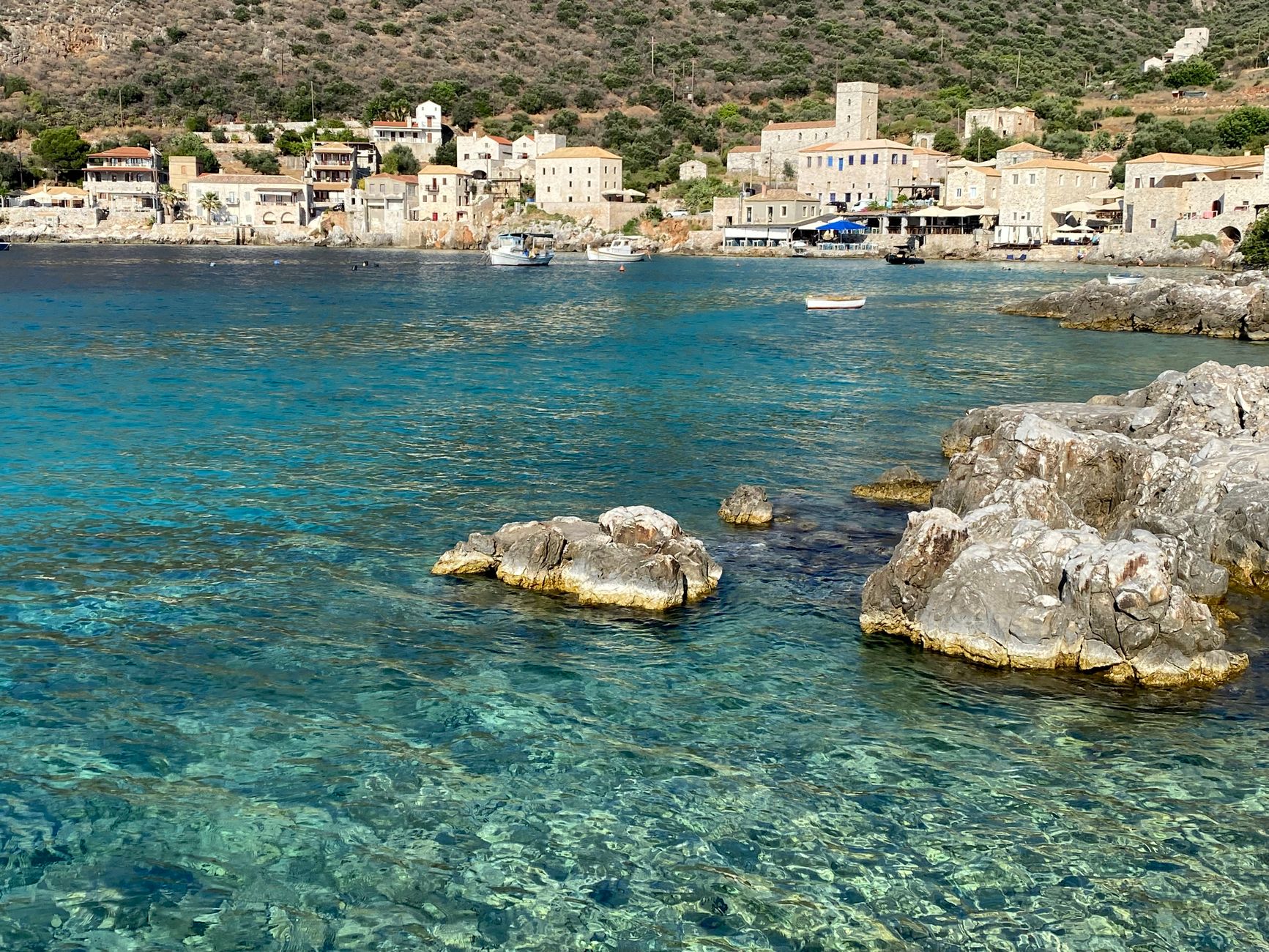
Kardamyli sits where the Taygetos mountains meet the Messenian Gulf in outer Mani. The village is small, stone-built, and genuinely beautiful: pebble beaches and clear water below, mountain paths above. Two nights allows the Viros Gorge walk (three to four hours return, passing Byzantine chapels and stone bridges) and time on the beach. Patrick Leigh Fermor spent decades writing here; his book Mani is worth reading before or during the trip. Restaurants serve fresh fish and good local olive oil. Reserve ahead in summer, and carry cash: ATMs are limited in the Mani.
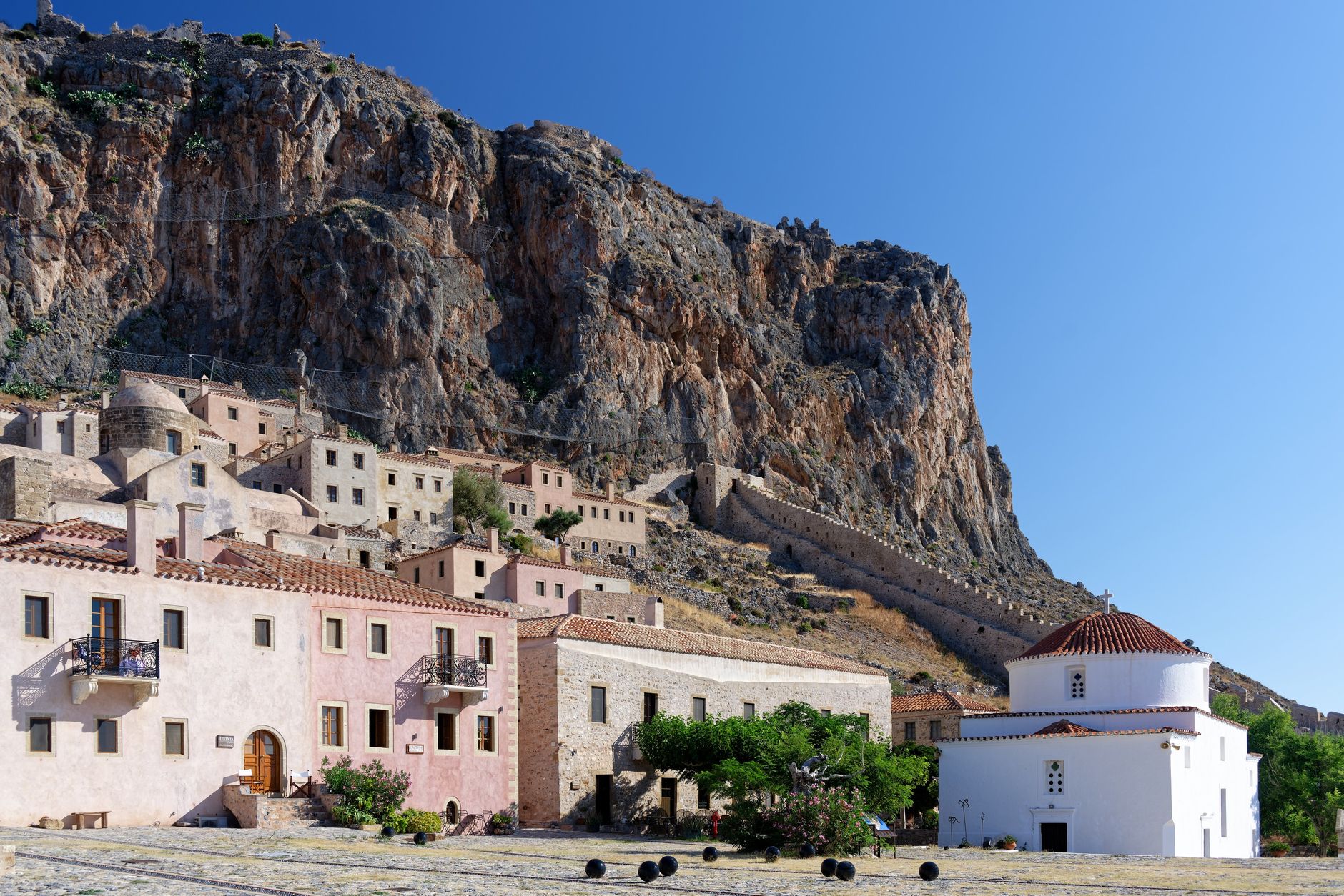
Monemvasia is one of the most dramatic sites in Greece: a Byzantine town built onto a massive rock, connected to the mainland by a single causeway. The lower town is mostly medieval, traffic-free, and surprisingly intact, with Byzantine churches, old stone houses converted to hotels, and a handful of excellent restaurants. The upper fortress, reached by a steep path, is in impressive ruin with views back across the Laconian Gulf. One night is enough to walk the lower town and climb to the fortress at sunset.
April to June and September to October offer the best conditions: warm enough for swimming, cool enough for the ruins, and quieter than the July and August peak. Summer is very hot at the exposed archaeological sites; spring and autumn bring fewer crowds and lower prices. The route works in winter, as the ruins are open year-round, but some smaller restaurants and guesthouses in the Mani close from November to March.
Rent a car in Athens (airport collection is the most convenient option). The motorway from Athens to Corinth has tolls, payable by cash or card. Roads in the Mani are narrow in sections but accessible to all standard cars. Fuel stations are reasonably spaced throughout the route; do not rely on finding one in Kardamyli itself. Parking is available in most towns, though in Nafplio you are better off leaving the car near the new town and walking into the old town.
In Monemvasia, park on the mainland before the causeway. No vehicles enter the old town. In Nafplio and Corinth, short-stay parking is available close to the sites. Olympia has a large car park adjacent to the site entrance.
Book accommodation in Nafplio and Monemvasia well ahead in summer. Timed entry tickets for Mycenae and Epidaurus should be reserved online. The Peloponnese is a year-round destination, but Mystras near Sparta, worth a day trip from Monemvasia or a stop on the drive back to Athens, adds another layer of Byzantine history to an already rich itinerary.
Ready to plan the detail? Use the route map below to see every stop, driving leg, and overnight on a single map.
A 10-day loop from Leeds through the Yorkshire Dales, Teesdale, UNESCO Durham and the chalk cliffs and gannet colonies of East Yorkshire: one of England's most varied driving circuits.
The full route — stops, maps, and driving times — is on Routebook by Kington.

A 10-day clockwise loop from Athens through the Peloponnese: Bronze Age ruins at Mycenae, the birthplace of the Olympics at Olympia, the wild Mani coast at Kardamyli, and the Byzantine cliff-town of Monemvasia.
 Routebookby Routebook
