

A twelve-day anticlockwise loop of Sardinia, from Cagliari and the Roman port of Tharros to Alghero's Catalan old town, the granite north and the cliff-backed coves of the Gulf of Orosei.
Most people arrive in Sardinia with a beach in mind and never see the rest of it. That is a shame, because the island is roughly 270 kilometres from top to bottom and the drive between its coasts is half the reward. This Sardinia road trip itinerary takes twelve days to go anticlockwise around the whole thing, from the capital in the south to the Catalan northwest, the granite tip that faces Corsica, and the limestone cliffs of the east.
Six bases, five proper driving legs, and nothing longer than about two and three quarter hours behind the wheel. There are no motorways on the island and no tolls, so the roads themselves are part of it: the SS131 running up the spine, the cliff road between Bosa and Alghero, the switchbacks down to Cala Gonone.
Sardinia changes character faster than its size suggests. The southwest is lagoons and archaeology. The northwest speaks Catalan and eats accordingly. Gallura in the north is wind-carved granite and island-hopping. The east is a wall of limestone with beaches you can only reach by boat. Stay in one place and you get one of those. Drive the loop and you get all five, plus a food culture that shifts from bottarga to culurgiones to Vermentino as you go.
The honest catch is timing. July and August are hot, busy, and increasingly rationed, with daily parking quotas on the best beaches. May, June, September and October give you the same sea with a fraction of the queueing.
Start in the capital. Cagliari stacks up a hill above its port, and the old Castello quarter at the top is where the ramparts, the cathedral and the best views are. Walk up through the Bastione di Saint Remy for the view over the Gulf of Angels, take in the Roman amphitheatre cut into the rock, and eat down in the Marina district. Luigi Pomata, on Viale Regina Margherita, is the safe bet for seafood and is listed in the Michelin Guide. Up in Castello, Pani e Casu does traditional Sardinian cooking with a terrace over the harbour.
If you want a beach day before the driving starts, Poetto runs for eight kilometres just east of the centre and a city bus gets you there. Leave the hire car until the morning you depart. Central parking is scarce and Castello is largely pedestrian.
An hour and a half up the SS131 brings you to Oristano and the flat, lagoon-backed Sinis peninsula. This is the archaeological heart of the route. Tharros sits on Capo San Marco at the peninsula's tip, a port founded by the Phoenicians, taken over by Carthage, then Rome, and eventually the capital of the medieval Giudicato of Arborea. An hour walking the excavated streets above the sea is enough.
The beaches here are unlike anywhere else on the island. Is Arutas is made of quartz grains the size and colour of rice, ranging from white through green to pale pink, with the protected island of Mal di Ventre offshore. Mari Ermi and Putzu Idu are quieter versions a few minutes north. Taking the sand is illegal and fined, so shake your shoes out before you go.
A 10-day southern France loop: Marseille's Calanques, Arles' Roman ruins and the Camargue, Saint-Tropez's beaches, and three nights on the French Riviera at Nice.
For dinner, drive into Cabras. Il Caminetto has been cooking the local seafood for years and is the place to try bottarga, the cured mullet roe that Cabras is known for, and merca, mullet boiled and wrapped in marsh herbs.
This is the day the drive earns its keep. Head north, and instead of cutting inland, follow the coast through Bosa.
Bosa piles pastel houses along the Temo, the only navigable river in Sardinia, with the Malaspina castle on the hill behind. Park by the river, walk up to the castle for the view downstream, and have lunch before you go on. The lanes in the old town are too narrow to drive.
North of Bosa the SP105 begins, roughly 49 kilometres of cliff road that is widely called the finest scenic drive in Sardinia. It runs high on the headlands, then drops into sheltered bays, with the sea a long way below on your left the whole way. It takes an hour if you push and three or four if you stop, which you should.

Alghero is the odd one out. Catalan-Aragonese rule left a town that still speaks its own Algherese dialect, prints street signs in it, and cooks lobster the Catalan way. The walled old town sits right on the water, and the sea walls are where the whole place ends up at sunset.
Give it two nights. The set-piece excursion is the Grotta di Nettuno, a cave system under the cliffs of Capo Caccia, reached either by boat from the harbour or on foot down the Escala del Cabirol, a stair of 654 steps cut into the cliff. Book the boat a day ahead, because sailings are cancelled in swell and the stairs become the only option.
For dinner, Al Tuguri is a small Catalan-Sardinian restaurant in the old town that gets booked out weeks ahead at weekends. If you want to stay somewhere with a bit of history, Villa Las Tronas occupies its own promontory just south of the walls and was built in 1880 as a royal summer residence.
Two hours east across Gallura takes you to the island's northern tip. Santa Teresa Gallura looks straight across the Strait of Bonifacio at the white cliffs of Corsica, and the granite here has been sculpted by the wind into shapes that look deliberate.
Capo Testa, ten minutes west of town, is the place to walk among those boulders and stay for the sunset. Rena Bianca, the town beach, is a few minutes below the centre and sheltered enough to swim before breakfast.
The reason to give Santa Teresa two nights, though, is the sea day. Full-day boats leave the port around 09:30 and return about 17:30, working through the La Maddalena archipelago and calling at Spargi, Budelli and Santa Maria before a stop in La Maddalena town. These islands have no road access at all. Book the day before in high summer and bring shade, because deck cover is limited. Grand Hotel Corallaro sits about 100 metres back from Rena Bianca and is an easy walk from both the port and dinner.
The drive south down the east coast is the trip's longest at roughly two hours, finishing with a switchback descent through a tunnel in the ridge above Dorgali.
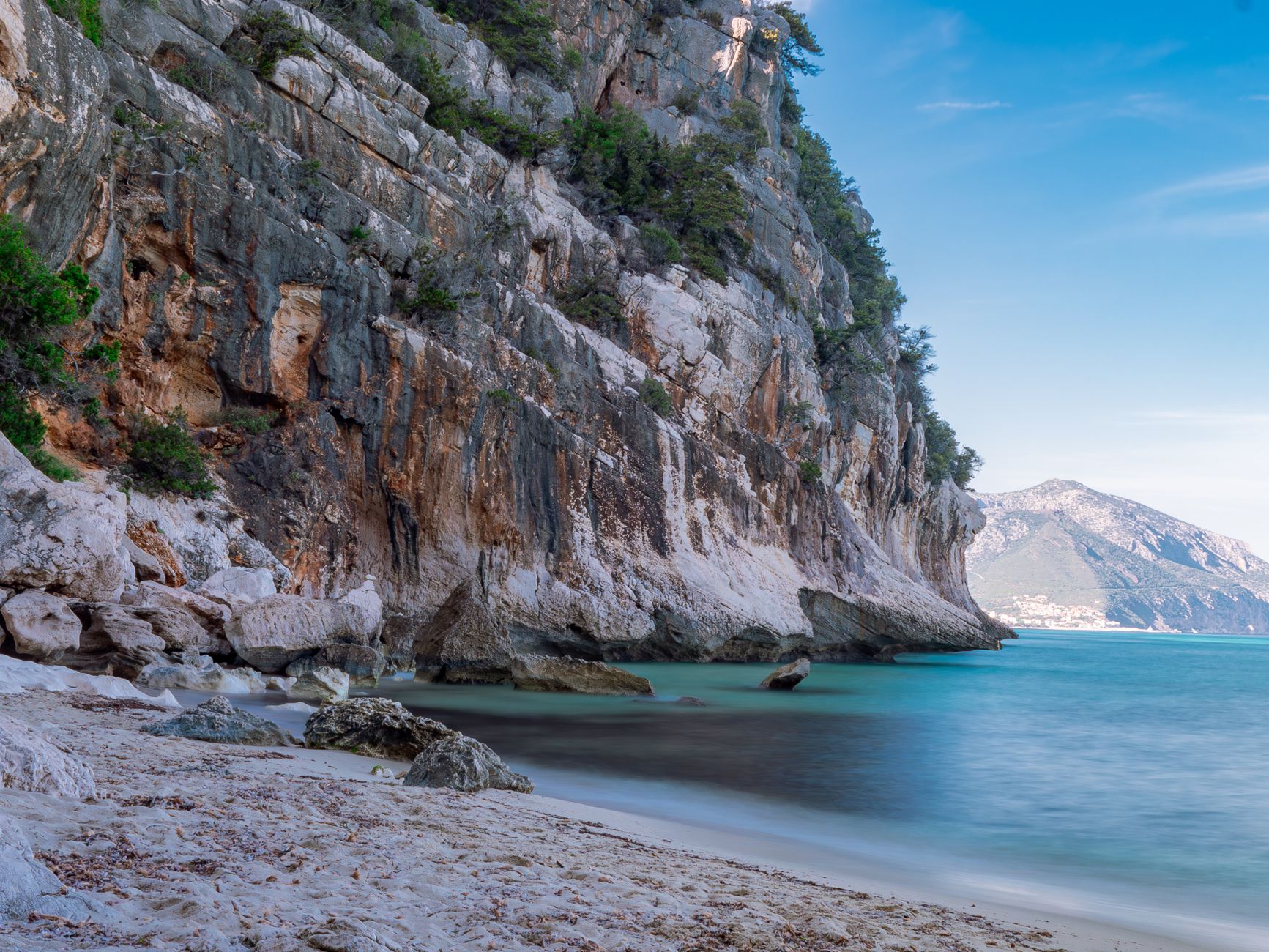
Cala Gonone is a working harbour town with one seafront strip, and its whole appeal is what you cannot drive to. The Gulf of Orosei runs south from here as an unbroken wall of limestone, and the famous coves along it, Cala Luna, Cala Mariolu, Cala Sisine and Cala Goloritzé, have no roads. Boats from the port reach them from roughly June to October, and the same trips call at the Grotta del Bue Marino, the sea cave named for the monk seals that once used it.
On a non-boat day, walk south along the coast path to Cala Fuili, which is under an hour from the seafront on foot. Hotel Cala Luna is on the promenade itself, a few minutes from the harbour kiosks where the trips are sold. Book a day ahead in August and keep an eye on the swell forecast.
The last leg runs down the southeast coast, roughly two and a half hours to Villasimius.

Beaches wrap the Capo Carbonara headland here, and the whole coastline is a marine protected area, which is why the water is as clear as it is and why the snorkelling and diving out of the marina are worth a couple of hours. Punta Molentis is the pick of the beaches, a hundred-metre arc of pale sand with a pink-streaked shore behind a granite promontory. Its car park is capped daily and booked online through the Villasimius council portal, so reserve a week ahead in July and August or expect to be turned away.
One night is enough. In the morning it is about 45 minutes back along the coast into Cagliari, closing the loop. Most flights out of Elmas leave late morning or afternoon, which usually leaves time for a last plate at the San Benedetto covered market before the car goes back.
How long: twelve days is comfortable and gives every base at least two nights except the last. Cut it to nine by dropping Santa Teresa Gallura and driving Alghero to Cala Gonone in one longer day, or stretch it by adding the Barbagia mountains inland from Cala Gonone.
When to go: May to June and September to October. The sea is warm enough from June, the light in September and October is the best of the year, and the beach parking quotas that make August difficult have not kicked in.
Driving: there are no motorways and no tolls in Sardinia, and the main roads are in good condition. Limits are typically 90 km/h on open roads and 50 km/h in towns. Legs on this route run between about an hour and a half and two and three quarter hours.
Car hire: pick up and drop off at Cagliari Elmas airport. Book early for July and August, when the island runs short of cars.
Where to stay: town hotels work best on this loop, since every base is somewhere you will want to walk out to dinner from. Book the Alghero and Cala Gonone nights first, as those two fill earliest.
A 10-day loop from Leeds through the Yorkshire Dales, Teesdale, UNESCO Durham and the chalk cliffs and gannet colonies of East Yorkshire: one of England's most varied driving circuits.
The full route — stops, maps, and driving times — is on Routebook by Kington.

Twelve days anticlockwise around Sardinia, from Cagliari and the Roman port of Tharros to Alghero's Catalan old town, the granite north and the cliff-backed coves of the Gulf of Orosei.


