
Drive from Roman Bath to medieval Salisbury through Wiltshire's prehistoric heartland. This 9-day itinerary covers Avebury, Stonehenge, Lacock and three UNESCO World Heritage Sites in under 65 miles of easy, rewarding driving.
England's most historically layered road trip runs through the chalk downs of Wiltshire, from the Georgian splendour of Bath to the soaring spire of Salisbury Cathedral. This Wiltshire road trip itinerary takes nine days but the driving legs are short. The route is designed for people who want to explore rather than cover ground.
Few English counties pack this much into a small area. Within 65 miles you have the Roman Baths and Georgian city of Bath (UNESCO), the world's largest prehistoric stone circle at Avebury (UNESCO), Stonehenge (also UNESCO), one of England's best-preserved medieval villages at Lacock, and a cathedral displaying one of only four original 1215 Magna Carta documents. The route strings these together in a clear, logical sequence, with no leg longer than 25 miles.
The route runs east and south from Bath across the Wiltshire chalk. You move from Bath to Bradford-on-Avon (10 miles), then to Lacock (8 miles), north to Avebury (15 miles), and south through Amesbury to Salisbury (31 miles). Total driving across nine days is about 64 miles. You will spend more time parked than on the road.
This is an unhurried, historically minded drive. It suits couples, families with older children, and anyone who finds the depth of English history genuinely interesting. Activity level is low: most sights involve gentle walking around monuments, village streets and cathedral close. The roads are straightforward A-roads and quiet B-roads. No special driving experience is needed.
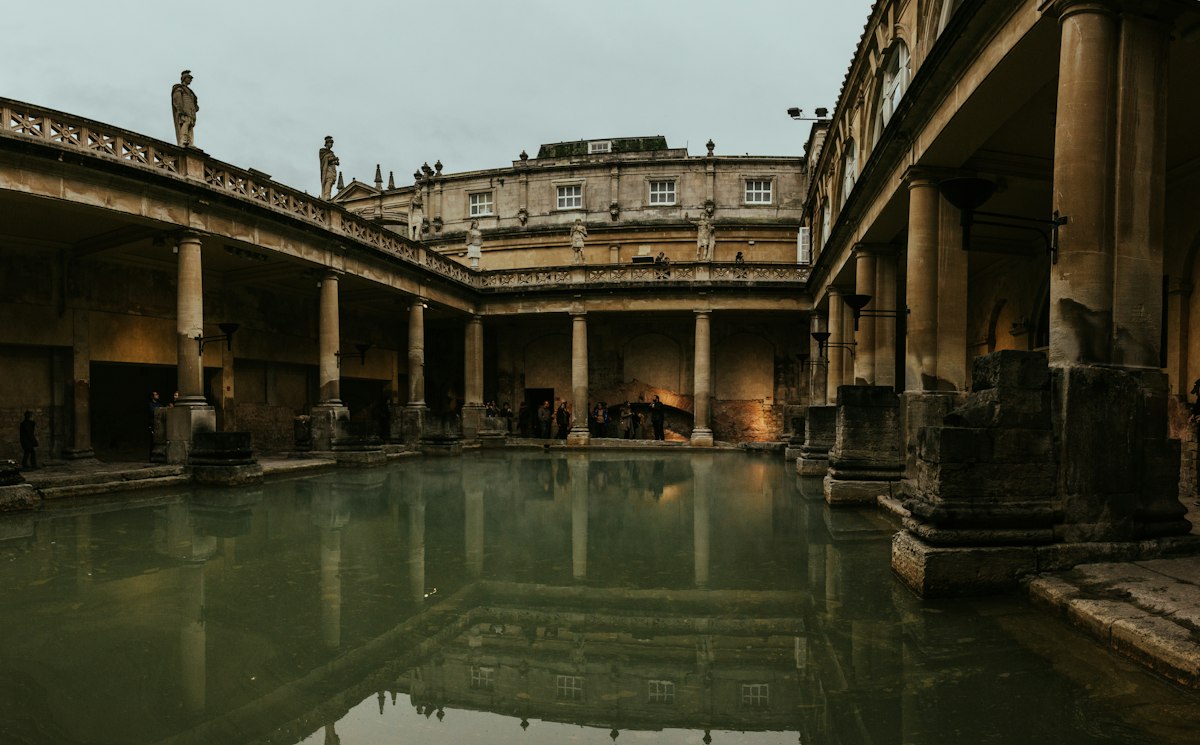
Bath earns two full days. The Roman Baths are as extraordinary as their reputation: a preserved bathing complex built over a natural hot spring that was sacred to the Celts long before the Romans arrived in AD 43. Book timed entry online to avoid queuing, and allow at least two hours. The audio guide is one of the better ones you will find at an English heritage site.
Beyond the Baths, Bath rewards aimless walking. The Royal Crescent, the Circus, Pulteney Bridge over the Avon and the covered market in the centre are all within a short walk of each other. The Thermae Bath Spa lets you bathe in naturally heated spring water in a contemporary rooftop pool overlooking the city. Book the rooftop session at least two weeks ahead for evenings.
Bath is expensive for parking. Use the Park and Ride from Newbridge or Odd Down for both days and leave the car entirely.
Just 10 miles south-east of Bath, Bradford-on-Avon deserves more visitors than it gets. The medieval town bridge, the Saxon Church of St Laurence (one of the most complete 10th-century buildings in England, free to enter) and the 14th-century Tithe Barn managed by English Heritage all sit within a 15-minute walk of each other. The Kennet and Avon Canal towpath makes an excellent afternoon walk.
A 10-day southern France loop: Marseille's Calanques, Arles' Roman ruins and the Camargue, Saint-Tropez's beaches, and three nights on the French Riviera at Nice.
Bradford is a genuine market town with a good independent food scene. It is considerably less crowded than Bath, even on summer weekends, and makes a pleasant contrast after two busy days in the city.

Eight miles east of Bradford-on-Avon, Lacock is one of the most complete medieval villages in England, and one of the quietly most extraordinary. The entire village, including the Abbey and the Fox Talbot Museum, is owned by the National Trust. No shop fronts have been modernised, no 20th-century buildings inserted into the streetscape. The result is a place that has been used as a filming location for Downton Abbey, the BBC Pride and Prejudice, Harry Potter and dozens of period dramas.
Lacock Abbey's medieval cloister is in remarkable condition, and the adjacent Fox Talbot Museum tells the story of William Henry Fox Talbot, who made some of the first photographic images here in the 1830s. Village access is free; the Abbey and Museum require National Trust admission.
Avebury is the best prehistoric monument in the world that most people have never visited properly. While Stonehenge dominates the tourist trail, Avebury is arguably more extraordinary: a vast Neolithic henge containing the remains of three stone circles, the outer circle being nearly a mile in circumference, with the village of Avebury sitting inside the henge itself. Walking among the megaliths is free and open any time. The Red Lion pub stands within the outer circle.
Two nights is the right allocation, because the landscape rewards unhurried exploration. On your first full day, walk the outer henge and inner circles, then drive or walk a mile south to West Kennet Long Barrow, a 5,600-year-old burial mound whose interior chambers you can step inside. Silbury Hill, the largest prehistoric artificial mound in Europe at 30 metres high, is a short drive further. On your second day, head 8 miles east to Devizes to visit the Wiltshire Museum, which holds the finest collection of Bronze Age gold objects in Britain and puts the whole Avebury landscape into its wider context.
Resist the temptation to combine Avebury with a Stonehenge visit on the same day. Each deserves its own time.
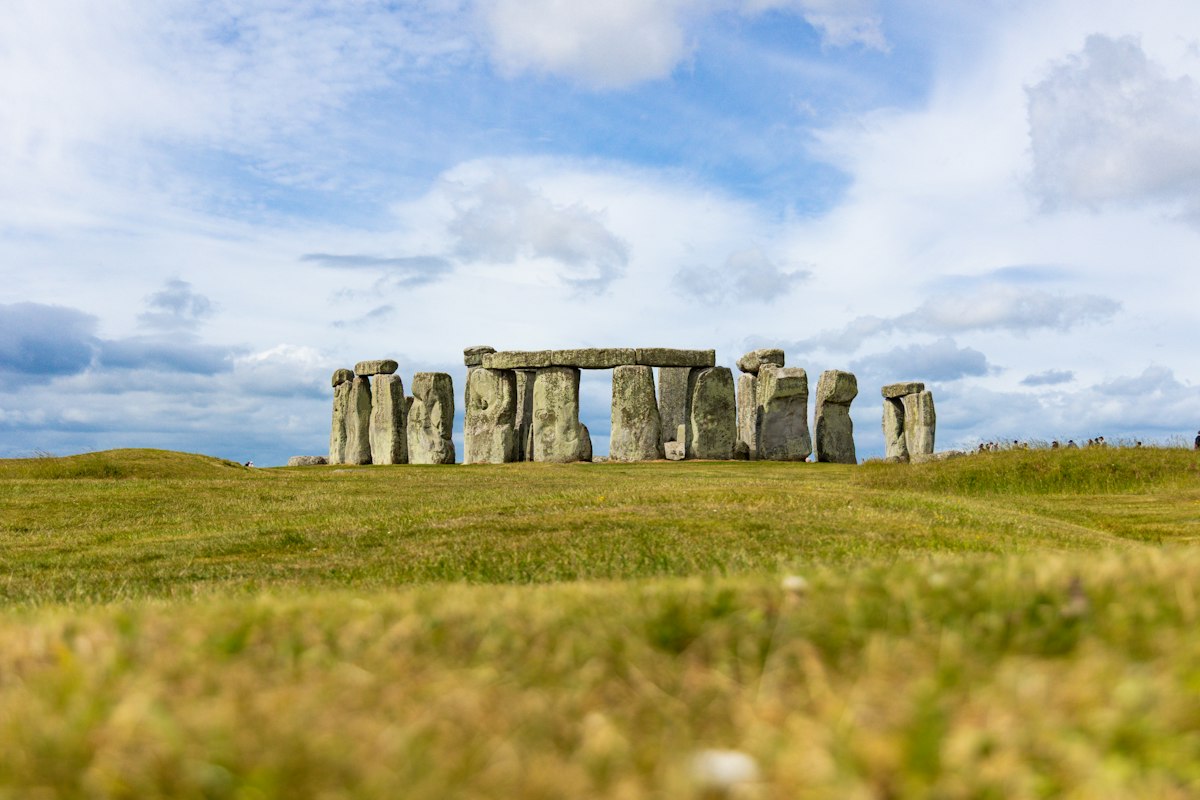
Amesbury, 2 miles from Stonehenge, is the right base for your visit. Stonehenge is one of those places that repays proper preparation: book timed entry well in advance at english-heritage.org.uk (it sells out weeks ahead in summer), take the earliest slot of the day when Salisbury Plain is quietest, and give yourself at least two hours. The English Heritage visitor centre provides good context before you walk to the stones.
Inner circle access, which allows you to stand among the megaliths rather than view them from the path, is limited and sold separately. It is worth checking availability when you make your reservation.
On the drive from Amesbury to Salisbury (9 miles), stop at Old Sarum, the windswept Iron Age hill fort and original Norman castle 2 miles north of Salisbury. The views from the ramparts across Salisbury Plain are among the best on the route.
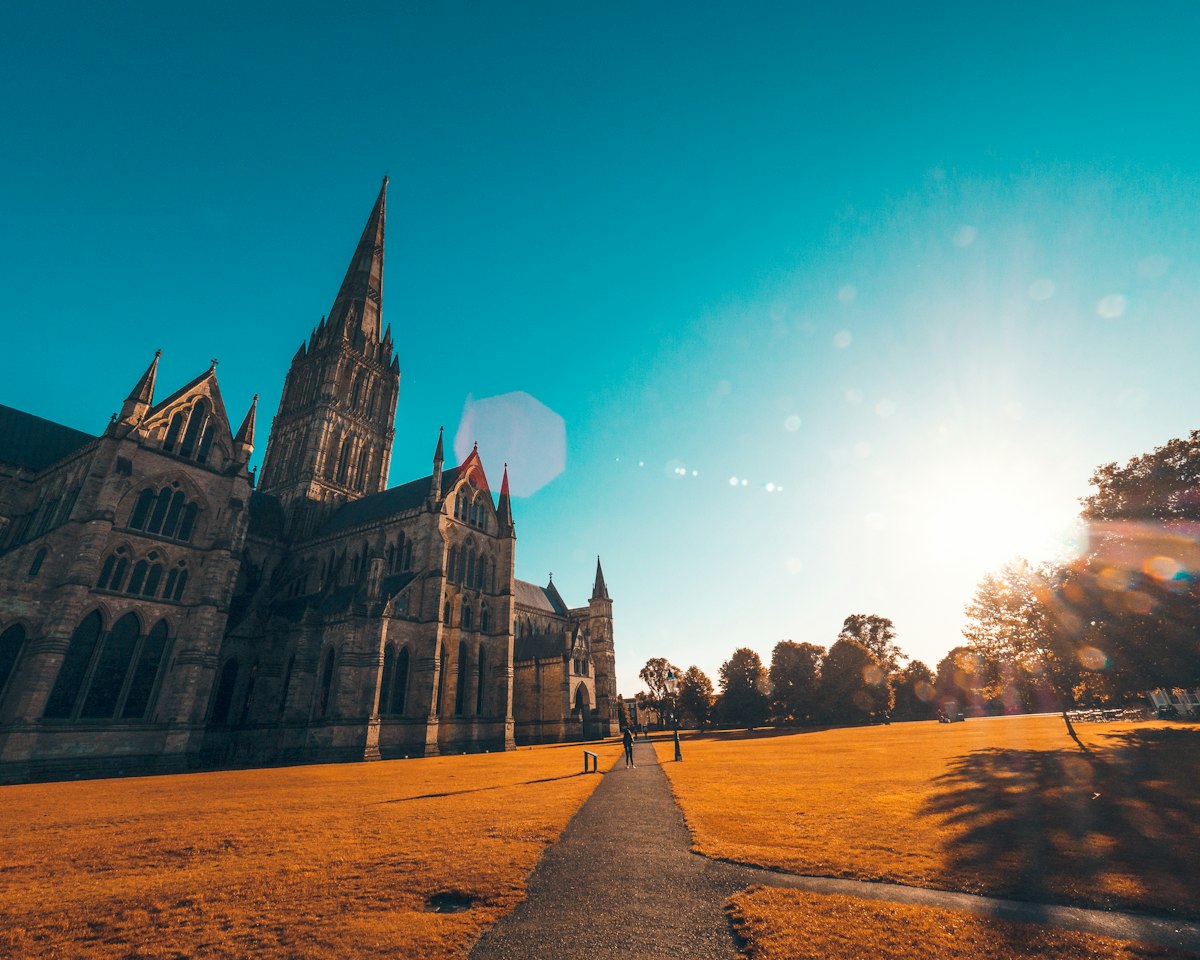
Salisbury is the civilised conclusion to nine days of prehistory and medieval England. The cathedral's 404-foot spire is the tallest in England and the building itself is one of the finest examples of Early English Gothic architecture. Inside, one of only four original 1215 Magna Carta documents is on display, well-interpreted and included in the standard admission. The 14th-century clock mechanism is the oldest still-working mechanical clock in the world.
Join one of the free guided tower tours to climb to the base of the spire and look out across the plain towards Stonehenge. The Cathedral Close, a walled precinct surrounding the cathedral, is one of the most peaceful urban spaces in England. The surrounding streets hold good independent restaurants and the Saturday market that has run since 1227.
Leave your second day in Salisbury relaxed. If you have not already stopped at Old Sarum on the drive down, it is worth 2 miles north for an afternoon visit. The views from the ramparts make sense of how the medieval city replaced the original settlement on the hill.
Stonehenge: Book timed entry as soon as your dates are confirmed at english-heritage.org.uk. In July and August, slots sell out weeks ahead.
Avebury and West Kennet: Both are free and open any time. No booking needed.
Lacock Abbey: National Trust. Book timed entry online in summer.
Roman Baths: Pre-book online. Audio guide included in admission.
Driving: All legs are under 25 miles. Roads are clear A-roads and quiet B-roads. No mountain passes, no single-track roads. Any car handles this route with ease.
Accommodation: Bath and Salisbury offer the widest choice. Villages (Bradford-on-Avon, Lacock, Avebury) have excellent B&Bs and country inns, but fewer options. Book village accommodation early, especially in summer.
Best season: April to October. Spring and early autumn give better photography light, lower Stonehenge crowds and mid-range prices. Summer is fine but July and August are busy at the headline sites.
Ready to plan the detail? Load the full route below to see every stop, leg distance and overnight on the map.
A 10-day loop from Leeds through the Yorkshire Dales, Teesdale, UNESCO Durham and the chalk cliffs and gannet colonies of East Yorkshire: one of England's most varied driving circuits.