

A 5-day East Anglia road trip loop from Cambridge through Ely Cathedral, medieval Bury St Edmunds, the wool town of Lavenham, and Saffron Walden's Audley End House.
East Anglia is England's great overlooked region. While visitors crowd into the Cotswolds and the Lake District, Cambridgeshire and Suffolk deliver something rare: one of the world's most celebrated university cities, a cathedral rising from a flat plain like a mirage, and a clutch of medieval wool towns so perfectly preserved that single streets feel like film sets. This 5-day loop from Cambridge is one of the best-value, least-crowded heritage road trips in England.
The driving distances are short, the roads are well signed, and the flat wide-sky countryside between stops has a quiet beauty of its own. This is a trip measured in architecture and local ale rather than mountain passes.
The route follows a clockwise loop from Cambridge: a half-day north to Ely, east to Bury St Edmunds, south to Sudbury and the wool villages, west to Saffron Walden, then back to Cambridge. It leans on three honest bases — Cambridge, Bury St Edmunds, and Saffron Walden — with easy day trips out from each.
Best time to visit: May to September for the longest days. May is excellent for the Backs in blossom and the tulip fields of Cambridgeshire; September has golden light and smaller crowds. Cambridge is busiest in July and August.
Getting there: Cambridge has fast rail from London King's Cross (48 minutes) and Liverpool Street (1 hour 20 minutes). Car hire at Cambridge is straightforward; the route also works well by car from London.
Budget: Cambridge sits at the upper end of mid-range. Bury St Edmunds and Saffron Walden are notably better value for accommodation and dining.
Base yourself in Cambridge to start, with enough time to do the city properly and slip out to Ely for half a day. King's College Chapel, with its fan-vaulted ceiling and Rubens altarpiece, is the unmissable starting point. The Backs, where the River Cam winds behind a sequence of colleges, are best seen at water level: hire a punt from the Mill Pond, or pay for a chauffeured tour from Scudamore's. The Fitzwilliam Museum (free) is one of the finest art museums outside London, with Egyptian antiquities, Impressionist paintings, and medieval manuscripts under one roof.
Cambridge Market Square and the surrounding streets have good restaurants for every budget. Aromi serves Sicilian pastries from early morning; The Anchor has craft beers and a good riverside view; Cotto is the area's best option for a more ambitious dinner. Day one covers King's College Chapel, the Backs, the Fitzwilliam Museum, and Market Square; save punting on the Cam, the University Botanic Garden, and Trinity College's Wren Library (open certain hours only) for around the Ely trip.
A 10-day southern France loop: Marseille's Calanques, Arles' Roman ruins and the Camargue, Saint-Tropez's beaches, and three nights on the French Riviera at Nice.
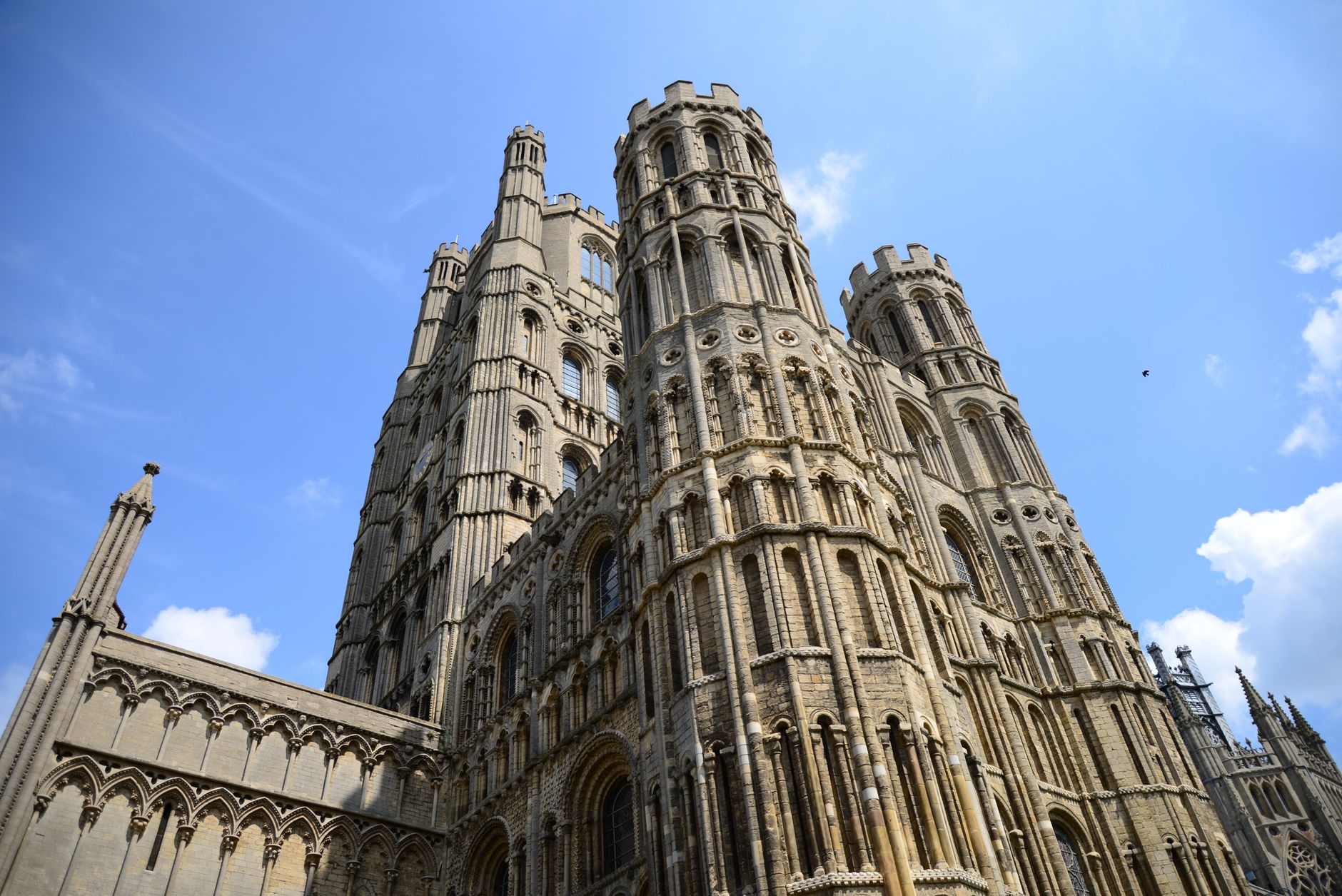
A 25-minute drive north on the A10 brings you to Ely, a small cathedral city on what was once an island of dry ground above the Fenland marshes. It makes an easy half-day trip from Cambridge. The cathedral is extraordinary: its Norman nave stretches 75 metres, and the octagonal lantern tower, designed in 1322 after the original crossing tower collapsed, is a feat of medieval engineering with no parallel anywhere in England. Allow at least two hours inside.
Oliver Cromwell lived in Ely for a decade before the Civil War; his house on St Mary's Street is now a museum about the war and about domestic life in 17th-century England. Ely waterfront on the Great Ouse is a 10-minute walk from the cathedral, with boats moving through the fens and good pubs on the bank.
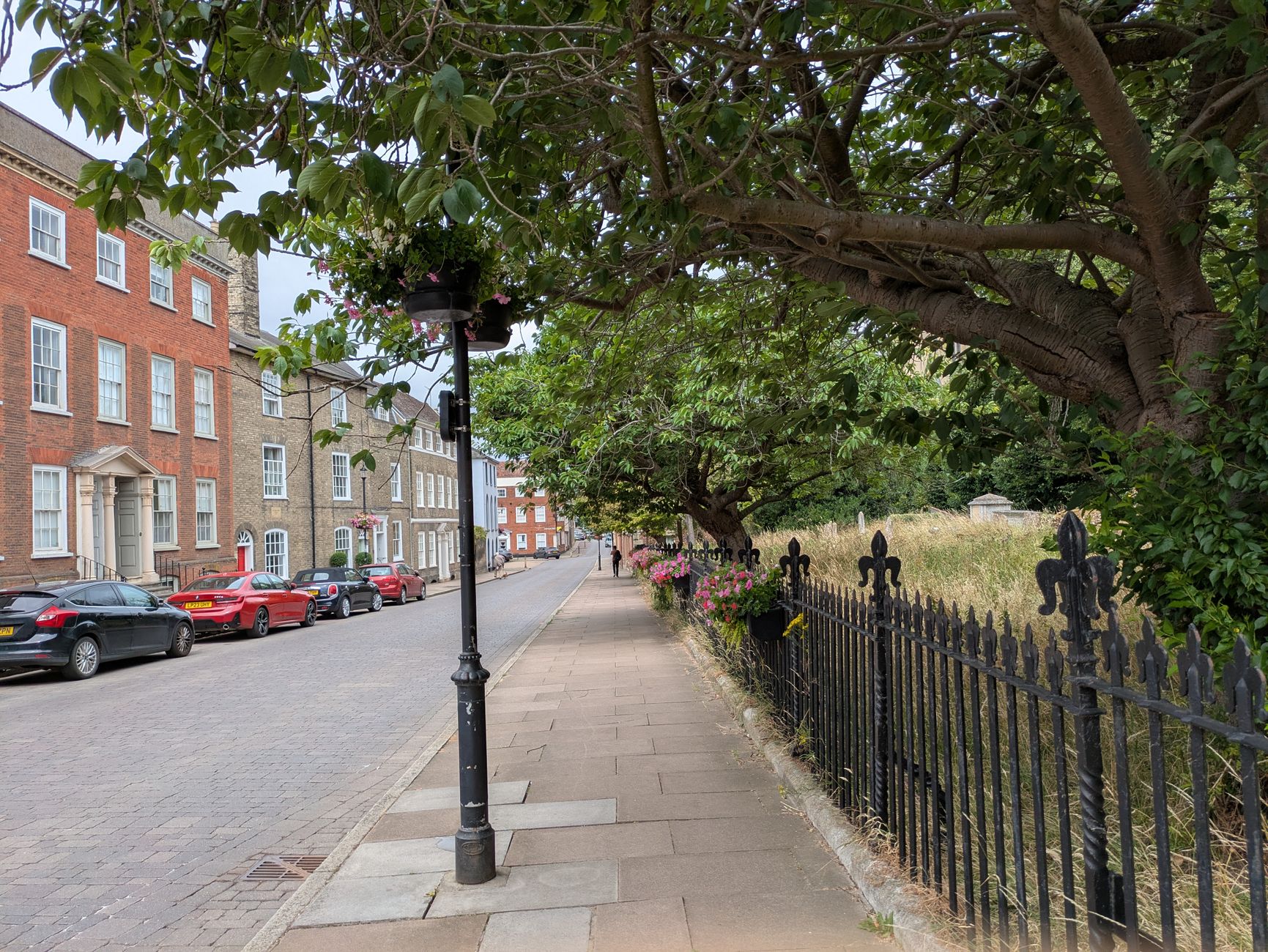
Drive east on the A142 and A14 for about 50 minutes to reach Bury St Edmunds, one of England's finest medieval towns and your base for the middle of the loop. The shrine of St Edmund, the martyred East Anglian king, made this a major pilgrimage destination in the Middle Ages; the abbey ruins and cathedral stand together in a walled garden at the foot of Angel Hill, a square flanked by a Georgian hotel, a Victorian corn exchange, and a Norman gateway.
Greene King has brewed on the same Bury St Edmunds site since 1799. Tours of the brewhouse and historic cellars run most days and must be booked online; they are one of the better industrial heritage experiences in the region, ending with a tasting. The town's covered market and cheese shops are also worth time.
A 30-minute drive south on the A134 brings you to Sudbury, an easy day trip from Bury St Edmunds, where Thomas Gainsborough was born in 1727. His house on Market Hill is now a gallery and museum holding the world's largest public collection of his paintings.
Two villages within 15 minutes of Sudbury are among the finest in England:
Long Melford has a church, Holy Trinity, so large and so perfectly lit by Perpendicular windows that it regularly appears on lists of England's finest parish churches. The village also has two stately homes within a mile: Kentwell Hall and Melford Hall (National Trust).
Lavenham stopped developing at the end of the wool trade in the early 17th century. The market square, Guild Hall of Corpus Christi (National Trust), and the main streets have barely changed in 400 years. The timber-framed houses lean at improbable angles over a market place almost exactly as it was in 1550.
Drive west on the B1064 and B1054 for about 40 minutes to Saffron Walden, an Essex market town named for the saffron crocus that was its medieval cash crop. The town has a Norman castle ruin, medieval almshouses, a large parish church, and a town centre that has not been badly damaged by 20th-century development.
Audley End House, a mile west on the B1383, is one of England's grandest Jacobean mansions: built in 1614 for the first Earl of Suffolk and now managed by English Heritage. The 'Capability' Brown landscape and the restored Victorian kitchen garden are as interesting as the house. Allow three hours. On the common near the town centre, one of England's eight ancient turf mazes survives in good condition; it is free to visit.
The B184 and A1301 carry you north to Cambridge in about 40 minutes. Duxford Imperial War Museum, signed from Junction 10 of the M11, is the largest aviation museum in Europe: a working airfield with Concorde, Spitfires, and the American Air Museum. Allow two to three hours before returning the car or catching the train from Cambridge.
Accommodation: Cambridge has the widest range from budget guest houses to boutique hotels. Bury St Edmunds and Saffron Walden are more affordable. In Sudbury, consider staying in Lavenham itself; the Swan Hotel is an outstanding 15th-century coaching inn now run as a hotel.
Transport: Distances are short and roads well signed. Sat-nav is useful in the lanes around Lavenham and Long Melford. Parking in Cambridge is expensive; use the Park and Ride or the Grafton Centre multi-storey.
Entry fees: King's College Chapel, Ely Cathedral, and Audley End all charge entry. The Fitzwilliam Museum, Abbey Gardens in Bury St Edmunds, and the Duxford outdoor aircraft park are all free.
A 10-day loop from Leeds through the Yorkshire Dales, Teesdale, UNESCO Durham and the chalk cliffs and gannet colonies of East Yorkshire: one of England's most varied driving circuits.
The full route — stops, maps, and driving times — is on Routebook by Kington.

A 5-day clockwise loop from Cambridge through the Fens to Ely Cathedral, east to Bury St Edmunds, south to Lavenham and Long Melford, and west to Saffron Walden before returning to Cambridge.
 Routebookby Routebook

