

A 7-day Dordogne road trip loop from Périgueux: medieval Sarlat, Font-de-Gaume cave paintings, La Roque-Gageac on the river, and Bergerac wine country.
The Périgord Noir road trip through the Dordogne valley is France's most richly layered short drive. In roughly 320 kilometres of country roads, you cross 17,000 years of human history: Paleolithic cave paintings still vivid in the limestone, medieval castles on river cliffs, market towns trading in truffles and duck confit, and vineyards producing wines that have never needed explaining. This Dordogne road trip itinerary covers seven days and a compact loop from Périgueux, through the heart of the Périgord Noir and back through Bergerac's wine country.
The loop runs clockwise for roughly 320 km, with no driving leg over 90 km. Périgueux is the start and finish: it has the nearest major TGV station (3.5 hours from Paris) and a regional airport. The route heads south-east into the Vézère valley, swings along the Dordogne River through the most beautiful stretch of the Périgord Noir, and loops back west through vineyard country.
This is a relaxed driving holiday with an emphasis on history, food and village-wandering. A standard rental car is all you need. The D-roads are well-signed and easy to drive; some lanes in Sarlat and La Roque-Gageac are narrow, but nothing demands a small vehicle. It works particularly well for pairs and slow travellers who want to linger at markets and long lunches.
Arrive in the Périgord capital and explore the Roman quarter on foot. The cylindrical Tour de Vésone is one of the best-preserved Roman towers in France, and the Gallo-Roman museum alongside it makes a good introduction to the region's deep history. The cathedral quarter's half-timbered lanes are pleasant for an evening walk.
The 50-km drive south-east into the Vézère valley passes limestone cliffs pockmarked with prehistoric shelters. Les Eyzies calls itself the prehistoric capital of the world, and with good reason: the Vézère valley contains around 150 documented sites, of which the most extraordinary is Font-de-Gaume, 1 km from the village centre.
Font-de-Gaume is the only cave with original polychrome Paleolithic paintings still open to the public in France. The limit of 78 visitors per day is strict: book the moment tickets release, ideally months before your visit. If Font-de-Gaume is full, the National Museum of Prehistory in Les Eyzies is worth an unhurried morning, and Lascaux IV, the faithful full-scale replica of the original cave near Montignac (25 km north), is a vivid alternative.
Sarlat is the most perfectly preserved medieval market town in France. The historic centre has more than 200 listed buildings from the 14th to 17th centuries, all in the same warm honey-coloured limestone. The result is a coherent whole rather than a collection of individual landmarks.
A 10-day southern France loop: Marseille's Calanques, Arles' Roman ruins and the Camargue, Saint-Tropez's beaches, and three nights on the French Riviera at Nice.
Time your arrival to catch the Saturday morning market, which fills Place de la Liberté and surrounding lanes with duck confit, foie gras, walnuts, truffles and Pécharmant wine. Even outside market days, most restaurants in Sarlat draw from the same produce, and it is a genuinely good place to eat at every price point.
Use Sarlat as a base for the Dordogne river valley. The short drive south reaches Beynac-et-Cazenac, where a castle clings to a vertical cliff above the river, and Castelnaud directly across the water. The clifftop bastide village of Domme, 10 km south, offers the widest panorama of the Dordogne's meandering bends.
Just 10 km from Sarlat, La Roque-Gageac is classified as one of France's most beautiful villages and makes a deservedly separate overnight stop. Honey-golden houses are pressed between a towering limestone cliff and the Dordogne River, with a single road running beneath them.
The definitive experience is a gabare trip: a flat-bottomed wooden river barge that departs from the riverbank for a 50-minute cruise past the castle cliffs of Beynac and Castelnaud. The view of La Roque-Gageac from the water, reflected in the river with the cliff behind, is the most iconic in the Périgord.
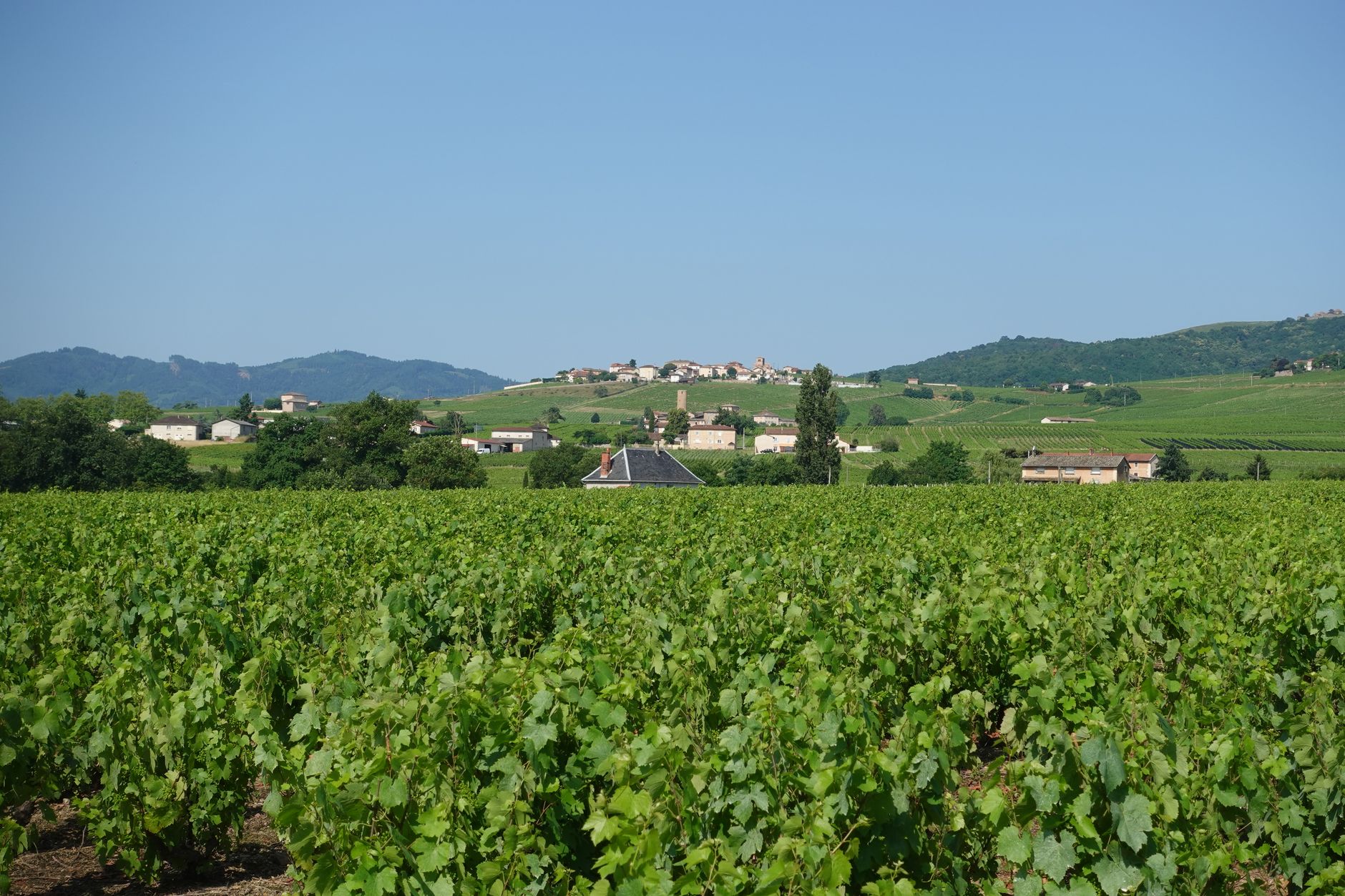
The 90-km drive west to Bergerac crosses from Périgord Noir limestone into the vine-covered slopes of Périgord Pourpre. Bergerac is a working wine town: the appellation covers more than 90 châteaux, and most welcome visitors for tastings without advance booking.
The compact riverside old town has a statue of Cyrano de Bergerac in Place de la Myrpe and a handful of good restaurants. The Monbazillac plateau, 6 km south, is where the honey-sweet dessert wine is made; the château and its vines make a good afternoon detour before dinner.
The 50-km return north to Périgueux closes the loop in under an hour via the D936. This leg is straightforward in time for a midday TGV from Périgueux to Paris, or an afternoon flight from Bergerac Airport (EGC), which has direct services to several UK and European cities.
May to September is the main season; July and August are the busiest but most reliable for weather. The shoulder months of May, June, September and October are quieter, with lower accommodation prices and more space at markets and restaurants. Font-de-Gaume and Lascaux IV require advance booking at any time of year.
Font-de-Gaume and Lascaux IV tickets sell out weeks or months ahead: booking online before you travel is essential, not optional. Sarlat's old town has no practical parking inside the walls; use signed lots on the approach roads. Fuel stations can be sparse between villages in the countryside: top up in Sarlat or Bergerac rather than relying on smaller places.
Ready to plan the detail? Use the full Dordogne route below to see every stop, driving leg and overnight on the map.
A 10-day loop from Leeds through the Yorkshire Dales, Teesdale, UNESCO Durham and the chalk cliffs and gannet colonies of East Yorkshire: one of England's most varied driving circuits.
The full route — stops, maps, and driving times — is on Routebook by Kington.

A 5-day clockwise loop from Périgueux through the heart of the Périgord Noir: Font-de-Gaume's prehistoric cave paintings, the golden market town of Sarlat, river castles at La Roque-Gageac, and Bergerac wine country.
 Routebookby Routebook


