

Drive England's western spine in 12 days from Bristol to Hadrian's Wall. A complete road trip itinerary: Cheltenham, Shrewsbury, Chester, Lancaster, Richmond and Hexham, with driving routes, highlights and practical tips.
England's western heritage road trip itinerary connects two of the country's most storied destinations: Bristol in the south-west and Hadrian's Wall in Northumberland. Between them, 12 days and seven stops follow the western spine of England through medieval market towns, a Roman city, a UNESCO industrial gorge and the most dramatic section of the 73-mile Roman frontier. This is not a theme-park version of history. Every stop is a working town with its own character, and every day has enough to fill it without rushing.
The route suits a hire car from Bristol Airport, with the option of flying home from Newcastle at the end. It also works as a point-to-point drive if you prefer to return south on the East Coast main line from Newcastle.
Bristol takes a full two days to cover properly. The old harbour district, now called the Harbourside, stretches along the floating harbour from Temple Meads to Clifton. On the first morning, walk from the city centre to the Clifton Suspension Bridge, one of Brunel's most recognisable works, completed in 1864. Cross it, then descend to the dockside.
Brunel's SS Great Britain, the world's first iron ocean-going steamship launched in 1843, is dry-docked in the Great Western Dockyard. The ship has been fully restored to its 1843 condition. Allow two hours.
The We the Curious science centre and M Shed museum are on the same harbourside stretch. M Shed tells Bristol's history through objects and oral testimonies, from the city's role in the Atlantic trade to Concorde. Entry is free.
Bristol's food scene is concentrated around Wapping Wharf (a converted shipping container market south of the harbour), Stokes Croft (independent cafes and street art) and Clifton Village. Book dinner anywhere popular at least two nights in advance.
On day two, take the harbour ferry across the water (runs every 20 minutes in summer) and explore the Redcliffe neighbourhood, where St Mary Redcliffe church stands in medieval splendour.
The A38 from Bristol to Cheltenham takes just under an hour. Both cities built fortunes from trade and both produced streets of Georgian architecture that have survived largely intact. Where Bath attracts coachloads, Cheltenham moves at a more relaxed pace.
The Promenade is the centrepiece: a wide colonnaded avenue with Neptune's Fountain at one end and independent shops running its full length. The Imperial Gardens behind it host the Cheltenham Music Festival in July. Pittville Pump Room, a 15-minute walk north, is the finest surviving example of a Regency spa building and still serves the mineral water that made the town famous.
A 10-day southern France loop: Marseille's Calanques, Arles' Roman ruins and the Camargue, Saint-Tropez's beaches, and three nights on the French Riviera at Nice.
The Cotswolds begin at the edge of town. Broadway is 20 minutes by car; Winchcombe, with its Norman church and Sudeley Castle, is less visited and closer. Either makes a worthwhile afternoon stop before dinner back in Cheltenham.

The A44 northwest from Cheltenham to Shrewsbury runs for about 90 minutes through the Welsh Marches, climbing over the Malvern Hills before dropping into the Severn plain. Shrewsbury sits inside a deep loop of the river: the town centre is almost entirely circled by water, which gave it a natural defensive perimeter for a thousand years.
The old town is compact and best covered on foot. Start at the castle, then follow the narrow lanes down toward the English Bridge. Charles Darwin was born here in 1809. The Market Hall in the main square dates to 1596 and is still in daily use. The abbey church on the south bank is part of the Benedictine foundation immortalised in the Brother Cadfael novels.
Day two is for Ironbridge, 12 miles southeast. The Iron Bridge itself (1779) is the focal point of a UNESCO World Heritage Site that covers 10 separate museums strung along the gorge of the River Severn. Buy a passport ticket. The Blists Hill Victorian Town is the most immersive: costumed interpreters run a printing press, a bakery and a chemist's shop. Arrive at 9am before the coach parties.

Chester is 45 minutes northwest of Shrewsbury. It is the most complete walled Roman city in England, and the walls are the best reason to arrive early and start walking.
The two-mile circuit of the Roman walls takes 90 minutes at a comfortable pace. The walls date to around AD 70, when the Second Augustan Legion built a fortress here, and have been maintained and repaired ever since. From the top you can see across the city to the Welsh hills to the west.
The Rows are equally distinctive: covered medieval galleries running at first-floor level above the four main streets, built on top of Roman structures in the 1200s. Nothing like them exists anywhere else in Britain. The Grosvenor Museum on Grosvenor Street holds the finest Roman collection in the northwest, including funerary tombstones from the original garrison.
The River Dee below the city walls has a circular walk to the oldest racecourse in Britain. Chester Races is a major social event in May and July; outside those dates the riverside is quiet and easy to walk.
On day two, consider the short drive to Beeston Castle (11 miles south), which stands on a crag with views over the Cheshire Plain. Alternatively, Chirk Castle, just into Wales (20 minutes), is a Marcher border fortress in near-complete condition.
The M6 north from Chester to Lancaster takes about an hour. Lancaster often gets bypassed on the drive north, which is a mistake. The city is small, handsome and seriously underappreciated.
Lancaster Castle occupies the hilltop above the River Lune and was continuously in use as a prison from 1196 to 2011. Guided tours run daily through the Shire Hall, the courtrooms and the cells. The view from the castle walls over the river to the Bowland Fells is the finest urban viewpoint in Lancashire.
The Maritime Museum on the quayside tells the story of Lancaster's role in the Atlantic trade, including the chapter on slavery. It is well-told and worth an hour. The Ashton Memorial, a baroque folly in Williamson Park, repays the 20-minute walk for panoramic views over Morecambe Bay.
The A683 east from Lancaster through the Lune Valley is one of the best hour-long drives in northern England. The route leaves Lancashire and climbs over the Pennines before dropping into the Yorkshire Dales. Richmond appears below you as you descend.
Richmond has one of the finest market squares in England. The cobbles slope down from the ruined Norman castle, which rises directly from the square on a rocky crag above the River Swale. The castle keep is climbable when open, and the view into Swaledale from the top explains why the Normans chose this spot. The Georgian Theatre Royal on Victoria Road is the oldest working Georgian theatre in Britain, still used for performances; it opened in 1788.
Day two: drive the B6270 up Swaledale to Keld. This is one of the great northern drives and takes a full day done well. The village of Reeth has a large green surrounded by dry-stone walls. Muker comes next, a small cluster of stone cottages with wildflower meadows in early summer. Keld at the dale's head has four waterfalls within a 30-minute walk. The whole round trip from Richmond is 50 miles.
Easby Abbey, one mile downstream from Richmond on a riverside path, is free and managed by English Heritage. The 12th-century ruin is well-preserved and rarely crowded.
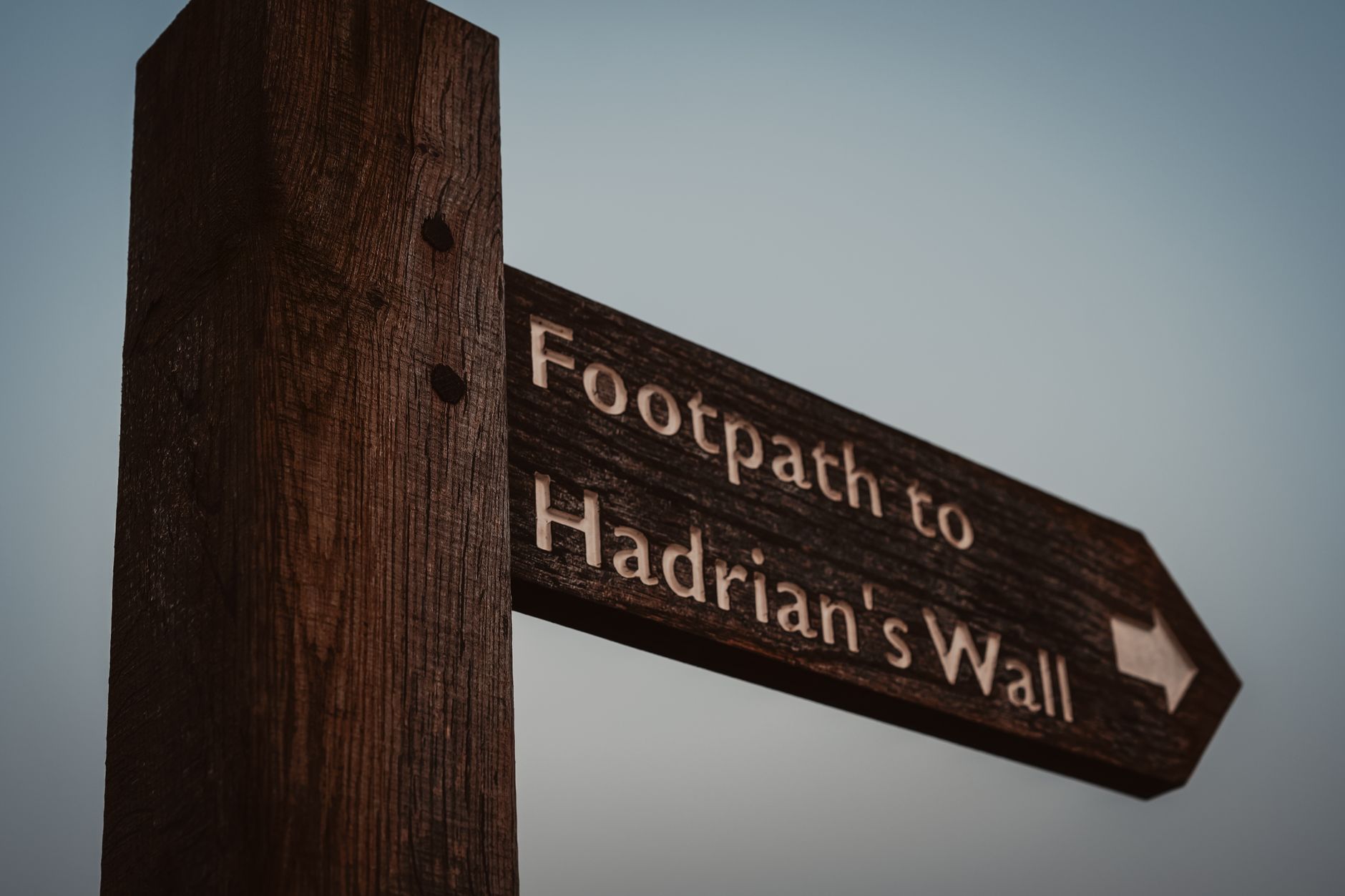
The A6108 northwest from Richmond to Hexham crosses the northern Pennines and takes about 1 hour 20 minutes. Hexham sits 5 miles south of Hadrian's Wall at roughly the midpoint of its 73-mile length, which makes it the best base for the central and most dramatic section.
Hexham itself is a proper market town with an abbey at its centre. Hexham Abbey was founded in 674 AD by Wilfrid, Bishop of York, who built a crypt from Roman stone taken from the garrison town of Corbridge 8 miles to the east. That crypt still survives beneath the nave. A guided tour identifies Roman inscriptions in the stonework.
Day one at Hexham: settle in and explore the town, then drive 8 minutes east to Corbridge Roman Town, one of the most complete garrison settlements on the Wall. The Corbridge Hoard, a collection of Roman armour buried around 130 AD and discovered in 1964, is displayed in the excellent on-site museum.
Day two: Housesteads Roman Fort and Vindolanda. Housesteads (20 minutes by car, or take the AD122 bus from Hexham station) is the most complete Roman fort in Britain, set high on the escarpment with views along the Wall in both directions. Vindolanda, a mile west, is an active excavation site. The Vindolanda Tablets, wooden writing tablets dating to around 100 AD, are the oldest handwritten documents found in Britain; the on-site museum shows casts and original context.
Chesters Roman Fort, 11 minutes by car, has the finest preserved Roman bathhouse in Britain, with changing rooms, cold rooms, warm rooms and a hot room whose floors were heated from below.
From Hexham, Newcastle is 23 miles, with airport connections or onward rail south.
Getting there: Bristol Airport has direct flights from most UK regional airports and many European cities. Trains connect Bristol Temple Meads to London Paddington in 1 hour 45 minutes. At the other end, Newcastle Airport is 23 miles from Hexham.
Car hire: Pick up at Bristol Airport or Temple Meads, drop at Newcastle. A standard road car works throughout; no 4x4 needed. Some Dales roads near Keld and Muker are narrow but fully paved.
Driving conditions: The A483 near the Welsh border has some single-track sections with passing places. Allow extra time near Chester on summer weekends. The A683 Lune Valley road is a highlight, not a shortcut; plan for a slower, scenic drive.
What to book ahead: Ironbridge passport tickets are best bought in advance during school holidays. Vindolanda tickets are available online. Chester's popular restaurants fill at weekends. Hexham accommodation is limited: book at least six weeks ahead in summer.
Best time to visit: April to October covers the best driving conditions and all seasonal facilities open. June is ideal: long days, wildflower displays in Swaledale, and pre-peak crowds at Chester and Bristol. September brings lower visitor numbers and clear autumn light.
Accommodation: Bristol and Chester have the widest choice at all price points. Shrewsbury, Lancaster and Hexham are smaller markets with good independent B&Bs and a handful of boutique hotels.
A 10-day loop from Leeds through the Yorkshire Dales, Teesdale, UNESCO Durham and the chalk cliffs and gannet colonies of East Yorkshire: one of England's most varied driving circuits.
The full route — stops, maps, and driving times — is on Routebook by Kington.

A 12-day journey through western England's architectural heart: from Bristol's Victorian harbourside north through Regency Cheltenham, medieval Shrewsbury, Roman Chester and Georgian Lancaster to the Yorkshire Dales and the Roman Wall country of Northumberland.


