

Dumfries and Galloway is Scotland's least-visited region, which makes it, for the right traveller, its most rewarding. This 8-day loop takes in Caerlaverock Castle, the UK's first Dark Sky Park, Scotland's Food Town and the Artists' Harbour at Kirkcudbright.
Scotland's most overlooked region is also one of its most distinctive. Dumfries and Galloway lies at the south-west corner of the country, bordered by the Solway Firth to the south and the Galloway Hills to the north. Unlike the Highlands or the Borders, it draws few international visitors and almost no crowds in summer. The result is a region that has remained genuinely unhurried: small towns with independent shops, dark roads that empty after dusk, and a coastline that belongs, for most of the year, to whoever shows up.
This 8-day Galloway road trip loops from Dumfries through the Food Town at Castle Douglas, into the Galloway Forest for stargazing, west to the harbour village at Portpatrick, and back via the Artists' Town at Kirkcudbright. Total driving is around 280 km, with no single leg over 90 minutes.
Three things set Galloway apart from other Scottish road trips. First, the Galloway Forest Park: 300 square miles of forest, loch and upland moorland holding the UK's first International Dark Sky Park. On a clear night, over 7,000 stars are visible to the naked eye and the Milky Way arches clearly overhead. Second, Castle Douglas, Scotland's designated Food Town, where an unusually high density of producers, artisan shops and delis has developed over decades of community commitment. Third, Kirkcudbright (pronounced Kir-koo-bree), a Georgian harbour town where artists settled in the 1880s and whose colourful buildings and galleries still reflect that tradition.
Dumfries (1 night) → Castle Douglas (2 nights) → Newton Stewart (1 night) → Portpatrick (1 night) → Kirkcudbright (2 nights) → Dumfries
Total driving: around 280 km. Longest leg: Portpatrick to Kirkcudbright, approximately 75 minutes along the southern coast.
Dumfries is where Robert Burns spent the last five years of his life and where he is buried at St Michael's Church. Burns House Museum and the Globe Inn, his favourite pub, are both central and free or low-cost to visit. The town is pleasant enough for an evening arrival, but the standout reason to base yourself here is the 30-minute drive south to Caerlaverock Castle.
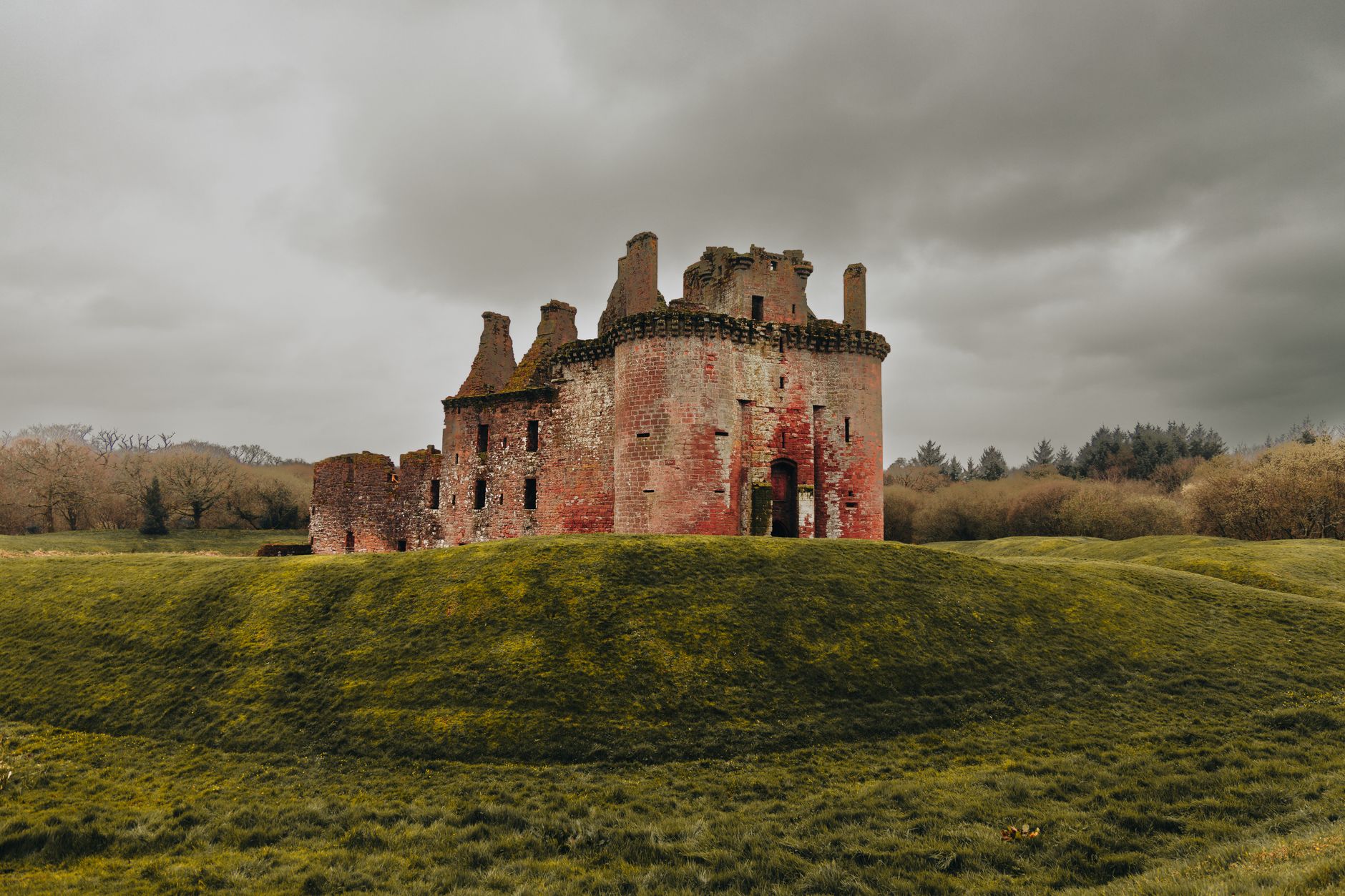
Caerlaverock is unusual among Scottish castles in being triangular, with a moat on three sides. Built in the 1270s, it was besieged over a dozen times before being partially dismantled in 1640. Historic Environment Scotland manages the site and it is open year-round.
Castle Douglas earned its Food Town designation honestly: the high street has an extraordinary number of independent food shops for a town of 4,000 people. The delicatessens, butchers and bakers that make up the cluster are the result of decades of deliberate community effort.
A 10-day southern France loop: Marseille's Calanques, Arles' Roman ruins and the Camargue, Saint-Tropez's beaches, and three nights on the French Riviera at Nice.
Threave Garden, three kilometres west of town, is the National Trust for Scotland's flagship walled garden. Spring brings over 200 varieties of daffodil; the walled garden produces vegetables and fruit through the growing season. Nearby, Threave Castle sits on an island in the River Dee and is reached by a small boat (included in the Historic Environment Scotland ticket). Built by Archibald the Grim, 3rd Earl of Douglas in the 1370s, it retains the only surviving drawbar slot in Scotland.
Galloway Forest Park is a further 30 minutes north by road. The Kirroughtree Visitor Centre is the main entry point for the central section. Even in daylight the landscape is impressive: dark forest broken by lochs and moorland. After dusk, the sky above becomes one of the clearest in Europe.
Newton Stewart is the region's market town and the practical base for the forest. Kirroughtree Visitor Centre is 2 km outside town, with walking and mountain bike trails (it is one of the famous 7stanes bike centres). The A712 north to New Galloway through the forest is one of the finest scenic drives in southern Scotland, passing Clatteringshaws Loch and offering views across open moorland backed by conifer plantations.
For stargazing, the car parks at Clatteringshaws and Kirroughtree serve as designated dark sky viewing points. The Galloway Dark Sky Park website lists ranger-led events and the best spots for each season.
From Newton Stewart, the route heads west to the Rhinns of Galloway, the double-headed peninsula at Scotland's south-western extremity. Portpatrick sits at its western tip: a village of painted houses around a small harbour. It was once the main ferry crossing to Ireland before Stranraer took over in the 19th century, and the ruins of Dunskey Castle on the clifftop to the south mark its earlier importance.
The Southern Upland Way passes through Portpatrick, and the clifftop path offers easy walking with views across to the Irish coast on a clear day. The path south to Dunskey Castle takes about 45 minutes each way.
Kirkcudbright's art colony began in the 1880s when E.A. Hornel and other painters were drawn by the quality of the light and the townscape. Broughton House, Hornel's former home and now a National Trust for Scotland property, preserves the studio, library and Japanese-style garden he created. The Kirkcudbright Galleries, opened in 2018 in a restored town hall, show the work of artists associated with the town across several centuries.
The town itself rewards exploration beyond its galleries. Maclellan's Castle ruins stand in the town centre. The harbour on the River Dee estuary is still used by working fishing boats, and the combination of Georgian townhouses and brightly painted buildings makes the waterfront distinctively photogenic for a town of its size.
The return to Dumfries (around 50 km east, 45 minutes) follows the A711 coastal road through the Solway Firth villages. A 15-minute detour to Dundrennan Abbey, the Cistercian ruin where Mary Queen of Scots spent her last night in Scotland before crossing to England, adds a historical footnote to the journey.
Best time to visit: May to September for outdoor activities and comfortable walking. October to February for Dark Sky stargazing, when nights are longer and the park runs guided events.
Getting there: Dumfries has train connections to Glasgow Central (1h 40min) and Carlisle (35 min). By car, it is around 1h 30min from Glasgow and 1h from Carlisle on the M6/A75.
Budget: Mid-range. Historic Environment Scotland membership covers Caerlaverock and Threave castles. NTS membership covers Threave Garden and Broughton House. Kirkcudbright Galleries are free.
Accommodation: Good B&B options in Castle Douglas and Kirkcudbright. Newton Stewart has limited choice; book ahead in summer, especially around dark sky events. Portpatrick has a small number of harbour-front guesthouses.
Car and roads: All roads are suitable for standard cars. Some minor roads in the forest and on the Rhinns are single-track with passing places.
A 10-day loop from Leeds through the Yorkshire Dales, Teesdale, UNESCO Durham and the chalk cliffs and gannet colonies of East Yorkshire: one of England's most varied driving circuits.
The full route — stops, maps, and driving times — is on Routebook by Kington.

An 8-day loop through Scotland's most overlooked region: from Dumfries past Caerlaverock Castle, through the Food Town at Castle Douglas, into the UK's first Dark Sky Park, west to clifftop Portpatrick, and back via Kirkcudbright's painted harbour.
 Routebookby Routebook

