

Leicestershire hides one of England's most remarkable road trip circuits: Richard III's reburial city, the birthplace of the pork pie, a Gothic revival castle that has been the Duke of Rutland's seat since Henry VIII's reign, and the finest staircase lock flight in the English canal system. Four days, under 130 miles of driving.
Leicestershire is one of England's most overlooked counties for road-trippers — a surprise, since it contains the site of the most significant archaeological find in modern British history, two national food icons, one of the grandest castle landscapes in the Midlands, and the longest staircase lock flight in the English canal system. This four-day loop from Leicester covers the full range in under 130 miles of driving.
Route distance: approximately 80 miles of driving. Best for: history, food heritage, stately homes, canals.

Old John Tower, Bradgate Park, Leicestershire (photo by David Roberts / Pexels)
Leicester became the first city in England to recover and identify a medieval king when Richard III's skeleton was found beneath a council car park — the former Grey Friars friary — in 2012. The DNA match to living descendants of his sister Anne of York was confirmed in February 2013, and in March 2015 the king was reburied with full ceremony in Leicester Cathedral.
The Richard III Visitor Centre on Grey Friars, opened in 2014, is one of the finest heritage visitor centres in England. The exhibition traces Richard from the Battle of Bosworth (1485) through burial, the contested memory of his reign, the 2012 excavation and the identification process. The original grave is visible through a glass floor.
Leicester Cathedral, next door, is where Richard rests in a carved alabaster tomb. The medieval Guildhall on Guildhall Lane — a 14th-century timber-framed hall — is the oldest surviving civic building in Leicester and worth a visit on the same afternoon.
For Bradgate Park, drive seven miles north-west on the B5328. A thousand-acre deer park in Charnwood Forest, Bradgate was the birthplace of Lady Jane Grey, England's nine-day queen in July 1553. The ruins of her Tudor mansion survive on the hillside. Old John Tower, an 18th-century folly on the ridge, gives the finest panorama of Charnwood Forest.
Leicester's curry quarter runs along Belgrave Road — the 'Golden Mile' — starting a mile north of the city centre. The street has traded as an Indian restaurant quarter since the 1970s and hosts England's largest Diwali celebrations outside India each autumn.
Two nights in Leicester give you a base for two easy day trips into the surrounding county.
Day trip: Loughborough. The drive from Leicester to Loughborough takes 25 minutes on the A6. The town's most moving landmark is the Carillon Tower: a 152-foot war memorial built in 1923, containing 47 bells that are still rung for public concerts. It is the only freestanding carillon war memorial in England.
A 10-day southern France loop: Marseille's Calanques, Arles' Roman ruins and the Camargue, Saint-Tropez's beaches, and three nights on the French Riviera at Nice.
Taylor's Bell Foundry, established in 1784, is one of the world's oldest and largest bell foundries and the last in England to cast major bells. The foundry cast the Great Paul — the largest bell in England, hung in St Paul's Cathedral in 1882 and weighing 17 tons — and has supplied bells to cathedrals on six continents.
The Great Central Railway runs preserved steam trains on the only double-track main-line heritage railway in the United Kingdom, which means trains can pass each other in the traditional manner. The line runs Thursday to Sunday from Loughborough Central station on Great Central Road, a five-minute walk from the town centre.
Day trip: Melton Mowbray. A short drive east of Leicester on the A607 brings you to the food capital of rural England — a boast the town can sustain.
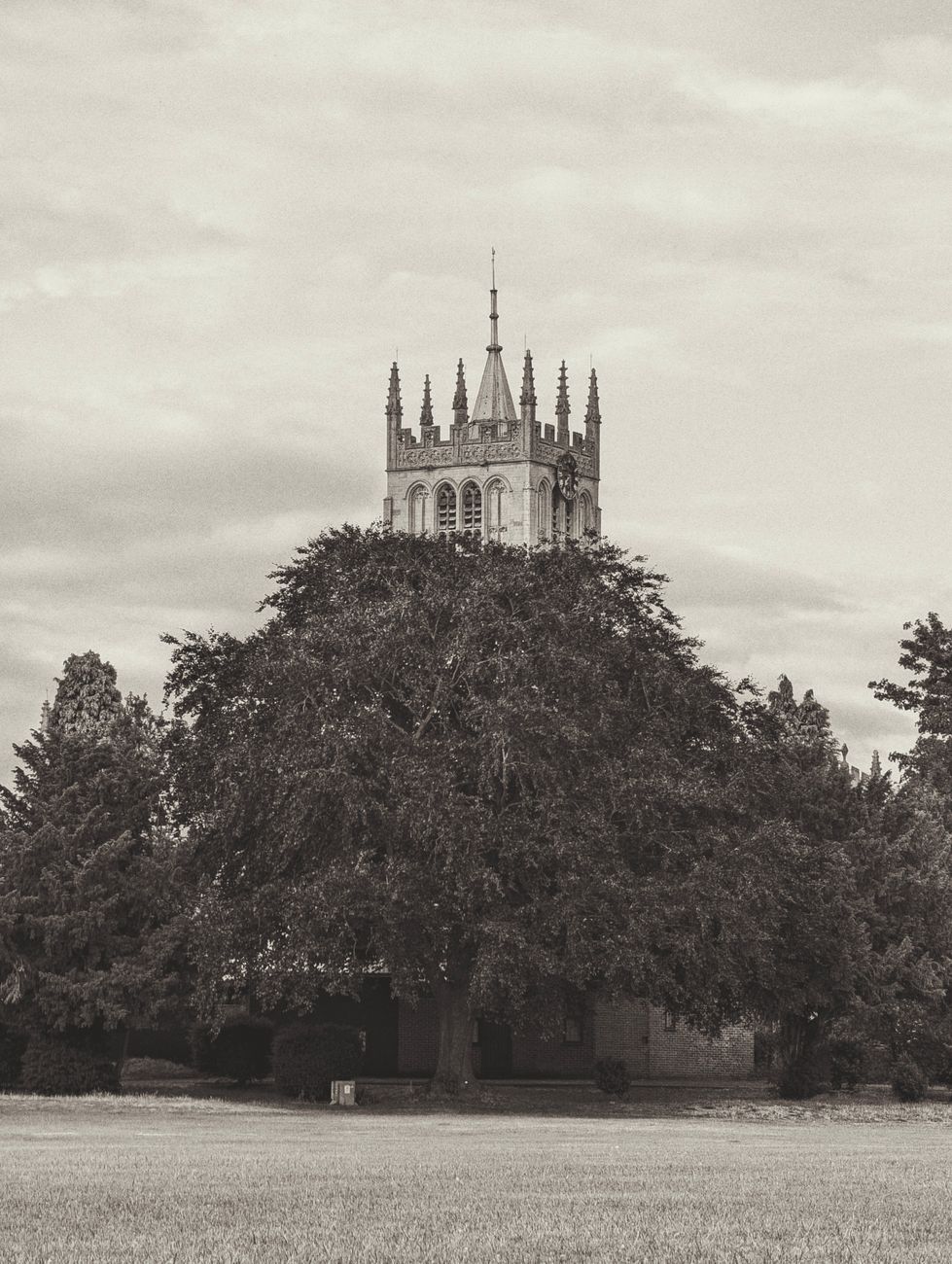
St Mary's Church, Melton Mowbray (photo by Sai Varun Ambati / Pexels)
Melton Mowbray is the birthplace of the authentic pork pie, distinguished by hot water crust pastry baked upright in a distinctive oval shape without a tin mould. Ye Olde Pork Pie Shoppe at 10 Nottingham Street has traded on this site since 1851 and is the last traditional hand-raised pork pie maker in the town, operating under the Melton Mowbray Protected Geographical Indication.
Stilton cheese is made here despite its name. The cheese is named after the coaching inn in the Cambridgeshire village where it was once sold to travellers on the Great North Road, but production has always been in Leicestershire, Derbyshire and Nottinghamshire. EU Protected Designation of Origin rules confirm that not a single wheel of Stilton may legally be made in Stilton itself.
St Mary's Church on Burton Street is one of the finest medieval parish churches in England. The embattled parapet, the 14th-century nave arcades and the north transept window repay a close look. The town's Tuesday market has traded at the Market Place since the 13th century.
Leave Leicester and break the drive south to Market Harborough with a stop at Belvoir Castle, in the Vale of Belvoir to the north-east. Belvoir Castle rises from a wooded ridge above the vale — a view that has changed little since John Manners made it his seat in the 16th century. The castle visible today is the fourth on the site: a Gothic revival structure designed by James Wyatt and completed in 1816 after a fire destroyed the earlier building.
The state rooms are among the most complete in England. The Regent's Gallery (180 feet long) runs almost the full length of the south wing; the walls are hung with family portraits by Gainsborough, Reynolds and Poussin. The Elizabeth Saloon contains a life-size marble statue of the fifth Duchess by Matthew Cotes Wyatt. Gobelin tapestries and Meissen porcelain fill the other rooms.
Capability Brown's landscape park — commissioned before the fire — surrounds the ridge. A walk down to the lake and through the walled kitchen garden takes about an hour and gives the best view back up to the Gothic silhouette of the castle on the hill. Belvoir opens Wednesday to Sunday in season, so allow a half-day here before continuing to your overnight base at Market Harborough.
English canal locks at dawn (photo by Conor Samuel / Unsplash)
Market Harborough is a prosperous market town on the River Welland, worth visiting for the Old Grammar School alone: a 17th-century timber-framed building on wooden stilts that bridges the pavement below the Market Place. Built in 1614 and raised on stilts to allow the butter market to trade beneath it, the building is one of the most idiosyncratic civic structures in England.
Foxton Locks is 4 miles west of the town via the B6047 and Gumley Road. A flight of ten narrow locks arranged in two staircases of five, Foxton raises and lowers the Grand Union Canal by 75 feet on a Leicestershire hillside. It is the longest staircase lock flight in England and one of the most photographed features in the British canal system. Narrowboats take around 45 minutes to work through both staircases; the towpath above gives a clear view of both simultaneously.
The ruins of the Foxton inclined plane — a steam-powered boat lift built in 1900 to bypass the locks and abandoned in 1911 — are visible on the hillside above the top lock. The machine could carry two narrowboats simultaneously in water caissons on a sloping track. The café at the top lock is open daily in summer.
Market Harborough to Leicester takes 35 minutes on the A6. The route closes where it started, with one final stop in the curry quarter on Belgrave Road if the first visit proved persuasive.
Leicester's railway station is on London Road, about 10 minutes' walk from the Richard III Visitor Centre. Direct trains reach London St Pancras in 68 minutes. The M1 motorway is at junction 21 south of the city.
Late spring and early summer (April to June) are best for Bradgate Park — the fallow deer calves appear from May. Melton Mowbray's pork pies and Tuesday market run year-round. Belvoir Castle opens Wednesday to Sunday in season (April to October); check belvoircastle.com for specific closure dates. The Great Central Railway runs Thursday to Sunday through most of the year.
The Richard III Visitor Centre is open daily. Taylor's Bell Foundry tours run on specific booking days; check taylorbells.co.uk. Foxton Locks is free and accessible year-round from dawn to dusk.
This is one of the most straightforward driving routes in the series. The A6 links Leicester, Loughborough and Market Harborough as a fast A-road. Melton Mowbray is reached from the A607 from Leicester. Belvoir Castle is well signed from the A607 at Melton and from the A52 to the north.
Leicestershire is gently rolling — no steep lanes, no difficult gradients. Parking is free at Bradgate Park and Foxton Locks. Belvoir Castle has a paid car park; Leicester city centre has multi-storey car parks on Jubilee Square and Highcross.
Leicester has a wide range of city-centre hotels and independent B&Bs in the suburbs. Loughborough is a university town with a good choice of guesthouses. Melton Mowbray has a small number of independent hotels and pub B&Bs in the surrounding villages. The area around Belvoir Castle is rural; the nearest town hotels are in Grantham (5 miles east) or Melton. Market Harborough has several good independent hotels in the town centre.
Opening hours and admission prices change each year. Check visitor.leicester.gov.uk, bradgatepark.org, belvoircastle.com, loughboroughcarillon.com, taylorbells.co.uk, and canalrivertrust.org.uk for Foxton Locks before travelling.
A 10-day loop from Leeds through the Yorkshire Dales, Teesdale, UNESCO Durham and the chalk cliffs and gannet colonies of East Yorkshire: one of England's most varied driving circuits.
The full route — stops, maps, and driving times — is on Routebook by Kington.

A four-day loop from Leicester through Loughborough, Melton Mowbray, Belvoir Castle and Market Harborough, tracing Richard III, England's finest food heritage and the staircase locks of Foxton.


