

Start in the ancient capital Winchester and loop through the Test Valley to Romsey Abbey, two nights at Lyndhurst in the heart of the New Forest, a night in the sailing port of Lymington, and a final day at the remarkable estate village of Beaulieu. Seven days, one satisfying loop.
Most of England's great road trips head north or west. The New Forest Hampshire road trip itinerary does neither: it stays compact and deliberate, circling between cathedral city, chalk stream, ancient forest and Solent harbour across seven days that reward lingering.
Start and end in Winchester, England's first capital. Loop south into the Test Valley, spend two nights in the New Forest's hub at Lyndhurst, dip to the coast at Lymington, and end at Beaulieu's remarkable estate. The loop covers roughly 65 miles of driving; the point is not the distance but the depth of each stop.
Hampshire packs extraordinary variety into a small space. Winchester is one of the most historically rich cities in England, yet it draws a fraction of the tourists of Bath or Oxford. The New Forest is a royal hunting ground that has survived a thousand years largely intact. Lymington and Beaulieu are proper places with their own identity, not tourist contrivances.
The scale is also right for a road trip. Each leg takes 15 to 35 minutes to drive; there is always somewhere better to spend the hours.
Total driving: approximately 65 miles. Activity level: relaxed, with optional walks at each stop.
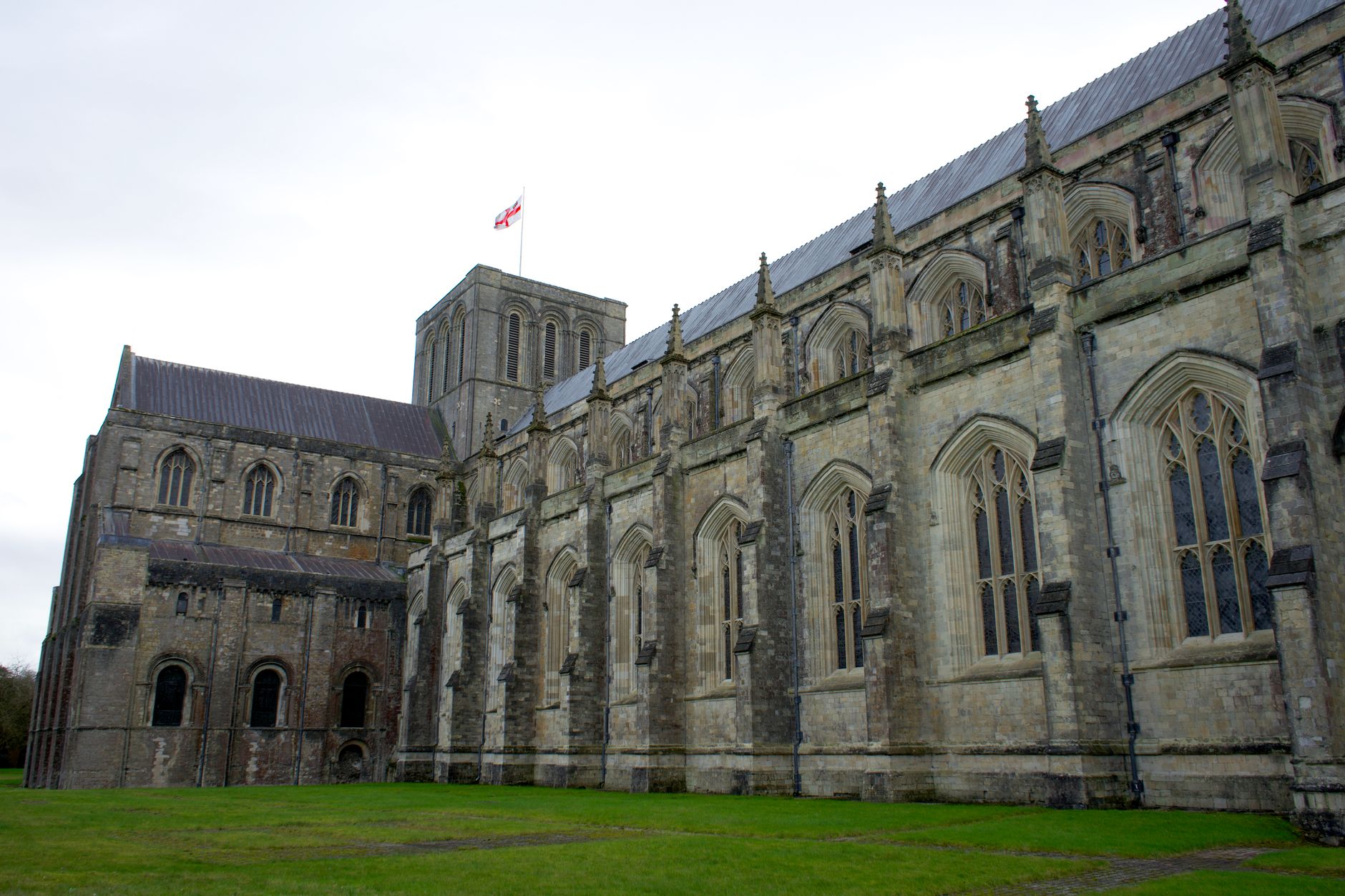
Begin where English history begins. Winchester was the capital of Wessex before it became the capital of England, and you feel that weight walking from the station into the centre.
Winchester Cathedral anchors your first morning. With the longest medieval nave in Europe (169 metres of Norman and Early English stone), it makes Bath Abbey look modest. Look for the grave of Jane Austen, unmarked for decades because she was considered unimportant at the time, and the marble statue of William Walker: the diver who worked in total darkness for five years to shore up the cathedral's flooded foundations between 1906 and 1911.
A ten-minute walk away, the Great Hall holds the only surviving fragment of Winchester's Norman castle and the famous Round Table. The 14th-century oak disc weighs 1,200 kg, was repainted during Henry VIII's reign, and has confused tourists about King Arthur for centuries.
On the second morning, walk the riverside meadows south to the Hospital of St Cross, founded in 1132 and still an active charity. Knock at the porter's lodge to receive the Wayfarer's Dole: a small piece of bread and a horn of ale, a custom unchanged since the 12th century.
A 10-day southern France loop: Marseille's Calanques, Arles' Roman ruins and the Camargue, Saint-Tropez's beaches, and three nights on the French Riviera at Nice.
Winchester's restaurant scene punches above its size. The evening here is as good as anywhere on the loop.
Drive 18 km southwest through the gentle Test Valley, following the chalk stream that gives Hampshire its reputation for fly-fishing.
Romsey is a small market town that does not advertise itself, which is part of its appeal. Romsey Abbey, in the town square, was founded in 907 and is one of England's finest Norman churches. It charges no admission, is rarely crowded, and contains the tomb of Lord Mountbatten of Burma. Spend an hour inside.
Broadlands, the Capability Brown-landscaped estate where Mountbatten lived, opens in July and August. The River Test passes close to the town; short paths along the river bank make for easy afternoon walking.
In the late afternoon, continue south toward the forest. Romsey sits at the edge of the New Forest National Park; the change in landscape comes within minutes.
Lyndhurst is the National Park's main village: a compact high street surrounded on all sides by open forest. The New Forest Heritage Centre provides good context on the commoners who have grazed animals here for centuries under the ancient rights still governed by the Verderers Court.
Two nights gives you enough time. On the first, drive the Rhinefield Ornamental Drive in the late afternoon: a narrow road south of Lyndhurst lined with towering Douglas firs, giant redwoods and ornamental rhododendrons. The trees are among the tallest in Britain; arriving at dusk when light filters through the canopy is one of the better small experiences on this loop.
On the second morning, drive to Bolderwood for the deer-watching platform. Rangers manage a feeding station where fallow deer come within metres of visitors. Three short circular walks (1 to 3 km) loop through the ancient woods. In the afternoon, drive west to Burley: a quintessential forest village where wild ponies wander past tea shops and thatched cottages.
A practical note: the 40 mph speed limit on unfenced forest roads is enforced strictly and exists for good reason. Ponies, cattle and deer appear without warning around bends; the roads are theirs as much as yours.
From Lyndhurst it is 14 km south to the Solent; the landscape opens from woodland to saltmarsh as you approach the coast.
Lymington is a proper working sailing town with a harbour full of ocean-going yachts and a High Street that slopes to the water down Quay Hill, a cobbled descent lined with Georgian and Regency buildings. The Saturday market, established by charter in 1257, fills the High Street from 8am with local food, antiques and fresh fish.
If the schedule allows a Saturday stop, time your arrival for market morning. The rest of the day works well as a walk along the saltmarsh reserve east of the town, or a trip on the Wightlink ferry to Yarmouth on the Isle of Wight: a 40-minute crossing that gives a completely different view of the Solent.
The evening in Lymington is the route's most coastal. The restaurants near the quay are worth choosing over a drive inland.

The drive from Lymington to Beaulieu takes 20 minutes through quiet forest lanes. One combined ticket covers the whole estate: the National Motor Museum (280 vehicles, from Edwardian pioneers and James Bond cars to Formula One racers), Palace House (the Montagu family home since 1538, complete with costumed Victorian staff), and the atmospheric ruins of Beaulieu Abbey, founded by King John in 1204 and largely demolished by Henry VIII.
Allow the full day. Before leaving, walk or drive two miles south along the Beaulieu River to Buckler's Hard: a perfectly preserved Georgian shipbuilding village where a single broad street of estate cottages leads to the water's edge. HMS Agamemnon, one of Nelson's favourite ships, was built here.
From Beaulieu, Winchester is 40 km north via the M27: about 35 minutes, and the loop is complete.
When to go: May to October is the comfortable window. June and July are warmest but busy. September is the driest month, the heathland turns golden, and crowds thin noticeably. Spring (April to May) brings wildflowers and settled weather. Avoid August school holidays if you dislike queues at Beaulieu and parking pressure at Lyndhurst.
Driving: A standard car is fine throughout. Forest roads are narrow and slow, which is the point. The 40 mph limit on unfenced roads is not advisory. Fuel up at Lyndhurst before extended forest driving.
Where to stay: Lyndhurst has a range of mid-range hotels and B&Bs; book ahead in summer. Lymington has good boutique options near the quay. Winchester has well-located hotels within walking distance of the cathedral.
Isle of Wight extension: An extra day based in Lymington with a day-trip on the Wightlink ferry makes a natural addition. The 40-minute crossing to Yarmouth gives you a complete island afternoon.
A 10-day loop from Leeds through the Yorkshire Dales, Teesdale, UNESCO Durham and the chalk cliffs and gannet colonies of East Yorkshire: one of England's most varied driving circuits.
The full route — stops, maps, and driving times — is on Routebook by Kington.

A 5-day driving loop from Winchester through the Test Valley, the New Forest National Park and the Solent coast. Ancient cathedrals, free-roaming ponies, a Georgian market port and one of Britain's finest motor museums.


