

A four-day loop from Northampton through royal estates, Tudor follies and medieval market towns: Althorp, Boughton House, Rushton Triangular Lodge, Oundle and Fotheringhay.
Northamptonshire is one of England's most undervisited counties, a fact that makes it all the more rewarding to explore. In a few days of easy driving you can visit the memorial to Diana, Princess of Wales at Althorp, the ruins of the castle where Mary Queen of Scots was executed, an Elizabethan folly built entirely around the number three, and a string of limestone market towns that see a fraction of the visitors drawn to the Cotswolds or the Dales.
This Northamptonshire road trip itinerary makes a compact loop from Northampton, passing through Daventry, Kettering, Oundle and Wellingborough before returning to the county town. No single drive takes more than an hour, leaving most of each day free for walking and exploring.
Northampton is well connected by rail: direct services from London Euston take around 65 minutes, and from Birmingham New Street around 45 minutes. Hiring a car at or near the station is the most practical approach; the county is not well served by public transport between its market towns, and having your own vehicle makes the day trips to the estates straightforward.
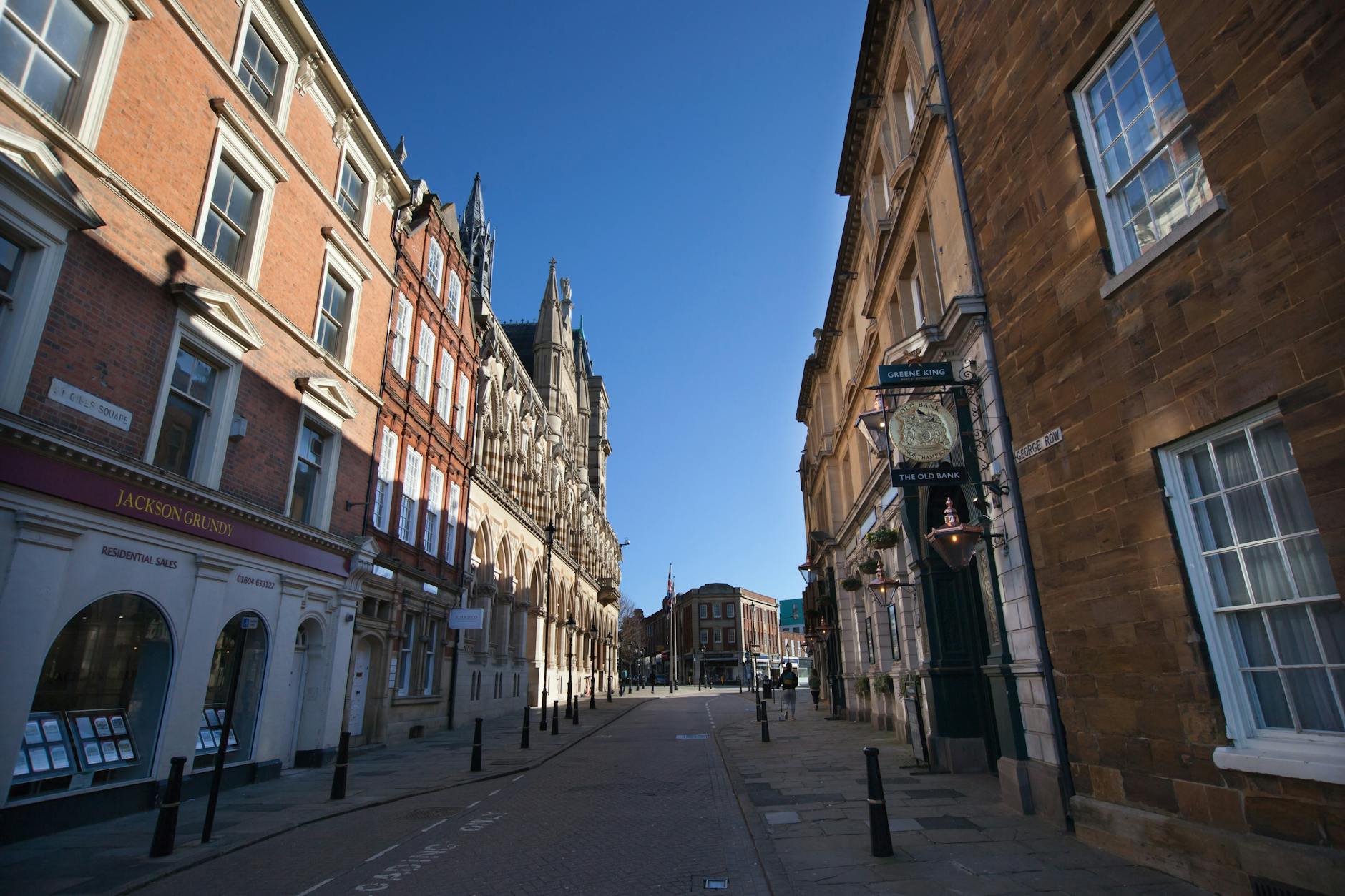
Northampton rewards two nights. The most unusual building in the city is the Church of the Holy Sepulchre, a round Norman church built around 1100 by Crusaders returning from Jerusalem and modelled on the Church of the Holy Sepulchre in the holy city. Only four Norman round churches of this type survive in England; this is the largest and most complete. It is open daily without charge.
The Northampton Museum and Art Gallery on Guildhall Road is free and holds the world's largest collection of shoes, covering 4,500 years of footwear history. The county's boot and shoe industry, which supplied boots to Cromwell's army and Wellington's troops, made Northamptonshire prosperous for three centuries, and the collection tells that story in full. The museum also holds fine art, local archaeology and an Egyptian mummy.
On day two, drive north on the A428 for the eight kilometres to Althorp. The Spencer family seat has been in private hands since 1508 and contains one of the finest private art collections in England, with works by Van Dyck, Gainsborough and Reynolds. Since 1997 the house has also been the memorial to Diana, Princess of Wales, who is buried on an island in the ornamental lake at the centre of the grounds. The house opens in July and August and on selected other dates; tickets must be booked in advance at althorpestate.co.uk. The grounds can be glimpsed from the road throughout the year.
Day trip to Daventry: A half-hour drive west of Northampton (25km via the A45) reaches a quiet market town on the edge of the Northamptonshire uplands. Borough Hill, an Iron Age hillfort on the ridge immediately above the town, is reached by a signposted footpath from the edge of the town centre. The summit covers 53 hectares and was occupied from around 1000 BC; the views extend across Northamptonshire, Warwickshire and Leicestershire, and on a clear day to the Malvern Hills in the west.
A 10-day southern France loop: Marseille's Calanques, Arles' Roman ruins and the Camargue, Saint-Tropez's beaches, and three nights on the French Riviera at Nice.
The best excursion at Daventry is Canons Ashby, a National Trust Elizabethan manor house 20km to the south via the A425. The house has been in the Dryden family since the 1550s and feels genuinely domestic rather than grand: the interior retains an unusually complete set of Jacobean wall paintings and furniture. The formal topiary garden, with its geometric yew hedges and parterres, is one of the finest Elizabethan gardens in the Midlands and is at its best in summer. Open Wednesday to Sunday from March to November; National Trust members enter free.
Daventry Country Park, 1km from the town centre, has woodland and meadow trails around a large reservoir. Grey herons, great crested grebes and kingfishers are regularly sighted, and the trails are well maintained for an easy afternoon walk.
Evening: Northampton has a lively town centre around the Market Square. Independent restaurants cluster in the streets around Guildhall Road and St Giles' Street. The Derngate theatre and cultural centre is worth a look from outside even without a performance; the facade was redesigned in 1916 by Charles Rennie Mackintosh.
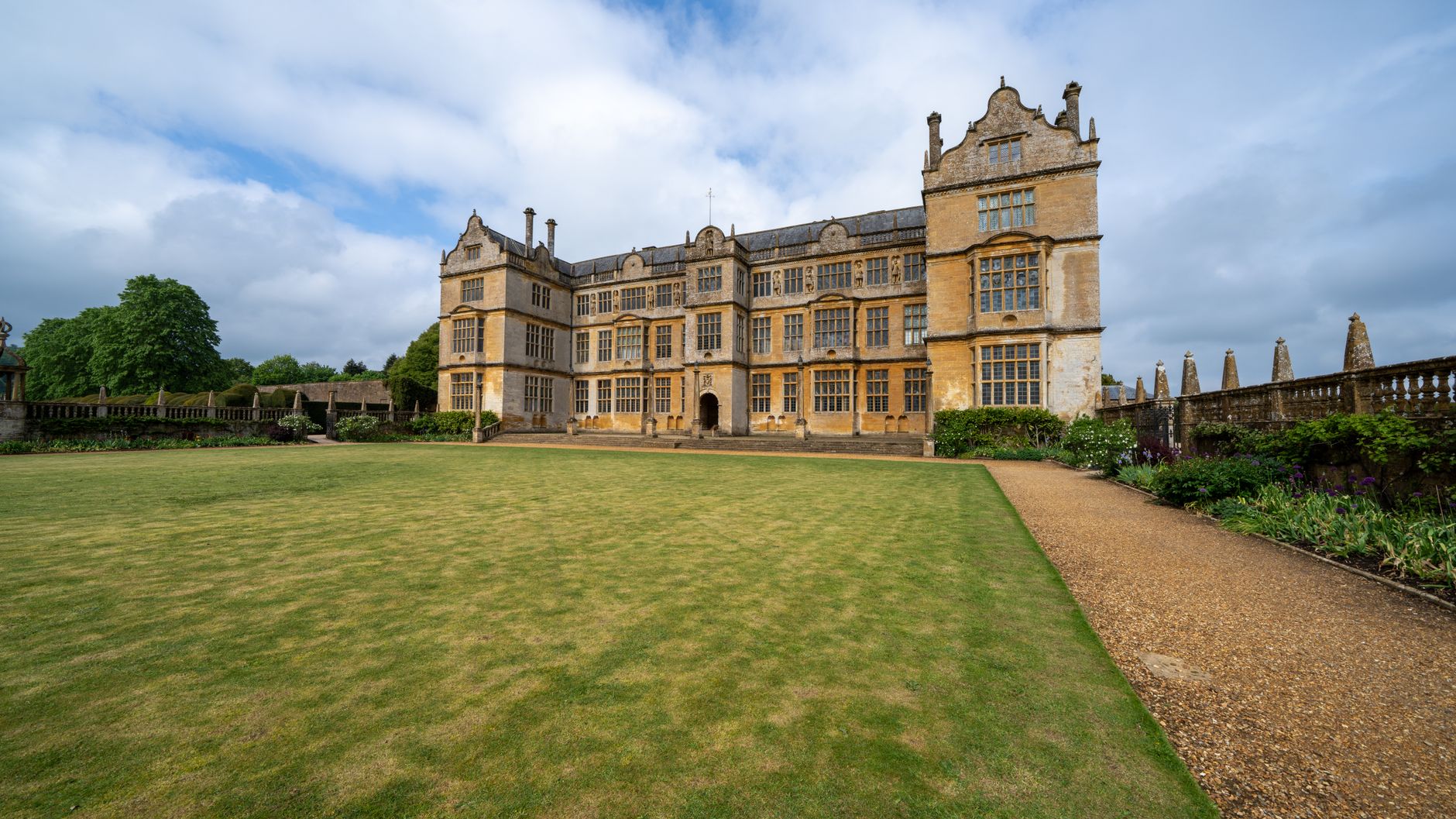
Leave Northampton and drive northeast across the county towards Oundle, with the grand estate country strung out along the way. Kettering, around 40 minutes from Northampton, makes a natural stop on the drive: a Victorian market town with a good pedestrianised centre, a market running three times a week, and the Alfred East Art Gallery, which holds 19th and early 20th-century paintings including work by the Northamptonshire-born artist Alfred East, who trained in Paris and exhibited at the Royal Academy.
The two great houses near Kettering are both within 10 kilometres of the town. Boughton House, 3km north along country lanes, is a baroque mansion built for the Duke of Montagu between 1685 and 1709 on the scale of a French palace, with a 150-metre-long north facade and state rooms hung with tapestries and French furniture. The house opens in August only, but the grounds, farm trail and tearoom are accessible in other months.
Six kilometres northwest, the Rushton Triangular Lodge is one of the most eccentric buildings in England. Designed by Sir Thomas Tresham between 1593 and 1597 as a meditation on the Holy Trinity, every element of the building comes in threes: three sides, three floors, three gables on each face, and trefoil windows throughout. The lodge stands 33 feet tall. It was a coded statement of Tresham's recusant Catholic faith at a time when Catholicism was illegal. English Heritage manages the building, which is open from April to October with a small admission charge.

From Kettering it is a short drive on the A14 and A605 to Oundle (28km, around 35 minutes), following the Nene Valley east into the most visually rewarding part of the county. Oundle is a medieval market town built largely in warm honey-coloured limestone: the main streets around North Street, West Street and the Market Place form one of the most complete small-town streetscapes in the East Midlands, largely unchanged since the 17th and 18th centuries. Settle in here for the night.
The 13th-century Church of St Peter has a 63-metre steeple visible for miles across the flat Nene Valley. The town's coaching inns, some in use since the 1600s, are the best places for dinner. Oundle School occupies much of the town centre and its honey-stone buildings blend naturally with the medieval fabric.
The morning's excursion from Oundle is Fotheringhay Castle, 7km north on the A605 and then local lanes. The castle was demolished after the English Civil War, but the earthwork mound remains above the River Nene, along with a carved falcon and fetterlock on a stone at the base of the mound. Mary Queen of Scots was beheaded in the Great Hall on 8 February 1587, after nearly 19 years of captivity under Elizabeth I. The 14th-century Church of St Mary and All Saints in the village contains the alabaster tomb of Richard, Duke of York, the father of Richard III, and is worth a short visit.
From Oundle, turn south down the Nene Valley for the drive back to Northampton, with Wellingborough worth a pause on the way. Wellingborough is a market town with a long history in the boot and shoe trade and a well-preserved town centre around the Market Square and the Church of All Hallows. The Nene Valley walking routes running south from the town give access to water meadows, gravel-pit nature reserves and several kilometres of peaceful riverside path. Irchester Country Park, 5km south via the A509, is a former ironstone quarry converted into a woodland nature reserve with 200 hectares of mature woodland, a children's play area and an industrial heritage trail that follows the route of the old narrow-gauge quarry railway. Admission and parking are free. Wellingborough station also has direct trains to London St Pancras in under an hour, a practical alternative for travellers who would rather finish by train than complete the loop by road.
From Wellingborough the final drive to Northampton (22km, around 25 minutes via the A509) is the shortest of the route. A last hour in the county town might include a return visit to the Church of the Holy Sepulchre (open daily without charge), a walk around the Market Square, or a quiet spell in Becket's Park beside the River Nene before heading for the station or onward by car.
Best time to visit: May to September offers the most settled weather and the best access to the estates. July and August see Althorp House open for the summer. Boughton House opens in August; its grounds and farm trail are accessible year-round. The Northamptonshire countryside is at its best in late May and June, when the hedgerows are in flower and the Nene Valley is lush and green.
Althorp House: Open July and August, and on selected dates in June. Tickets must be purchased in advance from althorpestate.co.uk; demand is high in summer and early booking is advisable. The estate road is open throughout the year, allowing a view of the grounds even when the house is closed.
Rushton Triangular Lodge: Managed by English Heritage; paid admission, open April to October, closed in winter. The lodge is a 10-minute drive northwest of central Kettering. The surrounding farmland is pleasant for a short walk after the visit.
Canons Ashby: National Trust; members enter free. Open Wednesday to Sunday from March to November; check the National Trust website for seasonal closures. The tearoom is open on days the house is open.
Fotheringhay: There is no formal car park at the castle site. Park in the village near the church and follow the footpath to the mound (5-minute walk). The site has no admission charge and is accessible at all times.
A 10-day loop from Leeds through the Yorkshire Dales, Teesdale, UNESCO Durham and the chalk cliffs and gannet colonies of East Yorkshire: one of England's most varied driving circuits.
The full route — stops, maps, and driving times — is on Routebook by Kington.

A four-day loop from Northampton through royal estates, Tudor follies and medieval market towns: Daventry, Kettering, Oundle and Wellingborough, connected by easy drives across England's most underrated county.

