

Drive a 6-day loop from Nottingham through England's most legendary county: the cave city beneath the castle, the perfect Norman cathedral at Southwell, the Civil War ruins of Newark and the ancient oaks of Sherwood Forest.
Nottinghamshire is one of England's least-visited counties, which makes it one of the most rewarding to drive. Where the popular circuits of the Cotswolds and the Lake District fill car parks before 9am and book out the better B&Bs months in advance, this East Midlands loop can be done with two weeks' notice and no queuing for anything except the Major Oak on a sunny August weekend.
The county is also more varied than its middling reputation suggests. Nottingham itself is a lively, undeniably interesting city with 800 carved caves beneath its streets and a Lace Market district that could hold its own against any northern English counterpart. To the east, Southwell Minster is arguably the most complete Norman cathedral in England, yet it draws a fraction of the visitors of Durham or Ely. Newark Castle is a genuine ruin of considerable drama, not a reconstructed shell. And Sherwood Forest, for all the gift-shop Merry Men, still has one of the oldest living trees in the country.
This 6-day loop from Nottingham covers all of them.
Nottingham's most distinctive feature is one most visitors never see. The sandstone ridge under the city centre has been carved into over 800 tunnels, cellars and chambers over roughly a thousand years, some dating to the early medieval period. The most accessible tour runs from the caves beneath the castle (book ahead in summer; they sell out). The tour covers storage chambers, a World War Two air-raid shelter and a section used as a medieval tannery. It takes about an hour.
The castle itself, rebuilt in the 17th century above the original Norman motte, houses the city museum. It is worth visiting for the view from the battlements as much as the galleries: the Old Market Square spreads out below, with the Victorian Council House dome at its centre. Trading has taken place on that square since at least 1155.
The Lace Market quarter lies a ten-minute walk east of the castle. Nottingham was one of the world's foremost lace-producing cities in the 19th century and the warehouses built to store and ship the fabric are impressive: tall red brick buildings on narrow streets that have since been converted into offices, restaurants and independent shops. St Mary's Church at the heart of the quarter is 15th century and free to enter.
On the second day, Newstead Abbey is worth the 16 km drive north on the A60. It was an Augustinian priory until the Dissolution, then the ancestral home of Lord Byron until he sold it in 1817. The grounds are the main reason to visit: a series of formal and informal gardens laid out through the 19th and early 20th centuries, with a lake, a cascade and a Japanese garden. Byron's bedroom is preserved inside the house. The gardens are open year-round; the house has seasonal hours.
A 10-day southern France loop: Marseille's Calanques, Arles' Roman ruins and the Camargue, Saint-Tropez's beaches, and three nights on the French Riviera at Nice.
The drive from Nottingham to Southwell takes about 30 minutes on the A612. There is almost nothing between them: fields, a few villages, a stretch of the River Trent.
Southwell Minster is the reason to come. It is technically a cathedral now (the diocese was created in 1884), but it functions more like a large parish church: no crowds, no charged entry, no coach tour guides with flags. The building is mostly 12th century, with two Norman towers at the west end and a pointed Early English retrochoir at the east. All of it is handsome. The reason it keeps appearing in architectural guides is the chapter house, built in the 1290s and connected to the choir by a stair passage carved in a style that is not found anywhere else in England.
The chapter house has no central column. Instead, the vaulting springs from the walls and the windows between them are tall and filled with clear glass. What fills the remaining wall surfaces is carved foliage: naturalistic representations of British native plants, each one specific enough that botanists have identified over thirty species. The carving is consistently of a quality that makes you wonder why almost nobody comes here.
Southwell itself is a quiet market town of about 7,000 people. The Bramley cooking apple was first cultivated in a cottage garden here in 1809 by a young woman named Mary Ann Brailsford; the original tree still grows in what is now a private garden on Church Street, visible from the road. Bramley apple products (juice, chutney, pies) are sold in most local shops.
The National Trust Workhouse on Upton Road, 400 metres from the Minster, is a different kind of visit: a well-preserved Victorian workhouse that gives a detailed account of how poverty was managed (and punished) in 19th-century England. It requires timed entry tickets, bookable online.
Newark is 13 km east of Southwell on the A612, a 20-minute drive through flat Nottinghamshire farming country.
Newark Castle was begun in the 12th century and stands on the west bank of the River Trent. King John died here in October 1216, having caught dysentery following what chroniclers describe as an overly enthusiastic meal in Swineshead. The castle's later significance came from the Civil War: it was a Royalist garrison and endured three Parliamentary sieges between 1643 and 1646, making it one of the last Royalist strongholds in England to surrender. The Norman gatehouse and two flanking towers survive to near-full height; the rest of the castle is a roofless shell above a large riverside lawn. Entry to the grounds is free. The Civil War Experience museum inside the gatehouse charges a small admission.
The town around the castle is worth a walk. Newark Market Place is one of the largest cobbled squares in England: roughly 200 metres by 100 metres, surrounded by Georgian and Victorian buildings and centred on a stone war memorial. St Mary Magdalene Church at the east end of the square has a 73-metre spire visible from miles away. The square still holds weekly markets on Wednesdays and Saturdays.
Newark also has a strong antiques trade: the Newark International Antiques and Collectors Fair, held at the Newark Showground six times a year, is one of the largest outdoor antiques fairs in the world.
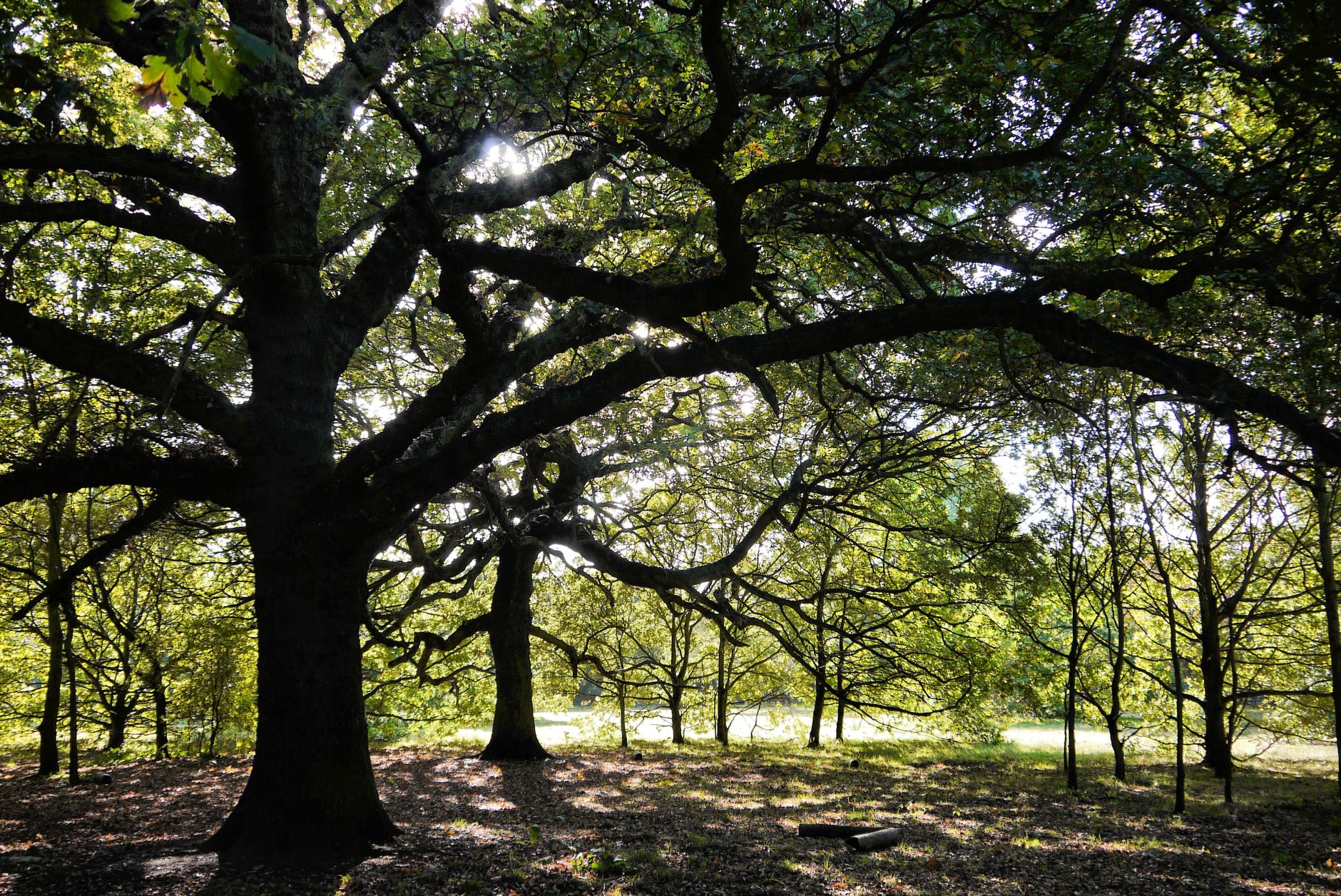
Edwinstowe is 30 km north of Newark on the A616 and A6075, roughly 35 minutes by car through the Nottinghamshire farmland.
Sherwood Forest Country Park is run by Forestry England and is based at the edge of Edwinstowe village. Entry to the park is free, though the car park fills quickly on summer weekends: arrive before 9am to be certain of a space. The Major Oak is the main destination, a ten-minute walk along a clear signed trail from the visitor centre. The tree is between 800 and 1,000 years old, with a trunk circumference of 10 metres and a crown spanning 28 metres. Metal props support the main limbs now, but the tree is still alive and still growing. It is surrounded by a low fence to protect the root system. The legend that Robin Hood hid in its hollow (a hollow that, in its current state, could not hide a medium-sized dog) is Victorian in origin, but the tree itself needs no embellishment.
The wider country park covers ancient oak woodland with waymarked walking trails of varying lengths. The 2-hour Greenwood Trail covers the most historic sections of the forest.
Clumber Park is 9 km north on the B6034. The National Trust estate covers 3,800 acres of farmland, heathland and managed woodland around a 35-hectare serpentine lake. The Victorian Gothic Chapel of St Mary the Virgin (1889) is the architectural highlight: a full-scale Gothic building in estate grounds, built for the Duke of Newcastle at considerable expense and now maintained by the National Trust.
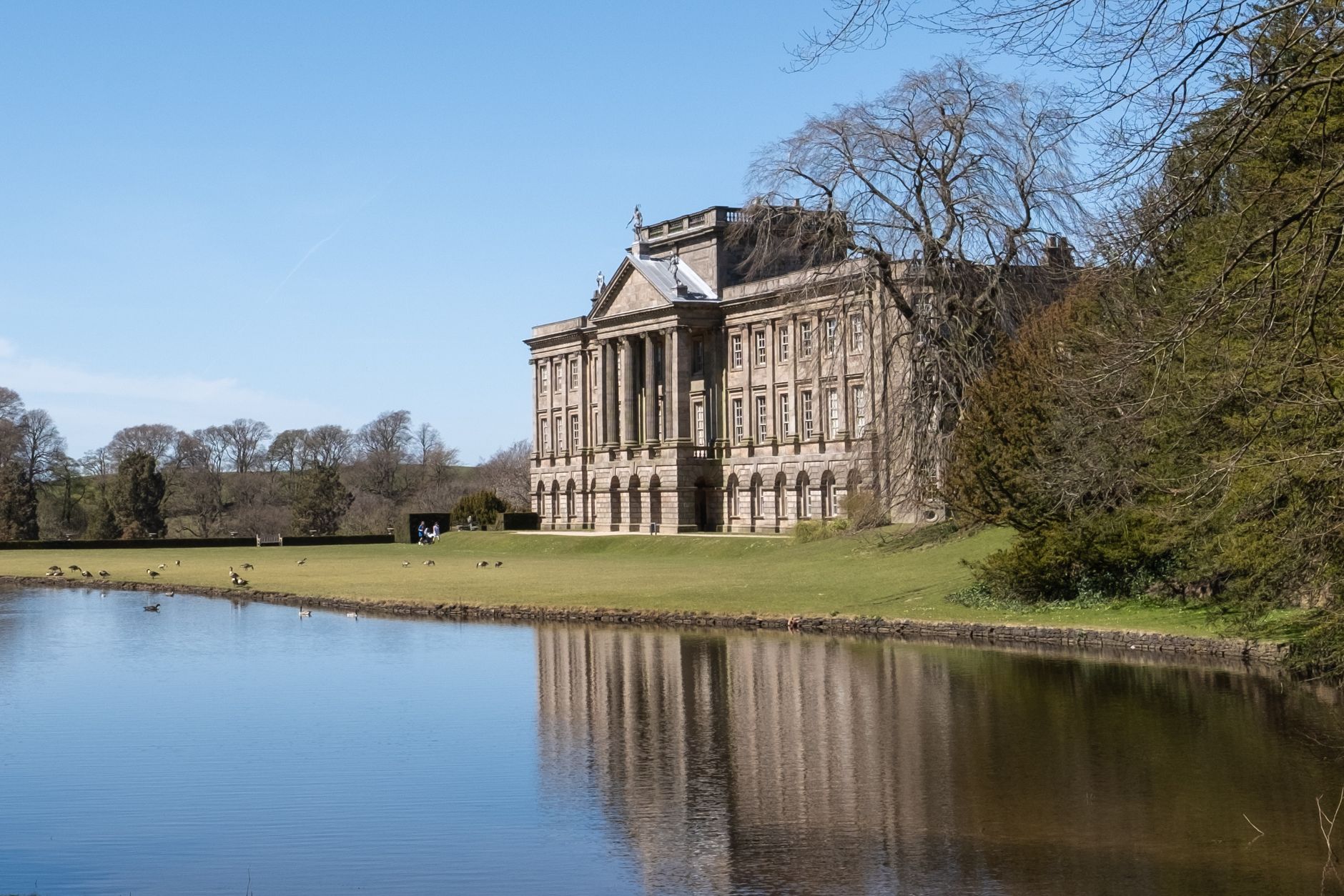
The double lime tree avenue in Clumber Park runs for nearly three miles and is said to be the longest in Europe. Walking or cycling along it is the simplest and most rewarding thing to do in the park. Bike hire is available at the estate. The car park charges approximately £7 per day for non-NT members; NT members park free.
The A614 south from Edwinstowe returns to Nottingham in under 40 minutes through the Nottinghamshire plain. The road passes Rufford Abbey Country Park, 9 km south of Edwinstowe, a ruined Cistercian abbey set in ornamental grounds with a lake and sculptures; it is free to enter and worth a brief stop.
The M1 junction 26 is 15 minutes west of Nottingham on the A610 for travel south to London or Leicester; junction 28 is 15 minutes east for the north.
Getting there: Nottingham is 2 hours from London St Pancras by East Midlands Railway. By car, the M1 junction 26 (westbound) and junction 28 (eastbound) are the most useful. A car is essential for this loop; bus services between the stops are infrequent and poorly timed.
Driving conditions: All roads are A-class or B-class in good condition. No single leg takes longer than 45 minutes. The A614 between Nottingham and Edwinstowe is a fast, straight road through flat agricultural land.
What to book ahead: Cave tours at Nottingham Castle, particularly in July and August. The National Trust Workhouse at Southwell. Accommodation at Sherwood Forest is limited; book at least 2 weeks ahead in summer.
Budget notes: This route is genuinely low-cost. Nottingham Castle, Sherwood Forest, Newark Castle grounds, Clumber Park (on foot) and Southwell Minster are all free to enter. Main paid attractions: Nottingham cave tours (approximately £12 per adult), NT Workhouse (approximately £10), Clumber Park parking (£7 per day for non-members).
Best time to visit: May to September for the best weather and full attraction opening hours. The Sherwood Forest car park becomes congested in July and August; May, June and September are noticeably quieter. Southwell Minster is particularly atmospheric in the run-up to Christmas when special evening services are held.
A 10-day loop from Leeds through the Yorkshire Dales, Teesdale, UNESCO Durham and the chalk cliffs and gannet colonies of East Yorkshire: one of England's most varied driving circuits.
The full route — stops, maps, and driving times — is on Routebook by Kington.

A five-night circuit through England's most legendary county, from the cave-riddled city of Nottingham to the Norman grandeur of Southwell Minster, the Civil War ruins of Newark Castle and the ancient oaks of Sherwood Forest.


