

Eight days, one loop from Leeds: Saltaire's UNESCO mill town, Haworth's Bronte Parsonage, Hebden Bridge's canal and Pennine valleys, and the 1779 Piece Hall in Halifax. All legs under 25 minutes.
West Yorkshire is not the obvious English road trip destination. That is precisely why it is such a good one. The county holds a UNESCO World Heritage Site, the most visited literary museum outside London, one of the finest Georgian commercial buildings in England, and some of the most atmospheric moorland in the country - all connected by drives of under 25 minutes. This West Yorkshire road trip itinerary takes 8 days and covers the loop from Leeds in a single clockwise circuit.
The West Riding of Yorkshire - the industrial and cultural heart of the county - was built on wool and coal, and the landscape and architecture that resulted from that wealth is unlike anything else in England. Victorian mill buildings, colonnaded trading halls, Pennine moorland above valley towns strung along rivers and canals: this is a distinct English region with a strong identity and a concentrated core of remarkable things to see. The compact geography means that unlike many English regional routes, no single leg of this circuit feels like a transit.
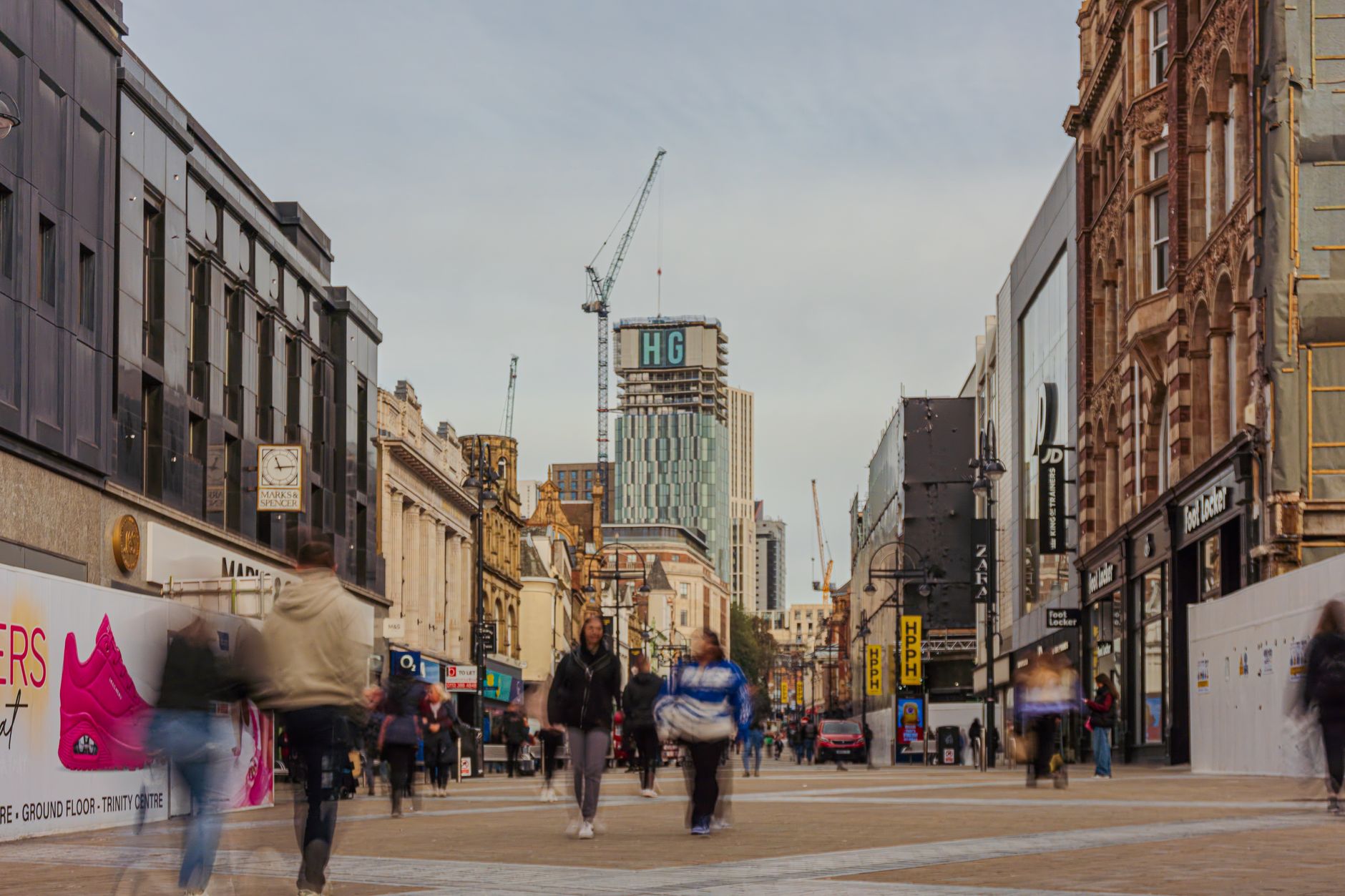
Leeds makes the best starting point for this route for a practical reason: it has the best transport links. Direct trains from London King's Cross take 2 hours 15 minutes; from Edinburgh, 2 hours 30 minutes; from Manchester, 55 minutes. The city has good hotels in every price range, which is harder to say for some of the smaller stops on this circuit.
The Royal Armouries on the south bank of the Aire is worth most of the first day. It is one of England's best free museums - the national collection of arms and armour, moved from the Tower of London in 1996, with over 70,000 objects displayed in five permanent galleries covering war, tournament, self-defence, hunting and oriental arms. Full-size figures, war horses and period settings give it more atmosphere than a conventional display case museum.
Kirkgate Market, a 10-minute walk north-west of the station, is the largest covered market in Europe and a proper working market rather than a tourist attraction. The Victorian market hall dates from 1904; the original stall where Michael Marks sold penny goods before founding Marks and Spencer is marked inside. It closes on Sundays.
The Corn Exchange, south of the market, is a dome-topped Victorian trading hall from 1864, now housing independent shops and cafes under an elliptical glazed roof. Worth 20 minutes. The Aire waterfront east of the station - Leeds Dock - has been developed around the Royal Armouries and is a pleasant evening walk.
Practical: Royal Armouries free, open daily. Kirkgate Market closed Sundays. Roundhay Park, 3 miles north, is a large Victorian park with a lake and formal gardens, free.
A 10-day southern France loop: Marseille's Calanques, Arles' Roman ruins and the Camargue, Saint-Tropez's beaches, and three nights on the French Riviera at Nice.
Saltaire is 9 miles west of Leeds on the A657, sitting in the Aire valley below the Pennine hills. The village was built by Sir Titus Salt between 1851 and 1876 to house the workers from his new combined mill on the opposite bank. Salt disliked Bradford and its slums; his intention was to demonstrate that industrial production could happen in conditions of dignity and order. The result was 850 houses, a school, a church, a hospital, an institute with a library and a concert hall, and - conspicuously - no pub.
Salts Mill, completed in 1853, was the largest industrial building in the world at the time of its construction: 550 feet long, 6 stories high, built to process alpaca and mohair wool. The mill closed in 1986 and was bought by entrepreneur Jonathan Silver in 1987. Silver's idea was to turn it into a gallery, and in 1993 he persuaded his friend David Hockney to exhibit there. The 1853 Gallery now holds one of the most important Hockney collections outside the United States - large-scale paintings of the East Yorkshire Wolds, Bigger Trees Near Warter, the iPad drawings - spread across the former mill floor. Entry is free.
The village itself is UNESCO-designated and can be explored freely at any time. The grid of streets named after Salt's children (Fanny, Herbert, Edward, Titus, George, Ada, Harold, William) is almost entirely intact, and the quality of the stone building is high. The village is a 5-minute walk from Saltaire railway station, which is on the Wharfedale line (15 minutes to Leeds, 3 minutes to Bradford Forster Square).
Practical: Salts Mill free, open daily including Sundays. Bradford (3 miles east) has the best accommodation for this section of the route. Saltaire village: freely accessible at all times.
Haworth is 10 miles north-west of Saltaire in the Worth Valley, a steep Pennine village of millstone-grit terraces around a cobbled main street climbing to the church and parsonage at the top. Patrick Bronte was appointed curate of St Michael's in 1820, when Charlotte was 4, Branwell was 3, Emily was 2 and Anne was an infant. They lived at the parsonage until the family's various deaths ended the household.
The Bronte Parsonage Museum is one of the most visited literary museums in England, and for good reason: the house is small and the objects in it are intimate in a way that large museums cannot replicate. Charlotte's tiny writing desk is in the dining room where she wrote Jane Eyre. Emily's diary papers are in the study. The sisters' handwritten juvenile manuscripts - tiny books made from pieces of paper and written in print too small to read without a magnifying glass, the products of an intense childhood imaginary world - are the most haunting things in the collection. Book tickets in advance; summer queues can be long.
The moors above Haworth are best experienced on the walk to Top Withens, a 4-mile path from the village along the Pennine Way to a ruined farmhouse on the high ridge above the Worth Valley. Top Withens is smaller than the Wuthering Heights farmhouse in Emily's novel, but the landscape around it - exposed, dark, treeless - is exactly what the novel describes. The walk is well-signposted; take waterproofs and solid footwear regardless of the forecast.
The Keighley and Worth Valley Railway, a preserved steam line, runs 5 miles from Keighley through Haworth down the valley to Oxenhope. The line was used to film The Railway Children in 1970. Haworth station is at the bottom of the village; the trains run most weekends and daily in school holidays.
Practical: Bronte Parsonage Museum: book online; last entry 1 hour before closing. Top Withens: 4 miles one way from Haworth village; well-signposted. Worth Valley Railway: check timetable before visiting.
Hebden Bridge is 8 miles east of Haworth over the moors, dropping down into the Calder valley. The town climbs both sides of the valley in terraces of weavers' cottages, many built as double-decker houses: the lower cottage served the valley floor street, the upper cottage served the hillside path above. The arrangement is unique to Hebden Bridge and came directly from the valley's topography.
The Rochdale Canal runs through the town at valley level and is navigable; narrowboats moor below Bridge Mill. The towpath is flat and well-surfaced in both directions - east toward Sowerby Bridge and west toward Todmorden - and is one of the best easy walking options on this route.
Hardcastle Crags, 2 miles north, is a National Trust woodland valley following Hebden Water upstream into the South Pennines. The main path passes Gibson Mill (1800), a cotton mill now restored as a sustainable visitor centre, and continues up the valley past waterfalls to the open moor. Return via the east bank for a circuit. The car park at Midgehole Road is pay-and-display; the valley itself is free.
Heptonstall village, a 10-minute steep walk uphill from the market square, has two churches in the same churchyard: the ruins of the medieval St Thomas a Becket (storm-damaged in 1847) and the 1854 replacement. Sylvia Plath is buried in the churchyard of the new church. The village's 18th-century weavers' cottages are largely unchanged.
Practical: Hardcastle Crags car park: Midgehole Road, pay-and-display. Heptonstall: free, always accessible. The Rochdale Canal towpath: flat, bikes welcome.
Halifax is 6 miles east of Hebden Bridge, and The Piece Hall is the reason to be here. Built in 1779 at the height of Halifax's cloth trade, it is a colonnaded cloth trading hall of 315 rooms arranged on three floors around a large central cobbled courtyard - a scale more Italian than English, and visually unlike anything else in the north of England. It was built for clothiers from the surrounding townships to bring their finished cloth pieces to trade with merchants. The trade declined after the introduction of power looms, and the hall served various functions - wholesale market, cinema, concert venue, flea market - before its restoration and reopening in 2017 as an independent retail and cultural destination.
The courtyard is free to enter. The shops and restaurants around the colonnade are open daily. The Piece Hall hosts regular outdoor concerts and market events; check the events calendar before visiting, as these can be a highlight in their own right.
Wainhouse Tower, a 10-minute drive south of the centre on King Cross Lane, is the world's tallest ornamental chimney at 253 feet. Built in 1875, ostensibly as a chimney for a dye works but in practice as a spectacular folly, it is only open on bank holidays and selected days. Worth a look from outside even when closed.
Dean Clough, a former Crossley carpet factory complex a quarter-mile north of the Piece Hall, has been redeveloped as galleries, studios and creative businesses. The Henry Moore and Crossley galleries are free.
Practical: Piece Hall: free courtyard access; events calendar at the website. Wainhouse Tower: Bank Holidays and selected days only. Dean Clough galleries: free, Mon-Sat.
The 8-mile drive from Halifax back to Leeds on the A58 closes the West Yorkshire loop. A final morning at the Corn Exchange, or a walk along the Aire through the city to the Armley Mills Industrial Museum (which covers the West Riding's textile industry from water to power loom), rounds off a route that has moved through the full arc of the region's character.
Getting there: Leeds has direct rail connections from London, Edinburgh, Manchester and most major UK cities. Leeds Bradford Airport is 8 miles north-west of the city centre with flights to Europe and domestic destinations.
Driving: All legs on this route are under 25 minutes on A and B roads. Parking in Haworth and Hebden Bridge can be tight on summer weekends; arrive early or use the signed car parks at the edge of both towns.
Accommodation: Leeds and Bradford (for the Saltaire section) have the best range and value. Haworth has good B&Bs and small hotels on and near the main street; book ahead in summer. Hebden Bridge has limited but characterful accommodation in the town.
Weather: The Pennines are higher and wetter than the Yorkshire Dales to the north. Top Withens walk requires waterproofs year-round. Indoor attractions - the Piece Hall courtyard, Salts Mill, Bronte Parsonage, Royal Armouries - make this a viable wet-weather route.
May to September gives the best combination of weather, opening hours and moorland walking conditions. June and July are the busiest months at Haworth; if visiting in peak season, book the Parsonage and arrive in the morning before coach groups. The moors are most atmospheric in late August when the heather turns purple - one of the best natural spectacles in England.
A 10-day loop from Leeds through the Yorkshire Dales, Teesdale, UNESCO Durham and the chalk cliffs and gannet colonies of East Yorkshire: one of England's most varied driving circuits.
The full route — stops, maps, and driving times — is on Routebook by Kington.

A five-day loop from Leeds through the West Riding's industrial and literary heritage: Saltaire's UNESCO mill town, Haworth's Bronte Parsonage, Hebden Bridge's Rochdale Canal and Pennine valleys, and Halifax's magnificent 1779 Piece Hall.


