

The Yucatan Peninsula packs Maya archaeology, underground cenotes, colonial cities, and Caribbean beaches into a road trip of unusual variety. This 12-day loop from Cancun runs counterclockwise through seven distinct stops: the clifftop ruins at Tulum, the seven-coloured Laguna de Bacalar, the pastel-walled UNESCO city of Campeche, the food-obsessed colonial capital Merida, a day trip to Uxmal's refined Puuc ruins, an overnight near the iconic pyramid at Chichen Itza, and the quiet colonial town of Valladolid. Roads across the peninsula are well-maintained and safe for self-drivers, with no single leg exceeding 4.5 hours. The route covers around 1,150 km in total. November to April is the best window, avoiding the June to October hurricane season. Pick up a rental car at Cancun Airport and return it 12 days later having covered some of the most varied scenery in Latin America.
The Yucatan Peninsula packs Maya archaeology, underground cenotes, colonial cities, and Caribbean beaches into a road trip of unusual variety. Pick up a rental car at Cancun Airport, drive a counterclockwise loop of roughly 1,150 km over 12 days, and return to Cancun having covered some of the most varied scenery in Latin America. No single driving leg exceeds 4.5 hours, and roads across the peninsula are well-maintained and well-signed.
The Yucatan Peninsula road trip itinerary here runs south from Cancun to Tulum and Bacalar, then west across to Campeche and Merida, before turning east through Chichen Itza and Valladolid for the return. The loop structure means no backtracking.
November to April is the best window: dry days, lower humidity, and temperatures in the mid-20s°C. December and January see the highest visitor numbers. The shoulder months of November, March, and April offer the best balance of good weather and manageable crowds at the main sites. Avoid June to October when the hurricane season brings heavy rain to the Caribbean coast.
Use the first two nights to arrive, recover, and get oriented before the road trip begins. The Hotel Zone (Zona Hotelera) sits on a narrow strip of land between the Caribbean Sea and Laguna Nichupte, with good beaches and most of the resort infrastructure. The city centre (Centro) is 20 minutes away and has better supermarkets, local restaurants, and a more authentic atmosphere.
Pick up the rental car on arrival and take a short drive so you are comfortable in local traffic before the longer legs begin.
The 117 km drive south on the toll road takes about 90 minutes. Tulum's walled Maya city, perched on a limestone cliff above the Caribbean, is the first great archaeological site of the loop. Arrive before 9 am to beat the tour groups from Cancun; the cliff-top view from the main temple, with turquoise reef water below, is the most photographed scene on the route.
Spend the afternoon at Cenote Dos Ojos, a flooded cave system 20 minutes south of Tulum town where crystal-clear freshwater flows through a connected underground limestone network. Gran Cenote is closer to town and good for families. In the evenings, Avenida Satelite in Tulum town has a good range of restaurants at all price points.
A 10-day southern France loop: Marseille's Calanques, Arles' Roman ruins and the Camargue, Saint-Tropez's beaches, and three nights on the French Riviera at Nice.
The 230 km drive south from Tulum (around 3 hours) arrives at Bacalar, where the Laguna de Bacalar stretches 42 km through the jungle. The "Lake of Seven Colors" earns its name from the way shallow Caribbean water shifts from pale turquoise near the shore to deep cobalt in the channel. Swim from the dock at your guesthouse, rent a kayak for an early morning paddle, or book a catamaran trip for a midday sail across the colour gradient.
Bacalar has evolved from a backpacker stop into a well-established destination, but retains a relaxed pace outside peak season. The small Fuerte San Felipe fort (1727) holds a short museum about pirate raids on the lagoon. Eat fish tacos at the market or order seafood rice at one of the lakefront restaurants.
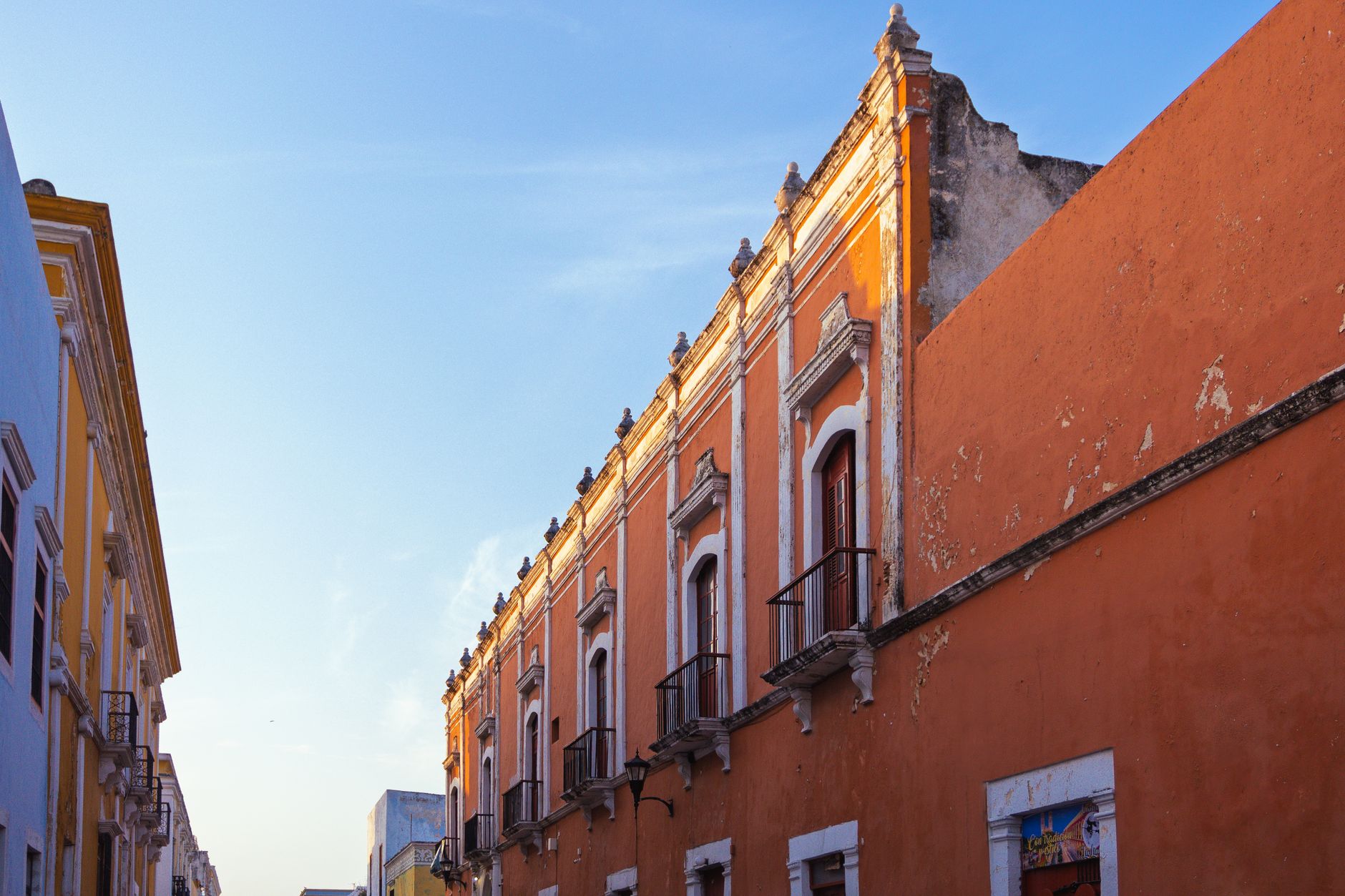
The 320 km drive from Bacalar to Campeche takes around four hours via highways 186 and 261. San Francisco de Campeche is the route's most underrated stop: a UNESCO World Heritage colonial city whose historic centre is encircled by 17th-century bastion walls and painted in bold shades of orange, ochre, coral, and green. It receives a fraction of the tourists that visit Merida or Tulum.
Walk the full circuit of the walled city, climb the Puerta de Tierra gateway at dusk, and eat cochinita pibil (slow-cooked pork in achiote and sour orange) at the Mercado Principal. The bastions are lit up after dark and worth a walk after dinner.
The Yucatan's colonial capital rewards two full days. The historic centre holds the second-oldest cathedral in the Americas (begun 1561), the Plaza Grande, and the Paseo de Montejo, a broad boulevard lined with 19th-century hacienda mansions. The city is walkable and safe to explore on foot.
Merida has the best food scene on the entire loop. Try panuchos (fried tortilla topped with black bean paste, turkey, and pickled onion), poc chuc (pork marinated in sour orange and grilled), and sopa de lima (chicken broth with lime and crispy tortilla strips) at the Mercado Lucas de Galvez or the many fondas around the centre.
Use the second day in Merida for an 80 km day trip south to Uxmal. The Puuc Maya archaeological site is architecturally more refined than Chichen Itza, with the Pyramid of the Magician and the intricately carved Governor's Palace commanding a hillside setting. Crowds are a small fraction of those at Chichen Itza.
The 120 km drive from Merida takes about 90 minutes. Stay in the village of Piste, immediately adjacent to the site, so you can enter at opening time (8 am) before the tour buses from Cancun and Merida arrive. El Castillo, the 24 m stepped pyramid and one of the New Seven Wonders of the World, anchors an ancient Maya city that also includes the Great Ball Court (the largest in Mesoamerica), the Temple of the Warriors, and the Sacred Cenote.
The site gets very crowded and hot by mid-morning. Plan to finish by 11 am. Book INAH tickets in advance online during high season.
Forty-five minutes east of Chichen Itza, Valladolid is a colonial town of pastel-coloured streets that makes a gentle final base before the return to Cancun. Cenote Zaci sits right in the town centre (entry around 70 pesos). The 16th-century San Gervasio church and the main plaza provide a relaxed hour of wandering. Try sopa de lima for lunch at one of the restaurants facing the square.
From Valladolid, the drive back to Cancun Airport is around two hours on a smooth toll road.
Allow at least two hours for the drive and plan to return the car at the airport with a comfortable buffer before check-in. If your flight departs in the afternoon or evening, a final swim at one of the Hotel Zone beaches is easy to add before heading to departures.
Car hire: Pick up and return at Cancun Airport. Full insurance is strongly recommended. Check your credit card's collision coverage before paying for additional waivers.
Toll roads: The Yucatan has a well-maintained cuota (toll) network. Keep cash pesos to hand — typical tolls are 50 to 200 MXN per stretch. Credit cards are accepted at some booths but not all.
Driving at night: Avoid driving after dark where possible. Speed bumps (topes) on secondary roads are sometimes unmarked. The main toll roads are safer for night driving but also have unmarked topes at junctions.
Entry fees: Chichen Itza (foreign visitors) approximately 590 MXN, Tulum ruins approximately 85 MXN, Uxmal approximately 345 MXN, Campeche fort is free. Book Chichen Itza tickets in advance.
Language: Spanish is the primary language throughout the peninsula. English is widely spoken in Cancun, Tulum, and at major archaeological sites. A few words of Spanish are useful in Bacalar, Campeche, and Valladolid.
Currency: Mexican Peso (MXN). ATMs are available at all main stops. Card acceptance is good in cities; carry cash for market food and smaller towns.
A 10-day loop from Leeds through the Yorkshire Dales, Teesdale, UNESCO Durham and the chalk cliffs and gannet colonies of East Yorkshire: one of England's most varied driving circuits.
The full route — stops, maps, and driving times — is on Routebook by Kington.

A counterclockwise 1,150 km loop through the Yucatan Peninsula's greatest hits: clifftop Maya ruins, underground cenotes, a lagoon of seven colours, a UNESCO walled city, and Mexico's best food capital.
 Routebookby Routebook


