

Four days through England's most underrated heritage county: Roman Chester, Tatton Park's deer park and Japanese garden, Jodrell Bank's UNESCO telescope, Little Moreton Hall's extraordinary timber-framed moat, and Tudor Nantwich.
Cheshire is routinely underestimated as a road trip destination. Visitors drive through on the M6 toward the Lake District or the Peak District without stopping, yet the county contains a concentration of heritage sites that few English counties can match: the most complete Roman walled city in Britain, a National Trust estate with a Meiji-period Japanese garden, the world's most famous radio telescope (now a UNESCO World Heritage Site), and the most elaborate timber-framed moated manor house in England.
Route distance: approximately 90 miles total driving. Best for: history, heritage, architecture, accessible days.
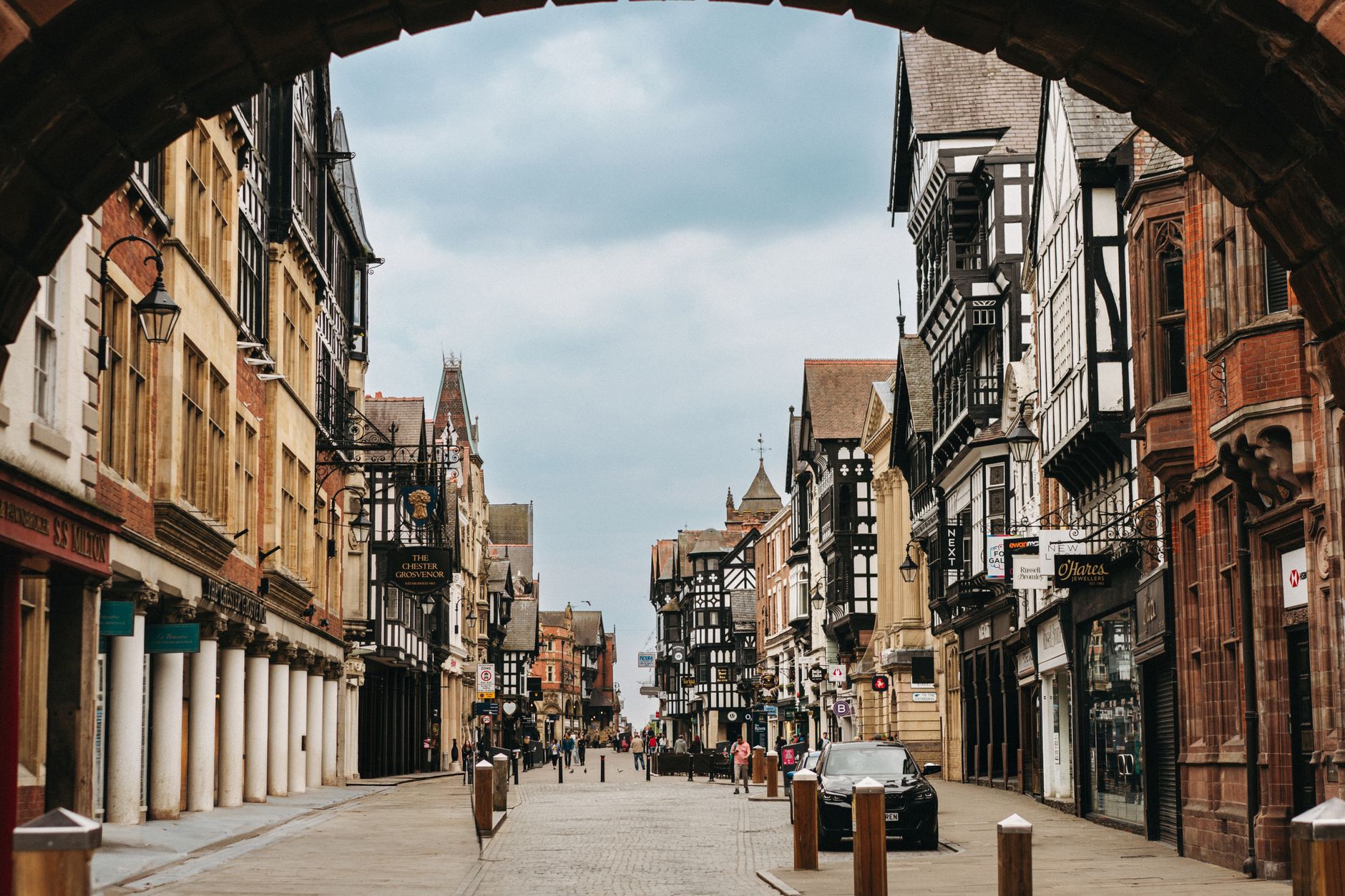
Chester earns two full days, the right amount of time to do the city justice. The Roman walled circuit takes 90 minutes to walk and should be the first thing on the list: the walls give the clearest orientation of the city and reveal how completely Chester has preserved its Roman footprint. The Eastgate Clock, built in 1897 to commemorate Queen Victoria's Diamond Jubilee, is the most photographed point on the circuit.
The Rows are Chester's most distinctive feature and have no equivalent anywhere else in the world: a medieval system of covered first-floor galleries running the full length of the four main streets, creating an upper and lower shopping level. The surviving medieval sections on Eastgate Street and Bridge Street show the structure at its most complete.
The Grosvenor Museum covers Roman Chester (Deva Victrix was a legionary fortress housing up to 6,000 soldiers) and is one of the finest Roman collections in Britain outside London. Entry is free. Dewa Roman Experience on Pierpoint Lane offers an archaeological reconstruction of the Roman street level beneath the medieval city.
Chester Cathedral's cloisters and the 12th-century Norman north transept are worth an hour. Chester Zoo, two miles north, is consistently rated one of the best in Europe and is a full day if travelling with children.
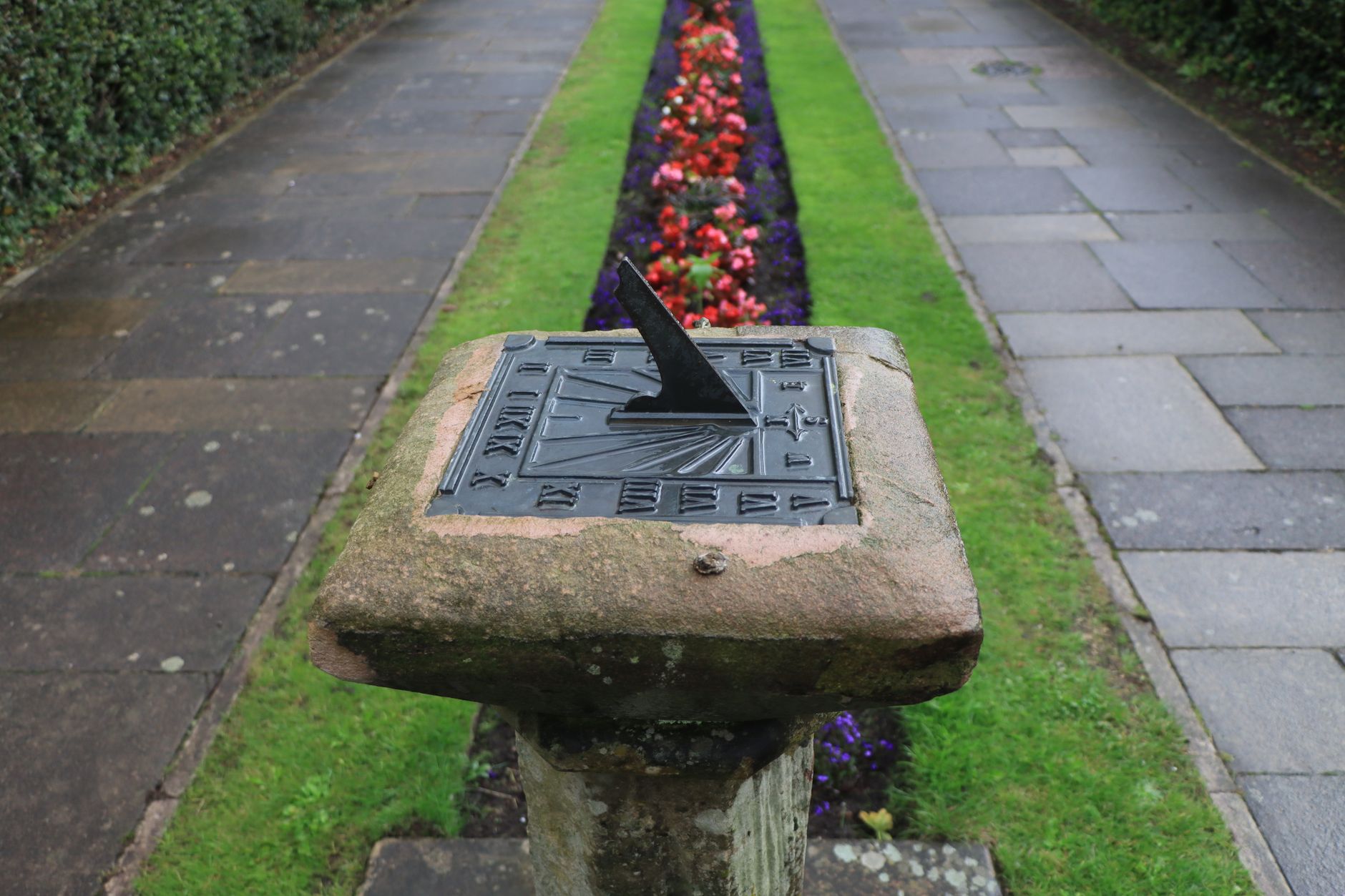
The drive from Chester to Knutsford takes 35 minutes on the A556 and A5034. Knutsford itself is a handsome Georgian and Victorian market town, best known as the setting for Elizabeth Gaskell's 1851 novel Cranford. Gaskell was born nearby and her grave is in the Unitarian Chapel on King Street.
Tatton Park, two miles north of Knutsford, is the county's flagship National Trust estate. The Regency mansion was completed in 1813 for the Egerton family and contains an important collection of paintings and furniture. The formal gardens include a walled kitchen garden, an Italian garden, a rose garden, and a fernery. The Japanese Garden, created in 1910 by Japanese craftsmen working with garden designer Thomas Mawson, is the finest surviving Meiji-period Japanese garden in England, with a Shinto shrine, roji path and traditional planting.
A 10-day southern France loop: Marseille's Calanques, Arles' Roman ruins and the Camargue, Saint-Tropez's beaches, and three nights on the French Riviera at Nice.
The deer park surrounding the estate covers over 1,000 acres and is home to around 1,000 red and fallow deer. Entry to the park is free; tickets are needed for the mansion and gardens.
The final day loops south and west from Knutsford back to Chester, taking in three of the county's headline sights as day trips along the way.
Jodrell Bank is a short drive east from Knutsford, near the old silk-weaving town of Macclesfield (whose Silk Museum and Paradise Mill, with original Jacquard looms still operational, are worth a detour if time allows). The Lovell Telescope, on the B5392, is 76 metres in diameter and weighs 3,200 tonnes. When it was completed in 1957 it was the largest steerable radio telescope in the world, and it remains in active scientific use by the University of Manchester as part of the MERLIN and e-MERLIN radio telescope arrays. The site was awarded UNESCO World Heritage Status in 2019, recognising the Lovell Telescope as one of the most significant technological achievements in post-war science.
The Discovery Centre has permanent and temporary exhibitions on radio astronomy, a 3D planetarium, and a science garden allowing visitors to observe the telescope at close range. Allow at least a half day.
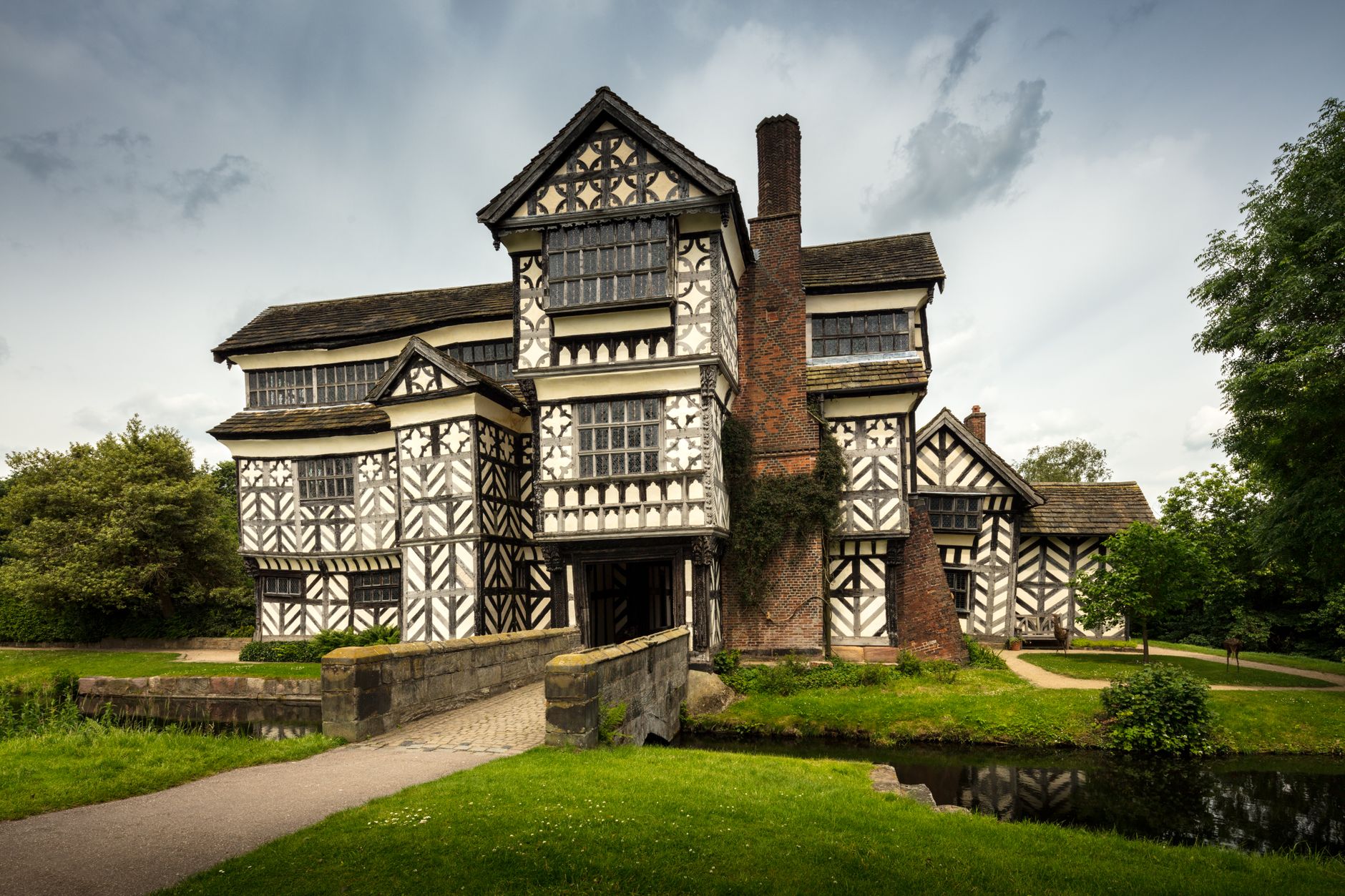
Continue south to Little Moreton Hall, near the market town of Congleton and two miles off the A34. It is the most complete timber-framed moated manor house in England. Construction began in 1504 and continued through three generations of the Moreton family until about 1610: the resulting building is an extraordinary accumulation of black-and-white decoration, with curved bargeboards, herringbone timbering and quatrefoil panels covering every surface. The Long Gallery, a rooftop room added in 1580, is famously out of plumb and has a dramatic lean visible even from outside. The National Trust has managed the property since 1938.
The moat is original and the hall sits in flat Cheshire farmland with nothing else visible in any direction, giving the building an isolated, dreamlike quality that photographs rarely convey as well as being there.

The loop's final stop is Nantwich, a prosperous salt-working settlement from Roman times whose wealth is visible in the quality of its Tudor architecture: more than 60 listed timber-framed buildings survive from the town's post-fire rebuild of the 1580s. The Church of St Mary the Virgin, built between 1304 and 1445, contains an exceptionally fine set of 14th-century choir stalls with carved misericords and a medieval stone chancel screen. The Crown Hotel on the main square is one of the best surviving examples of Elizabethan timber-framing in the country.
Welsh Row, running southwest from the town centre, has the densest concentration of black-and-white buildings. Hospital Street and Pillory Street complete the old town circuit. The Hack Green Secret Nuclear Bunker, four miles south via the A530, is a converted Cold War regional government headquarters that makes an unusual and well-presented half-day side trip. From Nantwich the A51 north returns to Chester in under 25 minutes, closing the loop with time to revisit anything missed in Chester at the start.
Cheshire's heritage sites are accessible year-round but National Trust and English Heritage properties typically run reduced winter hours from November to March. Tatton Park's Japanese Garden is at its best in late spring (rhododendrons and azaleas) and October (autumn colour). Chester's city centre is busiest in summer but manageable throughout.
The route covers under 100 miles in total, making it one of the most compact in this series. All roads are well-maintained A and B roads. The B5392 to Jodrell Bank can be slow on summer weekends when the car park fills. Chester's inner ring road is straightforward but park and ride is available if the city centre car parks are full.
Chester has the widest range of accommodation at every price point, including several hotels within the city walls. Knutsford makes an ideal second base, with good independent hotels and B&Bs, and puts Tatton Park, Jodrell Bank, Little Moreton Hall and Nantwich all within easy day-trip reach.
Mid-range accommodation runs from approximately £85 to £140 per night. The main paid attractions are Chester Zoo (approx £28), Grosvenor Museum (free), Tatton Park mansion and gardens (approx £19 non-members), Jodrell Bank Discovery Centre (approx £18), Little Moreton Hall (National Trust, approx £14 non-members), Hack Green Secret Nuclear Bunker (approx £12). A National Trust membership covering Tatton Park and Little Moreton Hall pays for itself on a single trip.
A 10-day loop from Leeds through the Yorkshire Dales, Teesdale, UNESCO Durham and the chalk cliffs and gannet colonies of East Yorkshire: one of England's most varied driving circuits.
The full route — stops, maps, and driving times — is on Routebook by Kington.

Four days through England's most underrated heritage county: Roman Chester, Tatton Park's Regency mansion and deer park, the Lovell Telescope at Jodrell Bank, Little Moreton Hall's extraordinary timber-framed moat, and Tudor Nantwich.


