

Northern England's five greatest cities make one of the country's most rewarding one-way road trips. This nine-day northern England road trip itinerary drives from Liverpool's Albert Dock through Manchester, Sheffield, and medieval York to the Tyne Bridges at Newcastle. Each city delivers a distinct cultural character, with never more than two hours of driving between overnight bases.
Five of Northern England's greatest cities make one of the most rewarding one-way road trips in the country. This nine-day itinerary links Liverpool, Manchester, Sheffield, York, and Newcastle in a natural west-to-east arc, with a distinct character at every base and never more than two hours of driving between them.
Northern England's cities are typically treated as isolated weekend breaks. This route links them as what they are together: a coherent arc of civic ambition, industrial heritage, and cultural life that runs from the Irish Sea to the Tyne. Each city is different enough to feel like a fresh start; each drive is short enough not to dominate the day.
The route is one-way by design. Liverpool John Lennon Airport and Manchester Airport serve broadly the same market; Newcastle International is the natural exit for the Northeast. Fly into one, return from the other, or reverse the direction.
Liverpool is the natural start. London Euston to Liverpool Lime Street takes around two hours fifteen minutes by train. Manchester Airport is a convenient alternative arrival point: the airport is one hour south of Liverpool by road, and hire cars are easy to collect there. Newcastle is the natural finish, with regular trains south to London King's Cross (around three hours) and flights from Newcastle International.
Liverpool's Albert Dock is the starting point for the whole route. The dock opened in 1846 and was the world's first non-combustible warehouse complex, built entirely from cast iron, brick, and stone. Within five minutes on foot, you can visit Tate Liverpool, the Merseyside Maritime Museum, the International Slavery Museum, and the Beatles Story. The Merseyside Maritime Museum is free and gives the clearest account of Liverpool's role as the empire's principal port.
St George's Hall, a 15-minute walk from the Dock via James Street, is the city's grandest neoclassical statement: a concert hall and law courts built in the 1840s and considered one of the finest neo-Grecian buildings in Europe. Entry is free on most days.
The Beatles Story at the Dock is the obvious pilgrimage for anyone interested in the band; book ahead as it sells out in summer. Penny Lane and Mathew Street are each within 20 minutes by taxi if you want to walk in the footsteps of the Fab Four.
Drive to Manchester: M62 east, approximately 65 km, about 55 minutes.
A 10-day southern France loop: Marseille's Calanques, Arles' Roman ruins and the Camargue, Saint-Tropez's beaches, and three nights on the French Riviera at Nice.
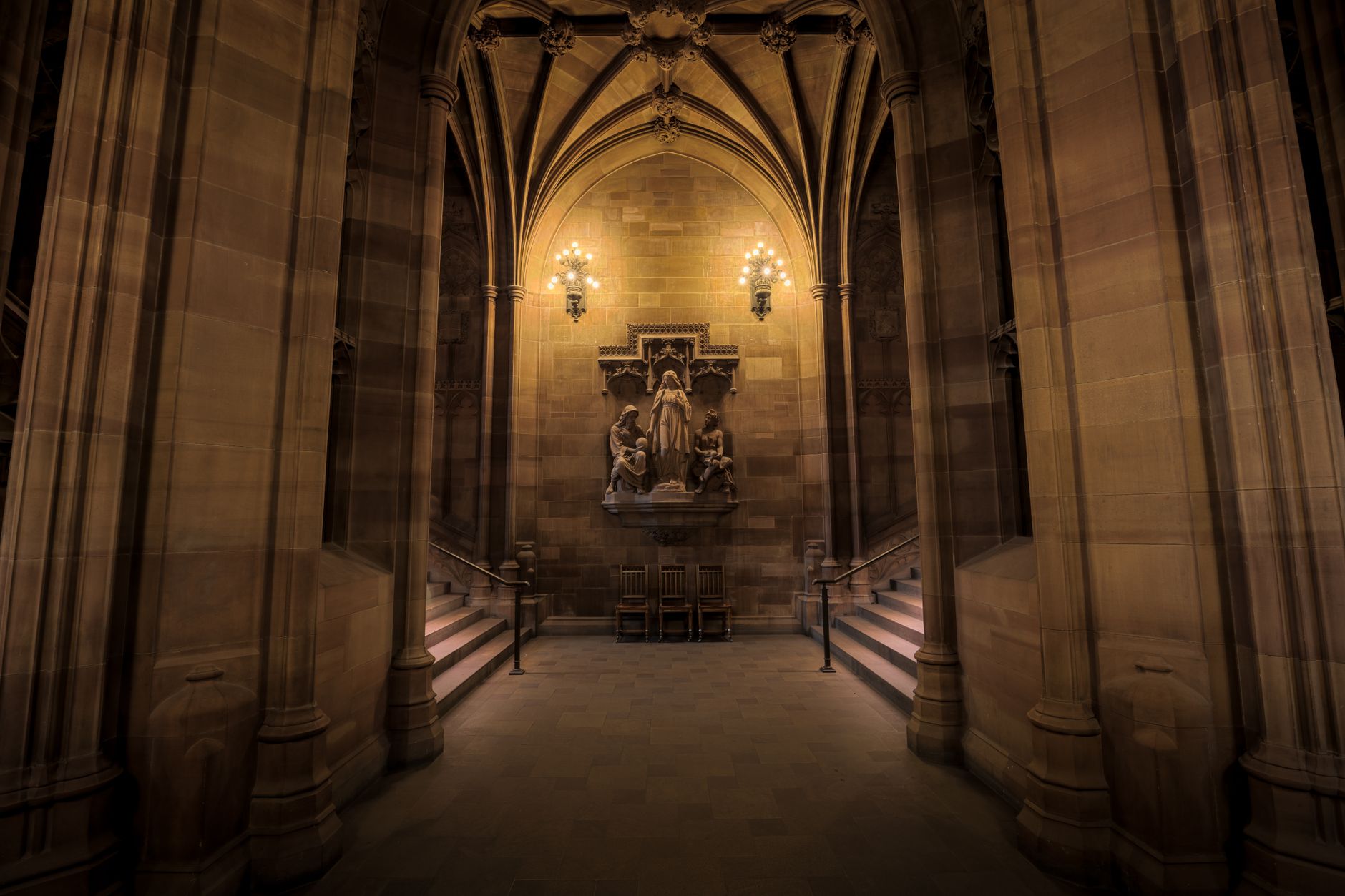
The John Rylands Library on Deansgate is free and is one of the finest Gothic Revival interiors in England. Completed in 1900 as a memorial to the Manchester merchant John Rylands, the main reading room has 14-metre arched ceilings and stained-glass panels by Basil Champneys. The library holds one of the world's most important collections of early printed books, including a Gutenberg Bible and rare medieval manuscripts. Timed entry slots are bookable online at library.manchester.ac.uk.
Castlefield Basin, 10 minutes' walk south of Deansgate, sits on the site of a Roman fort (Mamucium, established around AD 79) and the junction of the world's first industrial canal network. The Museum of Science and Industry on Liverpool Road, adjacent to Castlefield, occupies the world's oldest surviving railway station and is free. The mill engines and power hall are the standout rooms.
Day 3 suits Salford Quays well. The Lowry arts centre and the Imperial War Museum North (free) face each other across the Manchester Ship Canal about 4 km west of the city centre, connected to central Manchester by the Metrolink tram. The IWM North's building by Daniel Libeskind is a striking piece of architecture; the Time of War experience is one of the best museum presentations of the Second World War in Britain.
Drive to Sheffield: M60 south then A57/A628 or M1, approximately 68 km, just over an hour.
Sheffield's reputation for steel is worth engaging with. Kelham Island Museum, in a converted Victorian power station 10 minutes' walk from the city centre, holds the world's finest collection of Sheffield steel tools and cutlery. The centrepiece is the River Don Engine, a 425-tonne, 12,000-horsepower machine built in 1905 to roll armour plate. It still runs in steam at 12pm and 2pm Thursday to Sunday. Admission is free.
The city centre Winter Gardens, a glass-roofed subtropical plant house, is a good 30-minute rest stop and free to enter. The Millennium Gallery, connected by a short walkway, has the national collection of British silverware alongside changing contemporary exhibitions.
Day 5 is the natural time for a Chatsworth House excursion. The Duke of Devonshire's Baroque palace in the Derbyshire Dales is 35 km south of Sheffield on the B6012 and one of England's finest country houses. The house and garden are open March to December; allow at least four hours. Book tickets at chatsworth.org.
Drive to York: A61 north then A1(M), approximately 90 km, about 75 minutes.
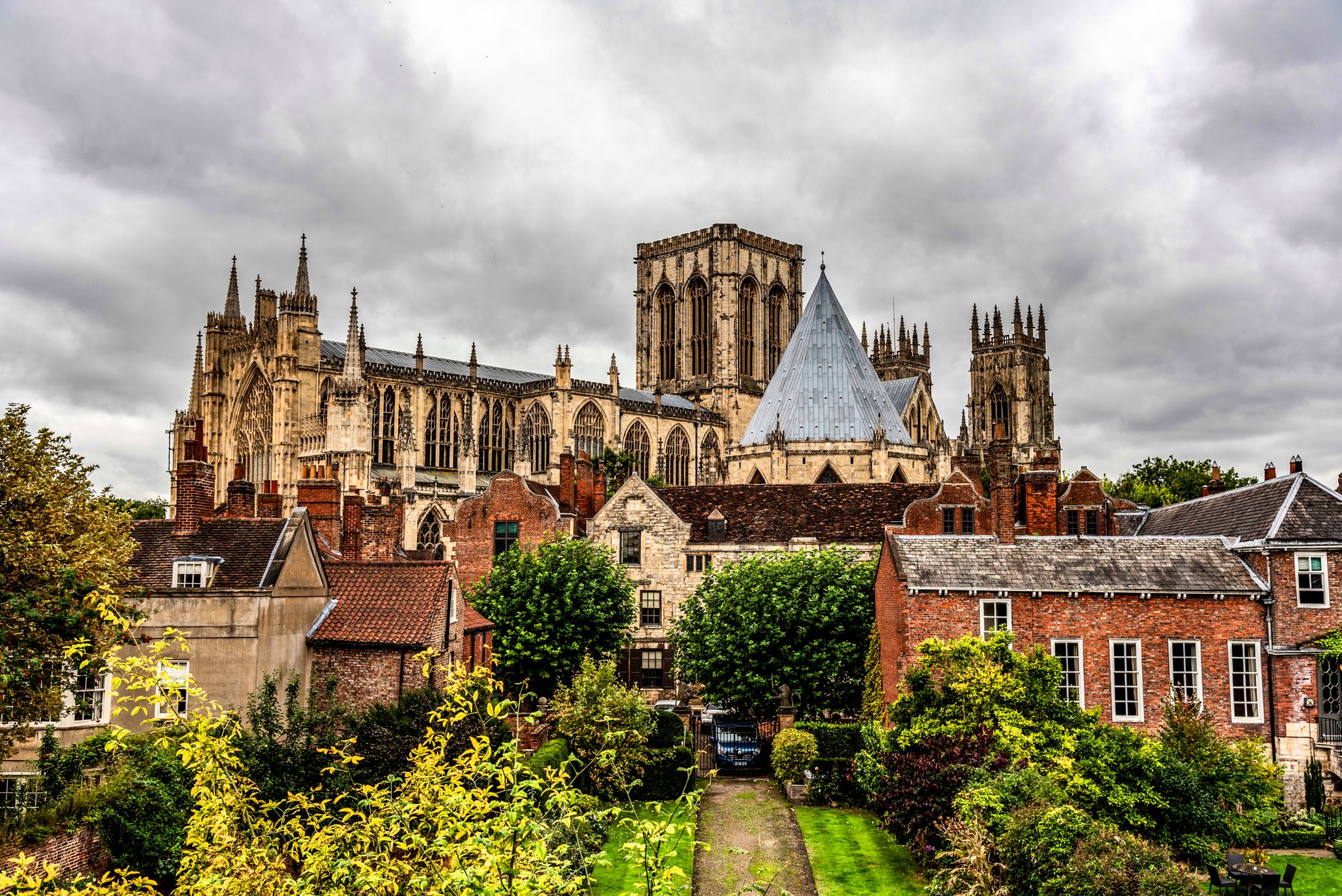
York is the most intact medieval city in England. Begin with the city walls: 4.8 km of limestone ramparts, walkable in about two hours and free. The walk gives the clearest sense of York's scale before you go inside the cathedral.
York Minster, begun in 1220 and completed in 1472, is the largest Gothic cathedral in Northern Europe. The Great East Window of 1405 is the largest expanse of medieval stained glass in a single window anywhere in the world. Adult admission is £15; the tower climb is an additional charge but the view across the Vale of York repays it.
The Shambles, a two-minute walk south of the Minster, is the best-preserved example of a medieval commercial street in Europe. The timber-framed buildings date from the 14th century; the overhanging upper storeys once extended so far that neighbours on opposite sides could pass items across the street. It is busiest by mid-morning; arrive at opening or return at dusk.
Day 7: the National Railway Museum on Leeman Road (free, 10 minutes west of the station) holds Mallard, the world's fastest steam locomotive, and a Japanese Shinkansen bullet train, alongside the world's largest railway collection. Jorvik Viking Centre on Coppergate is built on the actual excavation site of Viking-age York and requires advance booking: adult tickets were £17.50 in 2026. Castle Howard, the Baroque stately home 25 km north on the B1257, is the finest day trip from York.
Drive to Newcastle: A1(M) north, approximately 153 km, just over two hours.

The Tyne Bridges form one of the most recognisable waterfronts in Britain. Seven bridges cross the river between Newcastle and Gateshead. The 1928 Tyne Bridge, engineered by Dorman Long (who also engineered Sydney Harbour Bridge in the same decade), is the most famous. The 2001 Gateshead Millennium Bridge tilts open on its horizontal axis to let tall ships pass; the tilting mechanism operates at scheduled times.
The Baltic Centre for Contemporary Art on the Gateshead Quays is a former flour mill converted for art; entry is free. The top-floor viewing terrace has the finest elevated view of the river and bridges. The Sage Gateshead (now the Glasshouse International Centre for Music), Norman Foster's wave-form concert building on the same quay, has a public viewing area.
The Angel of the North is 10 km south off the A167. Antony Gormley's 20-metre steel figure with a 54-metre wingspan is visible from the A1 motorway on approach; there is a small car park off Durham Road and the visit takes around 15 minutes. It is always free.
For context on Hadrian's Wall, Segedunum Roman Fort at Wallsend (5 km east of the city centre, served by the Metro) is the Wall's eastern terminus. It has the only reconstructed stretch anywhere on the Wall's length, plus a viewing tower.
Driving: The route uses the M62 (Liverpool to Manchester), M60 or A628 (Manchester to Sheffield), A61 and A1(M) (Sheffield to York), and A1(M) (York to Newcastle). All sections are motorway or dual carriageway. City parking in all five cities is expensive; park in a multi-storey and explore on foot.
Budget: Mid-range hotels in Northern England typically cost £90 to £150 per night for a double room. Many of the route's best attractions are free: Kelham Island Museum, John Rylands Library, National Railway Museum, Baltic Centre, Museum of Science and Industry, and the Great North Museum in Newcastle. Budget £80 to £110 per person per day for accommodation, food, paid attractions, and fuel.
Best time: May to September gives the longest days and the most favourable conditions. York is at its busiest in August; book Jorvik Viking Centre and accommodation well in advance for summer visits. September is often the most enjoyable month across all five cities.
Can this route be done by train? Yes, with some adjustments. Liverpool, Manchester, Sheffield, York, and Newcastle are all on main rail lines. The Chatsworth House excursion from Sheffield and the Angel of the North from Newcastle are both difficult without a car or taxi; consider hiring a car for just those two days.
Is this route suitable for families? Yes. The Jorvik Viking Centre, National Railway Museum, Museum of Science and Industry, and Kelham Island Museum are all strong for older children interested in history or engineering.
What is the best base in each city? In Liverpool, stay near Albert Dock or the Ropewalks district. In Manchester, the Northern Quarter or Deansgate area is most central. In Sheffield, the Kelham Island neighbourhood has the best independent restaurants and pubs. In York, any hotel within the city walls puts you within easy walking distance of the main sites. In Newcastle, the Quayside gives the best access to the river and Baltic.
A 10-day loop from Leeds through the Yorkshire Dales, Teesdale, UNESCO Durham and the chalk cliffs and gannet colonies of East Yorkshire: one of England's most varied driving circuits.
The full route — stops, maps, and driving times — is on Routebook by Kington.

A nine-day one-way drive through five of Northern England's greatest cities, from Liverpool's Albert Dock to Newcastle's Tyne Bridges. The route passes through Manchester, Sheffield, and York, with a distinct cultural character at every overnight base.


